

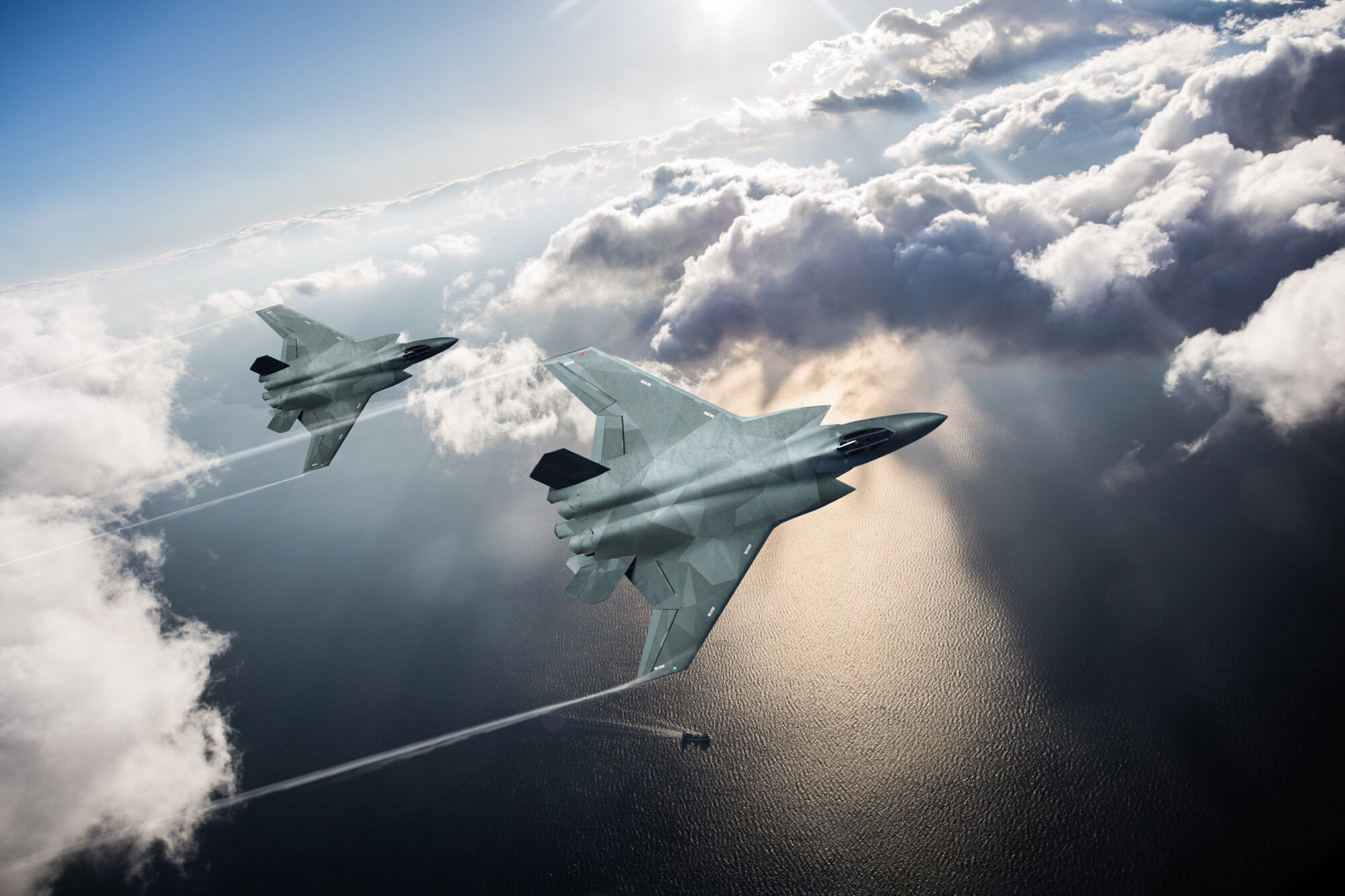
The Defence Committee has published a comprehensive report on the Global Combat Air Programme (GCAP), emphasising the need for careful planning, robust structures, and tight cost control to meet its ambitious target of delivering a next-generation combat aircraft by 2035.
The Committee acknowledged GCAP as both a global and national programme with significant implications for UK security and economic prosperity. However, the report highlighted unresolved issues around resilience against emerging threats, integration with existing systems, and adaptability to technological advances over the aircraft’s lifespan.
Citing past challenges with multilateral defence programmes like the Eurofighter Typhoon, the report warned of potential delays and cost overruns. The Defence Committee stressed the importance of avoiding similar pitfalls, stating, “Decisions made at this early stage around partnerships, delivery structures, and workshare will be key to ensuring the aircraft arrives on time and to budget.”
Tight Cost Control and Transparent Funding
The Committee urged the Ministry of Defence (MOD) to maintain strict control over costs and ensure transparency to enable effective public and parliamentary scrutiny. It also called for multi-year funding to provide stability and bolster confidence among international partners.
“The Government should consider providing a multi-year funding arrangement to put the programme on a secure footing,” the report recommended.
Skilled Workforce Retention
Retention of the existing Typhoon workforce was identified as critical, with concerns over the dwindling production pipeline before Tempest production ramps up. The report stated, “GCAP offers a welcome opportunity to attract new talent into the UK’s combat air industry, but the focus cannot just be on recruitment of new apprentices.”
Partnership and Delivery Structures
Acknowledging the ambitious timescales, the Committee stressed the importance of empowering delivery structures to make timely decisions. It noted that delays caused by structural failings in the Typhoon programme must not be repeated.
“Meeting the 2035 target date is critical for Japan and the UK must sustain its commitment to empowering GCAP’s delivery organisations throughout the programme’s development,” the report concluded.
Flexibility for Future Technologies
The report emphasised the need to future-proof GCAP to accommodate advances in artificial intelligence, autonomous systems, and emerging threats like hypersonic weapons. “Sufficient flexibility must be built into GCAP to allow the main aircraft to operate alongside a range of future uncrewed solutions,” it recommended.
The report concluded with a clear warning: “Whilst progress to date has been positive, previous multilateral defence programmes have frequently seen costs spiral and delays pile up. GCAP will have to break the mould if it is to achieve its ambitious target date.”
The Defence Committee pledged to continue its scrutiny of the programme, ensuring it remains on track to deliver cutting-edge capabilities while fostering a skilled workforce and strengthening international partnerships.










Here we go again with the same negative observations, which generate doubts for any potential customers outside the consortium. Typical of any British / group project whether it be nuclear power stations or HS2………just get on with the blasted job.
Absolutely agree.
Negativity is a knee-jerk reaction, whether it’s a new jet, road, tunnel, or anything else.
I agree it’s interesting to note that there was a negative air about what we just read despite the fact it couldn’t actually find anything as yet to be negative about. It was so very British in tone sadly, let’s be positive when it’s appropriate and critical in tone when it deserves it but to create a whole attitude questioning whether Britain is up to it rather than the can do attitude of so many of our rivals and esp Japan is hardly going to help the very challenges ahead to be met. I am just glad the Japanese are onboard, not only will they help ensure best practice and systems but they will equally be a standard upon which can judge both ourselves and overall progress too. Let’s hope we don’t have the usual suspects laying into the project for the sake of political advantage or innate National self hate.
Heard a German physicist last week totally slagging off almost everything German (just as I do a German friend in my local pub by the way) the trains are appealing, WiFi coverage and decades of stagnant infrastructure renewal, disastrous energy set up, she even compared the mediocre WiFi unfavourably to that in Britain (and we are hardly high up the list) and I just had to laugh at the stereotype I was listening to was so very familiarly British in nature while we unquestionably buy into the myth of German excellence. Sometimes it’s more a state of mind than reality but equally a bad state of mind tends to lead to the very inadequacy it predicts, in a warped self serving prophesy.
Hell everyone thinks Japan is some sort of economic miracle, but in reality the nation is 2 steps away from complete bankruptcy, yet still insists on spending £150 each on drain covers.
The issue is always the scope creep.
The customers always want more.
They key here is to get a big flying stealthy frame with plenty of payload and plenty of power margin.
This programme will be scrapped within 6 months. Italy is ready to pull out in the coming weeks.
Given that the legislation enabling GCAP was approved in the Italian parliament less than a month ago, why do you believe this? It seems odd.
Correction, less than two months ago. [doesn’t time fly]
Any source for this bollocks post?
And so it begins.
The US Air Force has paused its NGAD program, which already has protypes flying, over cost. The outgoing Biden Administration has passed the decision as to whether to proceed with the program to the incoming Trump administration. The Typhoon program will be subject to the same pressures as the NGAD program. Not to mention the dire economic straits the UK finds itself in.
There is much required nuance here. The navy programme is continuing, why? because there seems to be far more agreement upon its design, role and requirements. The Airforce equivalent on the other hand has been paused because there is no current agreement upon whether its general design, role and expectations meet the changing environment they find themselves in, much of which is flowing through to the decision makers from the Ukraine war and wider threats related to events there. This obviously affects the potential role and whole nature of this aircraft far more than its navy equivalent which is far more focused. So while cost comes into it, it’s part of a far wider assessment process to make sure the money is well spent on the actual aircraft that they need. If it were purely about money two separate programmes would never have been originated. The reasons for that was nominally because it was deemed the F-35 became too limited in capability by trying to appeal to all three services in one airframe/engine, but you don’t need to be a genius to work out that the overwhelming hindrance to Fat Amy is the compromises enforced by the Marine version especially the overly powerful single engine arrangement, size limitations and compromised aerodynamics.
In regards to NGAD being paused I do wonder if the USAF is getting a bit of pressure around why they are not looking at joint together with the F/A XX NGAD programme. From what I’m reading the USN is being a lot more pragmatic in developing something that could actually be marketed abroad and is not just another hyper expensive niche fighter that will only be produced in tiny numbers like the F22…..F/A XX looks sensible..have three six generation programmes looks excessive…Bomber and one fighter program supported by a big fifth generation programme in F35 is sensible for the US.
In regards to the UK six generations offering, I would agree it would be impossible on its own, but Japan, Italy and UK, that’s an inbuilt market of around 500- 600 airframes and three nations that do have the industry and fund to do it together, what they really want to do is be very focused on not gold plating do everything platform…
I was one of the programmes biggest sceptics in the early. Even heard someone from BAe whisper, he’s the worst one we’ve had yet. I am gradually becoming optimistic and with Trump causing doubt around US reliability and the holding back of F35 codes to all but Israel, I think there is a wide open market available. Still have serious doubts about our ability to handle the very advanced and demanding software but this could be a winner.