

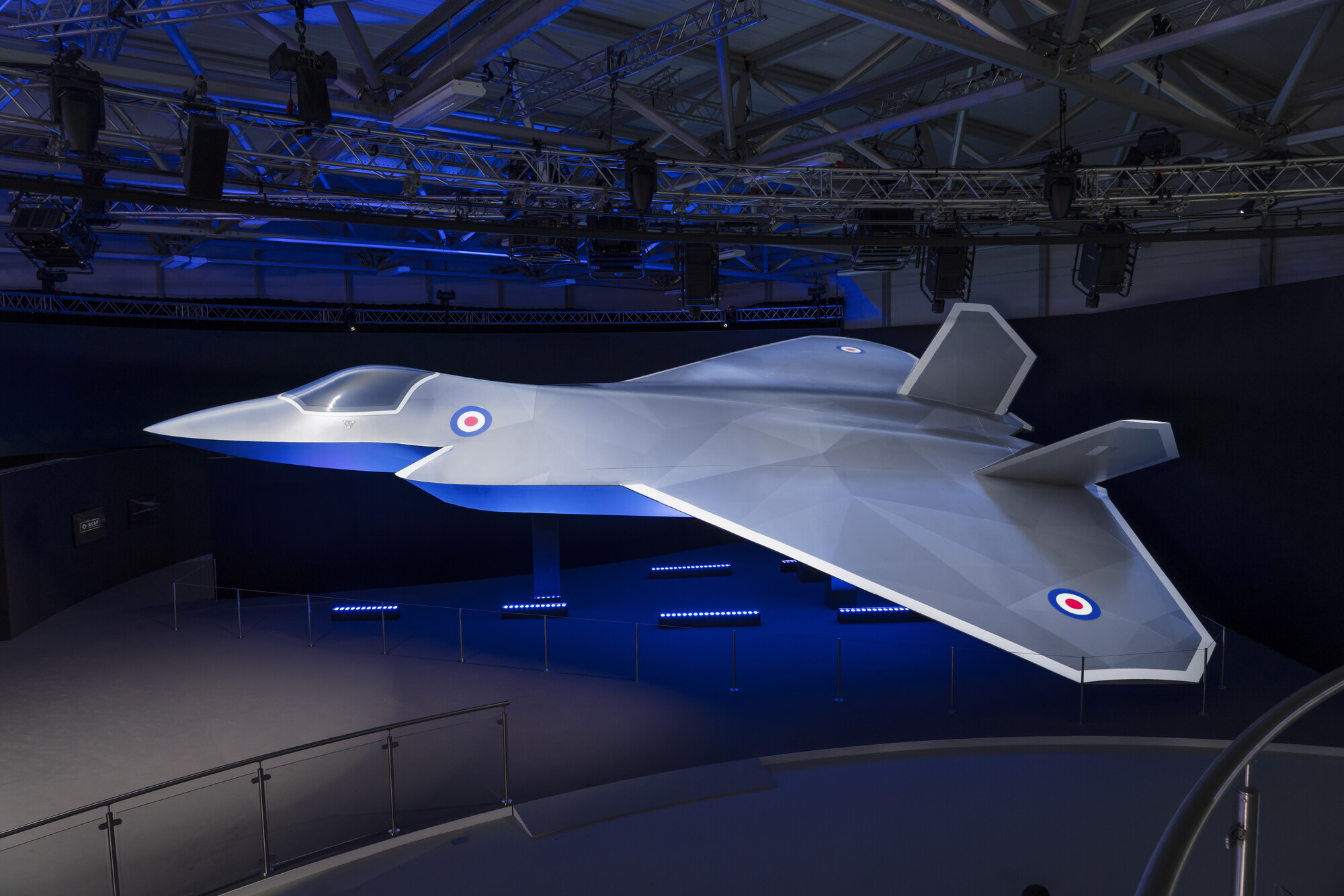
The Defence Committee has released a report on the Global Combat Air Programme (GCAP), acknowledging its potential while stressing the importance of meeting its ambitious in-service target date of 2035.
GCAP, a collaboration between the UK, Japan, and Italy, aims to design, manufacture, and deliver a next-generation crewed combat aircraft.
With increasing pressures on the defence budget, the Committee emphasised the need for strict cost control and transparency. It urged the Government to adopt a multi-year funding approach to provide stability and instil confidence among international partners.
“There must be transparency around the programme’s budget, and information on costs should be made available to Parliament and the public as GCAP proceeds,” the report noted.
The report highlighted the critical importance of maintaining a skilled workforce, especially transitioning those working on Typhoon production to GCAP. With the Typhoon’s production winding down and Tempest’s full-scale production yet to begin, workforce retention is a significant challenge.
“The MOD should work with those skilled workers, including those currently working on Typhoon, to bring them onto GCAP,” said Chair of the Defence Committee, Tan Dhesi MP. He added that the failure to fully leverage the success of the Hawk trainer aircraft was “remarkably short-sighted and deeply regrettable.”
The Committee described the 2035 target as ambitious, calling for empowered delivery structures to ensure timely and decisive action throughout the programme.
“GCAP must break the mould of multilateral defence programmes often plagued by soaring costs and delays,” Dhesi stated. “We have a window of opportunity now, at this early stage, to make choices that set the programme on the right track.”
Dhesi underscored the strategic importance of GCAP: “The world is an increasingly volatile and dangerous place, and new air power capabilities – such as those promised by GCAP – will be essential if we are to meet the challenges ahead.”
He concluded by emphasising the role of the workforce: “The UK’s proud history in combat air manufacturing is rooted in its workforce: it’s people that will be key to the success of GCAP, and the MOD must ensure that they are prioritised.”
Despite this, the report sets out several positives about the Global Combat Air Programme (GCAP), including:
- International Collaboration:
The partnership between the UK, Japan, and Italy is praised as a significant step forward in international defence collaboration. The Defence Committee notes the depth of Japan’s and Italy’s commitment and technical capabilities, which inspire confidence in the programme. - Strengthening National Sovereignty:
GCAP is positioned as a critical programme for retaining the UK’s national sovereignty in combat air, ensuring the country maintains a vital military capability in an increasingly volatile global environment. - Economic Opportunities:
The programme is seen as a driver for industrial growth, providing opportunities to deepen relationships with allies and strengthen defence industrial capacity. The Defence Committee acknowledges the potential for the UK’s defence industry to attract new talent and capitalise on the technological advancements tied to GCAP. - Commitment to Timely Delivery:
The early recognition by all partners of the importance of avoiding delays is a positive sign. Lessons learned from past programmes, such as Typhoon, appear to be informing better decision-making processes. - Future-Proofing Capability:
The report highlights that GCAP aims to integrate advanced technologies such as artificial intelligence and Autonomous Collaborative Platforms (ACPs), ensuring the system remains adaptable to future operational and technological changes. - Skilled Workforce Development:
While workforce retention is flagged as a challenge, GCAP offers a significant opportunity to attract and train new talent, ensuring the long-term viability of the UK’s combat air sector.
These positives demonstrate that, despite the challenges, GCAP has the potential to provide both strategic and economic benefits









If government doesn’t want GCAP to go off the rails it needs to
a) put up the money
b) avoid changing its mind and interfering
c) not cancel or withdraw from the programme
d) order some planes
Yes, it will cost more money than they had been led to believe, but anything they do to “help” will make matters ten times worse. They must just grit their teeth and look forward to worldwide sales in the 2040s.
It will cost more money that they originally believed, but far less than abandoning the project halfway through and then seeking an off-the-shelf alternative from the US, ala Nimrod MR4.
Just push through any difficulties and see it through to completion.
Sunk cost fallacy.
Not really.
The combined costs we put into the Nimrod MRA4 upgrade, and then into purchasing the P8 Poseidons after we scrapped the upgrades, were a lot higher than had we just grit our teeth and continued on.
What I’m saying is that, rather than just reacting to rising costs and having a knee-jerk reaction, we need to look at a project, such as Tempest, and assess whether, even with rising costs, it’ll cost more to scrap it and buy American etc planes off the shelf.
And not just the immediate financial costs, but also costs to UK industry and our ability to produce weapons and munitions for ourselves. If we go down the route of getting everything off the shelf then we’re at the mercy of our supplier countries.
Delays to F35 production and delays to integration of UK preferred weapons being a worked example of the limitations of non sovereign programmes. UK being a tier 1 production partner doesn’t seem to mean much when TR3 and Block 4 are in distress.
A Grippen style software architecture that separates flight controls from Defencive and Offencive systems so enabling best value flexibility seems obvious given that distress.
Having one supplier in control of all the software on the grounds of national security seems like a big mistake by JSF Programme Office. A genuine multinational effort suggests that approach can’t work so a more open architecture will be required even if components are black boxes.
Sunk cost is not a fallacy . However there is a big difference between an industrial project and a military project, especially one that is cutting edge and being designed and built to meet a future need.
Or put another way out anti British civil service will scupper the whole project by sticking in more managers, more controls, more reports and perhaps even more features, then claim it is too expensive Nd go and buy a more expensive inferior US one as they have done many times before (e.g. tsr2)
It is not very likely that the Americans will sell NGAD based on what happened with the F22
“There must be transparency around the programme’s budget, and information on costs should be made available to Parliament and the public as GCAP proceeds,”
One learning from the Joint Strike Fighter Programme (F35) is that such detailed transparency enables political oversight and interference. Further doing research and development of secure systems in public will add politics to the engineering challenges for more time and cost spent.
F22 was an example of political interference that cut short production so increasing unit cost. The inherent secrecy makes the value proposition weaker than reality so people looking for value for money are mislead to object to huge costs, unaware of the real value.
That most politicians have liberal arts education not STEM doesn’t help. PPE or Law background is no help for research and development Programmes.
While Tempest doesn’t have Joint (USAF, USN, USMC) requirements to complicate the design, build and test, there’s no certainty that UK, Japan and Italy have the same requirements. Compromise is inevitable to keep the Programme on time and budget. No idea if multinational is easier than interservice, but suspect not.
Interesting to look at other big Programmes for insights, for example, nuclear power. Magnox had dual use for power and nuclear weapons production so was done behind closed doors. Later generations were still research and development with production attached though not weapons. Public funding meant public oversight but probably not the correct understanding of research and development risks. Low rate production at best not serial production. That resulted in unwillingness to public fund nuclear power so to attempt risk sharing or transfer to private companies and their investors. Understandably that slowed innovation to a halt. The modular reactor approach enables a serial production approach with the research and development paid for from Defence (Nuclear submarines) so that risk and cost of risk are low. There’s even a benefit to small distributed power stations now that they are boringly reliable and don’t need to be sited on remote coastal places (Dunganess etc). However the illusion that modular reactor research and development costs are born by the company and not the public is not true since SSN are Defence spending. At least the third generation reactors are based on proven design and each generation has been operational to standards not just lab testing. However the research and development hasn’t really been separated from the production engineering commercially so not quite a model to follow for Tempest.
Long term commitment is critical to retaining partnerships. You can’t expect others to commit long term if you don’t. Im sure, given significance of this, that MOD / treasury will do the right thing. US has real potential to be highly unreliable over coming years. Never be a better opportunity for this project / UK to establish significant long term international partnerships that will pay back.
This will not be in service in 10 years. 15 is ambitious, but 10 is just science fiction.
Invite the Saudis. Otherwise this is a dead duck.
Italy will leave the project shortly and the UK and Japan will probably end up leaving in due course. There is no funding for this.
You keep saying this, what is your source please?
More importantly what is his motive. When no evidence or reading is provided clearly almost certainly there are ulterior motives.
There is NOTHING in the Italian press to indicate they are nothing but fully supportive of the project. So this is twaddle unless you can provide the evidence to say otherwise.
The first hint of trouble ahead with funding. The treasury said this week that they would be looking at a five per cent cut in budget heads for all but the NHS and one or two others. Defence was not excluded from cuts.
it was suggested in the Guardian that both the NHS and Defence were excluded from the 5% cut
They were but now I can only comment on the exclusions mentioned Defence was not there so…?
Here we go. So it begins.
Meanwhile USAF expects anti aircraft missiles with more than 1000 miles range being operational in 25 years.
Sounds like a good time to invest in stealth aircraft, then.
What was that defence review back in the 80s/90s that claimed manned aircraft would be replaced by surface to air missiles?
Earlier than that, 1975. Duncan Sandys’
Earlier than that by miles – 1957.
Even more reasons as to why stealth is becoming the standard. 1,000 miles sounds like an ambitious sound bite, current long range missiles are really only designed for larger aircraft such as AWACS and tankers with maybe 300km ranges. Radars able to detect, track and target at those ranges will need to mature before any SAM or AAMs with those ranges can become reality.
Perhaps the biggest threat to GCAP would be the abandonment of USAF NGAD in favour of spirally developing F-35A. Financially, even this country could benefit temporarily more through this than through GCAP, at the expense of never building a first-class fighter jet again. Also the dependancy of this country on Lockheed Martin timescales would be exacerbated. Hopefully US pork-barrel politics makes this unlikely.
Biggest threat to NGAD is Ellon musk and his belief he knows everything
I encourage everyone to read the actual Defence Select Committee report. It makes for very interesting reading. The Defence committee have made a surprisingly well informed report. Including the point that what the U.K. spend on the development of Tempest will be repaid several times with direct sales of the jet and spin off from its tech.
Given the pressure the MoD will be under to spend north of 3% to meet NATO obligations , the money will almost certainly be there and I fully expect the Japanese will ensure that pulling out will come with heavy penalties and the damage to the U.K. reputation will ensure we are never in a defence collaborative project again.
The Specs of the Jet have been hammered out and agreed . If other partners are involved it needs to be Ona “ take it or leave it” basis ESPECIALLY the Germans . If they did jump ship they should BEVER be allowed to be in a position where they can cause the mischief they did with Typhoon. Most of the project delays and cost over runs were down to them trying to dumb down, neuter or pull out of Typhoon.
A sideline from all of this that has taxed my brain for some time now are the modern timelines. Now we all understand that we will never be in a position to churn out new “Spitfires” at a dozen a day as in WW2 but the reality is that if war breaks out tomorrow, we have a hundred plus Typhoons and a handful of F35s and that is it!! There is no way that losses can be quickly covered if at all! which brings me to my second point-15 years until we have operational Tempests??!!! Surely there must be a quicker way or easier option?
24 more Typhoons is the obvious route — if there’s the money for them.
I’d be happier with another 60, but I realise that’s fantasy.
Regretably this will never see the light of day.
Paper exercise to look like they are doing something.
No funding for a project that would sell tiny numbers.
Cancel it now and end the shenanigans
Source?
The implications of that would be economy shattering, ai, electronics, micro processors, materials, skills almost everything would be severely damaged and as I will say again Bae will become US headquarter investor very little here and RR will probably go bust. High technology will pretty much disappear other than niche areas like F1. Oh and we will never be allowed into a serious cooperative project as anything other than a tea lady ever again and British self confidence and self flagellation will make the place a basket case eventually and a new massive brain drain as we fight to be considered as anything better than Costa Rica by the US. I doubt they would even offer us State status probably something akin to Diego Garcia with Farage as Governor to rub it in if we are lucky.
Just keep buying F35’s
They work and are available.
By the time the uk sixth Gen is ready piloted fighters will be history
Do those two aircraft carriers work properly yet?
Ajax vehicles??
Leave it to the Americans
They don’t work as intended. Tech Refresh 3 has slipped again and block 4 upgrade has disappeared over the horizon. There is now considerable doubt that full block 4 will ever be achieved, meaning that integration of Meteor, Spear 3 and even ASRAAM internally may never happen. To avoid serious damage to the airframe and coating, supersonic flight is limited to a few tens of seconds. And despite LM promises, support costs are not falling.
GCAP has to avoid the software omnishambles of the F35 programme or it will fail.
Utter rubbish.
And what do you propose we adopt instead? Don’t just say “cancel it” without offering an alternative.
nn
A mistake please ignore
The NGAD design looks futuristic, Tempest looks like a1960’s canoe.