

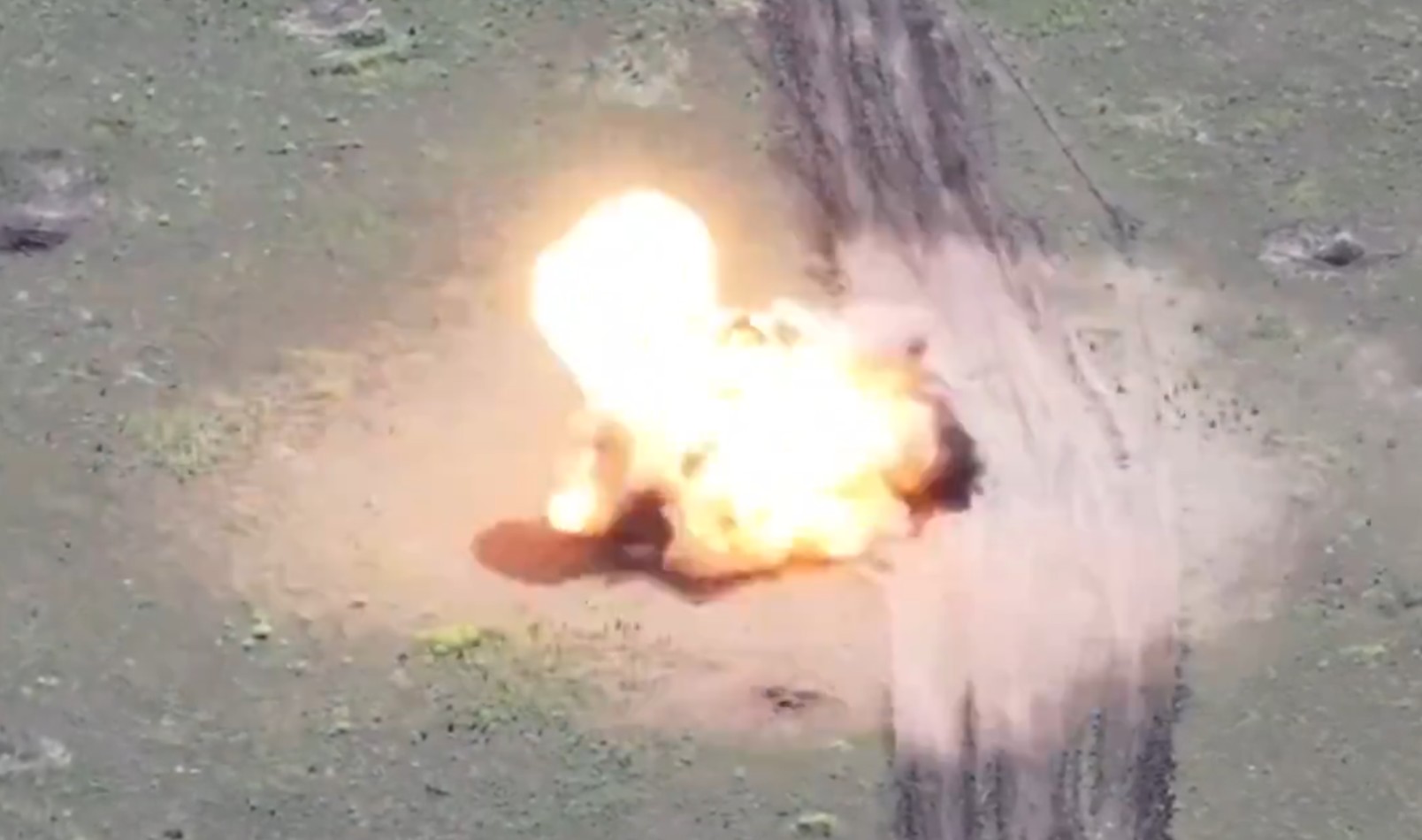
The war in Ukraine has demonstrated that drones and autonomous systems are transforming warfare at a pace that risks outstripping traditional military thinking, defence experts warned MPs, cautioning that dismissing Ukraine’s experience as unique would be a serious strategic error.
Giving evidence to the Defence Committee during a session on the future of warfare, Air Marshal (Retd) Edward Stringer said the lessons of Ukraine extend far beyond individual technologies and point to a deeper failure to adapt national thinking to modern conflict.
“The lessons of Ukraine have to be evaluated by an independent commission,” he told MPs. “It can’t be left to the Ministry of Defence, because people are already cherry-picking lessons that support cherished programmes.”
Stringer argued that the conflict has exposed the central role of industry, logistics and national mobilisation, not just frontline systems. “This war is about the power of industry, it’s about railways,” he said. “We’ve drifted out of the habit of thinking about national mobilisation and resilience since 1989, and that intellectual rearmament is now overdue.”
When pressed specifically on drones, Stringer rejected claims that Ukraine’s experience could be discounted as an anomaly. “I am quite staggered that I still hear officers say, ‘we wouldn’t fight like the Ukrainians’,” he said. “That strikes me as complacent and rather arrogant.”
While acknowledging that future wars would not look exactly like Ukraine, he stressed that its core characteristics would carry forward. “The future of warfare certainly involves a lot of what you’re seeing in Ukraine, adapted for future theatres,” Stringer told the committee, pointing to Israel’s recent operations as evidence of how conventional capabilities are increasingly blended with drone, cyber and intelligence-led systems.
“At the moment, I don’t see that blend of thinking applied to the way we do force development,” he added.
Dr Keith Dear, CEO and founder of Cassi, warned that much of the current debate still underestimates the pace of technological change, particularly in autonomy and artificial intelligence. “We started with people saying drones didn’t really matter,” he said. “Then suddenly they mattered, but only as an adjunct to crewed systems. That fundamentally misunderstands the rate of progress.”
Dear said advances in AI were accelerating faster than most defence planning assumptions allow. “We’ve gone from agentic capabilities doubling every seven months to doubling every four months,” he told MPs. “In 2023, AI could do tasks taking humans 30 seconds. Last year, tasks that take humans an hour. On current trajectories, by 2029 it could complete tasks that take a human a full working year.”
He warned that betting on limits to autonomy was increasingly risky. “Any assumption that autonomous systems will only have a limited impact by 2030 is a large bet against AI progress,” Dear said. “So far, everyone who has bet against that progress has been wrong.”
Sir Hew Strachan, Professor of International Relations at the University of St Andrews, cautioned against focusing too narrowly on drones at the expense of broader structural lessons from Ukraine.
“There’s a tendency to say, ‘this isn’t how we would fight’,” he said. “Of course we would try to avoid a protracted war of attrition. But the real question is whether we could.”
Strachan argued that Ukraine’s experience highlights unresolved challenges around manpower, mobilisation and economic endurance. “Ukraine still hasn’t got a fully effective system of conscription or a whole-of-society approach to mobilisation,” he said, adding that economic warfare and industrial sustainability were as decisive as battlefield tactics.
Despite these pressures, he pointed to one area where Ukraine had succeeded. “They fought a brilliant information and propaganda war,” Strachan said. “Internationally and domestically, they prevented the kind of internal collapse many expected.”




And the flip side is you bet heavy on AI and autonomous capabilities, disinvesting in traditional capabilities and get caught with your trousers around your ankles.. in some cases were the stakes are very high you must be conservative.. Ukraine in the end had no other option.. the simple truth is if it had had significant traditional fast air with SEAD/DEAD and was able to own its own airspace.. there would have been no Russian formations left to hit with drones.. so yes drones are import but like everything they do not replace.. armour did not replace infantry, AirPower did not replace armour etc..
I doubt HMG will agree. A perfect get out clause and assume much cheaper too.
UAVs are airpower, a key part of combined arms operations, the land/air battle, since 1918.
The key to not having to fight a land/air battle is a verifiably credible conventional deterrent, of which drones are but one part.
That conventional deterrent assured ‘The Long Peace’ in Europe 1945-2014.
Quite how any British government can think that a similarly long peace can be restored in Europe without such a deterrent is beyond me.
British governments sre uniquely effective in emulating ostriches when it comes to defence spending.
They are also uniquely effective at loitering over the battlefield looking for valuable targets to crash themselves into.
Yes indeed they are a valuable adjunct…. But heavy on the adjunct.. they are not the answer they are an extra part of the answer..
It’s quite annoying how little attention the forces have devoted to SEAD/DEAD. Russia’s air defence systems are one of the main impediments to our gaining complete superiority over them (IIRC Pantsir outranges lobbed Paveway) and yet it fell to MBDA to introduce the DEAD role for Stratus RS while Spear EW and Spear 3 are endlessly delayed. Tempest is supposed to be designed quite a lot around the DEAD role but the effectors just haven’t been made yet.
There are very few air defence systems that cost less than £10M so I can’t see why a Meteor ARM was never developed, it would be just about the most capable of its type out there given the throttleable propulsion.
Failing that we should load the EW equipment that’s going into the Stormshroud drones into the Vampire platform, to give them twice the range and three times the speed for better use in strike missions.
That’s what I can think of off the top of my head, I’m sure there are many other options for SEAD that we can do from our current position.
I believe we have discussed a Meteor anti-radiation capability before. Personally I think the only reason why it hasn’t been done, was that no one was willing to stump up the cash. I’m sure MBDA have looked into this, but they won’t develop the concept past a model unless someone funds it. There was a thought that adding the AESA seeker from the AAM4-B, as part of the joint JNAAM program. The missile would have had a secondary anti-radiation capability. Sadly JNAAM petered out, but has allegedly been replaced by something else, so who knows?
One obvious choice from me, would be Qinetiq’s Banshee Jet 80+ fitted with Leonardo’s Britecloud. As it has a higher speed than the Stormshroud, meaning it would have a reduced time to target if a threat popped up, like a mobile SAM system.
Meteor is getting various midlife upgrades, not sure if any of them include an AESA seeker but it would be sensible. What would be ideal is a missile equivalent of the ECRSmk2 ‘multifunction array’ that could do all of the different functions like ECCM, home on radiation, home on jam and all that jazz.
STRATUS will be very capable in its ARM mode but also much more expensive and heavy to carry than Meteor or any possible derivative, of which something like Tempest would be able to carry 6-10 depending on the bay arrangement they go with.
“The lessons of Ukraine have to be evaluated by an independent commission,” he told MPs. “It can’t be left to the Ministry of Defence, because people are already cherry-picking lessons that support cherished programmes.”
Interesting that he does not trust the MoD Centre to impartially learn lessons from the war in Ukraine!
I remember a drone technician who said when interviewed, ‘Drone development is measured in days, not months or years.’
Future war? Fought by drones on land and sea, in the air, controlled by AI. My guess is that will be the quickest route to use of the nuclear option.
Counter drone is moving is also moving at pace:
‘Late last month, the company announced it had integrated five different sensors from five different companies into a coherent drone-detection system for a 1st Cavalry Division unit at the National Training Center on Fort Irwin, Calif. The disparate active radar, passive radar, and acoustic sensors were then able to feed data into the Army’s standard command system for battlefield air defense, Northrop Grumman’s FAAD-C2 (which itself is getting AI features). The software’s even smart enough to use the passive sensors to get an initial fix and only turn on the active radar — which emits a highly targetable signal — briefly for confirmation.
Picogrid did that project from a cold start in about four weeks, beginning with an unexpected email from 1st Cavalry Division leaders wrestling with a bevy of unfamiliar counter-drone technologies that didn’t work together’
03 Feb 2026
Aeroplane development 1914-18 also followed a swift development path, culminating in Allied air superiority during the Battles of Hamel and Amiens 1918. in combination with other arms, notably armour and counter battery artillery fire plans, close air support of the land battle made a major contribution to a decisive victory.
Drone/counter drone is part of today’s struggle for battlefield air superiority. Whichever protagonist successfully achieves low and ultra low level air superiority will once more be able to conduct combined arms manoeuvre at a tempo previously denied them.
Air Marshal Stringer unaccountably appears to have missed the very latest lesson in utilising UAVs in Ukraine:
‘Ukraine’s Armed Forces have established a new command to reinforce unmanned aerial system (UAS) operations against Russian kamikaze drones.’
It may very well be that a complete reorganisation of our three services is required.
I, for one, cannot see the Land/Air battle being effectively conducted in the future by two services, let alone three.
Cutting edge integrated digital C2 must surely now permit joint command across all three (or four?) services with fewer resources (a great deal faster, more effective) required than the present sum of independent service C2 systems that currently exist.