Apex Europe will bring defence leaders, industry and experts together in London this October to tackle some of the most urgent operational challenges facing allied forces, from autonomous warfare and deep strike to air defence and protecting critical undersea infrastructure.
Allied defence forces across the globe now operate in an era where advantage is dependent on the ability to innovate at pace. Conventional conflicts as we’ve seen with Ukraine are increasingly being shaped by autonomy, mass, speed and connectivity. Armed forces across land, sea, air and cyber domains face the recurring challenge of how to adapt to a constantly shifting technological landscape.
An upcoming defence trade show attended by industry leaders and experts across the globe seeks to bring these pressing questions into sharp focus this autumn. Apex Europe, held in parallel with Apex Defense, is set to have its inaugural show on 7-8 October at the Magazine London, one of the city’s premier event spaces near The O2 area. At its core, the programme centres around identifying, assessing and solving the most pressing challenges facing the defence sector and collective allied armed forces in an increasingly complex geopolitical landscape.
The Mission Sets have been curated around the leading problems facing the sector, each inviting select industry, government, military, and academia to address them.
Operational Problem A: Interoperability and Integration of Uncrewed Systems Across European and NATO
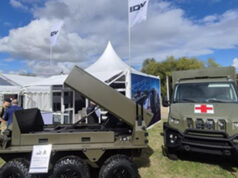
The first problem brings into focus the large-scale challenge of integrating crewed and uncrewed forces across domains. Countries across the globe have highlighted this enormous challenge, particularly with regards to optimising the balance between high-end and low-cost capabilities, coordinating cross-domain command and control as well as building resilience against cyber and EW threats. In the UK we’ve seen great emphasis in the Defence Investment Plan on the Carrier’s Hybrid Air Wing, or equally the loyal wingman of the RAF. For this potential to be maximised, autonomous systems must be interoperable.
Operational Problem B: Delivering Warfare Advantage Through Autonomous Mass
Similarly, the event aims to invite discussion on how to utilise autonomy to gain decisive operational advantage. Autonomy changes the economics of warfare. The central question is moving from what a single exquisite platform can achieve to what a force can generate when hundreds or thousands of autonomous systems can be produced, deployed, replenished and replaced at speed. Mass, however, is not simply a matter of acquiring more platforms. It requires resilient supply chains, common architectures, software that can be updated rapidly, distributed command and control, and an industrial base capable of absorbing wartime demand. This will factor in sustaining autonomous operations under contested conditions as well as the adaptation and iteration at the speed of the frontline.
Operational Problem C: Generating Combat Power Through Deep Precision Effects
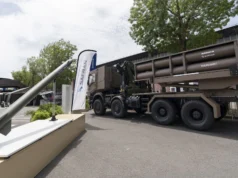
Long-range precision strike is becoming less about individual weapons and more about the ability to build a persistent, responsive system for generating effects at depth. Precision depends on the resilience of the wider architecture: radar, intelligence, communications, targeting and battle management must continue to function when the adversary is actively trying to disrupt them. The strategic opportunity is to think beyond inventories of missiles and strike platforms and towards an integrated deep-effects enterprise – one capable of creating dilemmas across an adversary’s system rather than simply hitting individual targets.
Operational Problem D: Countering Undersea Threats and Protecting Critical Infrastructure
Another mission set central to Apex Europe this year is countering undersea threats. As the seabed becomes a frontline, protecting energy pipelines, communications cables and other critical subsea infrastructure requires far greater awareness of what is happening below the waterline. The event will explore how to detect, track and neutralise undersea and hybrid threats, maintain persistent surveillance and deny access to critical infrastructure, and deploy layered sensing, precision effects and resilient architectures to sustain advantage in contested maritime environments.
Crucially, this challenge extends beyond traditional anti-submarine warfare, requiring closer integration between navies, governments, infrastructure owners, industry and autonomous systems. Later this year, Undersea Defence Technology (UDT) Australia is due to have its inaugural event in Adelaide, further reinforcing the importance of the subsea environment.
Operational Problem E: Countering Low-Cost, Rapidly Proliferating UxS Threats
Apex Europe will also address the growing challenge of low-cost, rapidly proliferating threats from uncrewed systems. The focus will be on detecting and discriminating small, low-signature threats, while balancing layered and cost-effective defeat mechanisms. Discussions will explore the role of attritable and mobile C-UxS capabilities, alongside greater integration of cross-domain and allied counter-UxS operations to deliver a scalable and sustainable defence against increasingly accessible autonomous threats.
Operational Problem F: Enhancing Layered and Integrated Air and Mission Defence Across Domains
Modern air and missile defence is increasingly a problem of integration rather than individual systems. The focus will be on 360-degree surveillance and real-time threat identification, cross-domain integration and adaptable, scalable engagement mechanisms across the threat spectrum. At the heart of this is resilient command and control – connecting sensors, effectors and decision-makers into a coherent architecture that can respond to complex, saturated attacks while preserving high-end capabilities for the threats that demand them.
Operational Problem G: Fighting in Denied, Degraded and Contested Battlespace
The final mission set addresses the growing reality of fighting in a denied, degraded and contested battlespace, where connectivity and access to information can no longer be taken for granted. The focus will be on spectrum management in an increasingly congested and contested electromagnetic environment, accelerating tactical EW adaptation, and building cyber and EW effects at scale. Alongside this, forces must be able to exploit and sustain access to space for command, control and targeting – maintaining decision advantage even when networks, data and communications are under constant pressure.
What this is all about
These Mission Sets represent Europe’s most pressing operational priorities and point to a broader shift in the character of warfare that must urgently be addressed. The issue is not simply acquiring more autonomous platforms, longer-range weapons or additional air-defence systems; it is building a force that can connect those capabilities, generate them at scale and continue operating when an adversary attacks the underlying architecture. Technological advances are key, but technology alone will not determine outcomes. Industrial capacity, interoperability, software, doctrine, data and operational experimentation are becoming inseparable parts of combat power and will be central to the discussions at Apex Europe’s inaugural event this October. The advantage will go to those able not only to field better systems, but to adapt, integrate and regenerate them faster than their adversaries.
Apex Europe forms part of a dynamic technology event series that puts near-term operational needs at the heart of the programme and exhibition; held in parallel with Apex Defense (January in Washington, D.C.)
Brought to you by the organisers of major international military and industry events such as DSEI Germany, DSEI Japan, and DSEI UK.