A new FQ-42 Vengeance Collaborative Combat Aircraft has been delivered to Creech Air Force Base in Nevada, where it will join US Air Force test and evaluation work on the service’s future uncrewed combat aircraft programme, according to General Atomics Aeronautical Systems.
The aircraft arrived at Creech on 18 September and will be used for further experimentation with the FQ-42, one of the designs being developed under the US Air Force’s Collaborative Combat Aircraft programme. GA-ASI was selected in April 2024 to build production-representative flight test aircraft, with the FQ-42 making its maiden flight in August 2025 before the company was selected for an initial production contract in June 2026.
Mike Atwood, GA-ASI Vice President of Advanced Programs, said: “The CCA program’s rate of progress has been incredible. Every week, the Air Force is pushing forward with new and more impressive accomplishments using Vengeance. It’s amazing to think of how far this program has come in such a short amount of time.”
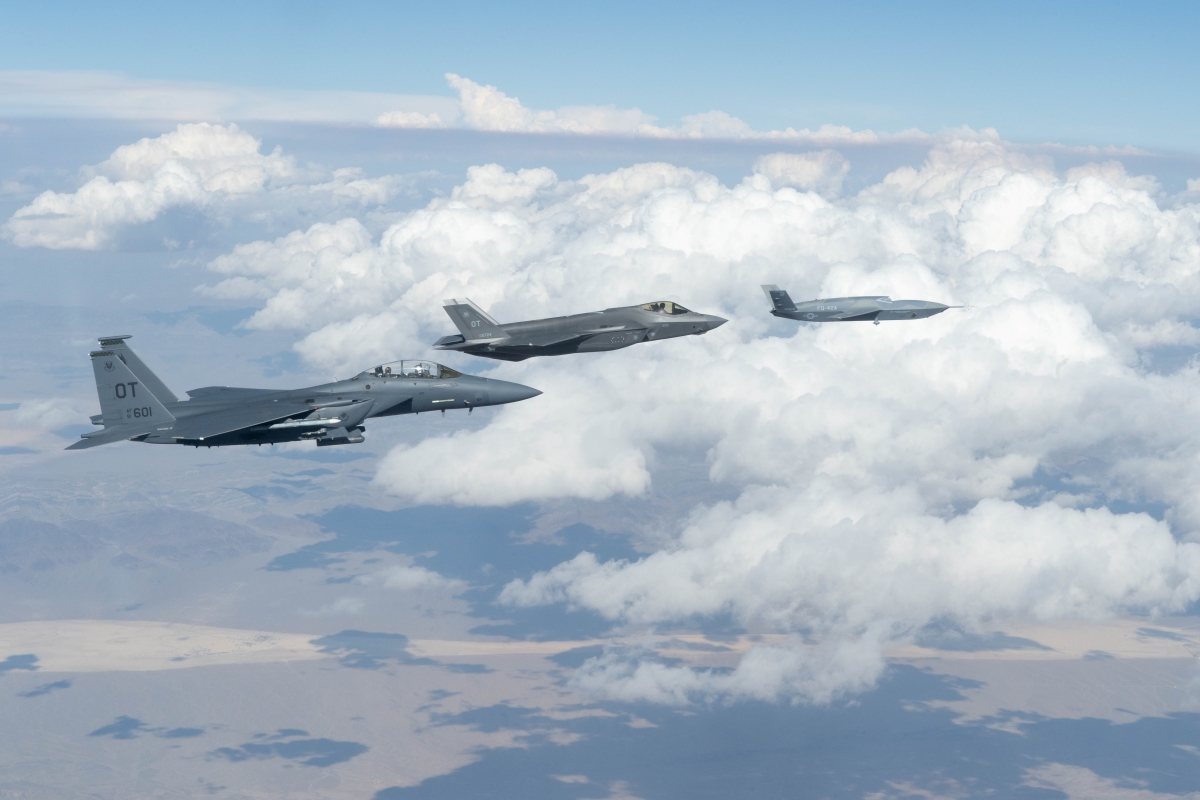
The FQ-42 has already flown in formation with F-35 Lightning II and F-15E Strike Eagle aircraft as preparations continue for collaborative operations between crewed and uncrewed platforms. GA-ASI said its wider experimentation has also involved the XQ-67A Off-Board Sensing Station and MQ-20 Avenger, with aircraft flown semi-autonomously and autonomously using different artificial intelligence pilots and under collaborative control from pilots flying F-22 Raptors and F-35s.
GA-ASI describes the FQ-42 as a low-observable uncrewed combat aircraft with an internal weapons bay and features intended to improve survivability. Further work will build on demonstrations previously carried out with the MQ-20 Avenger as a CCA surrogate, allowing collaborative control concepts to be tested alongside the main US Air Force development programme.
GA-ASI has completed a new low-observable paint facility for the programme and says it is positioned to deliver up to six aircraft a month to meet US Air Force requirements, with additional manufacturing space available if orders increase. The company is also using its own funding to continue FQ-42 production while government funding plans develop, and intends to build aircraft for its own fleet to support further testing and technology development.
The FQ-42 and XQ-67A are both derived from GA-ASI’s Gambit family of uncrewed combat aircraft, which uses a modular design intended to allow sensors, weapons and autonomy software to be integrated without major changes to the underlying airframe. The XQ-67A was developed with the Air Force Research Laboratory and has served as one of the flying predecessors to the FQ-42 programme.