

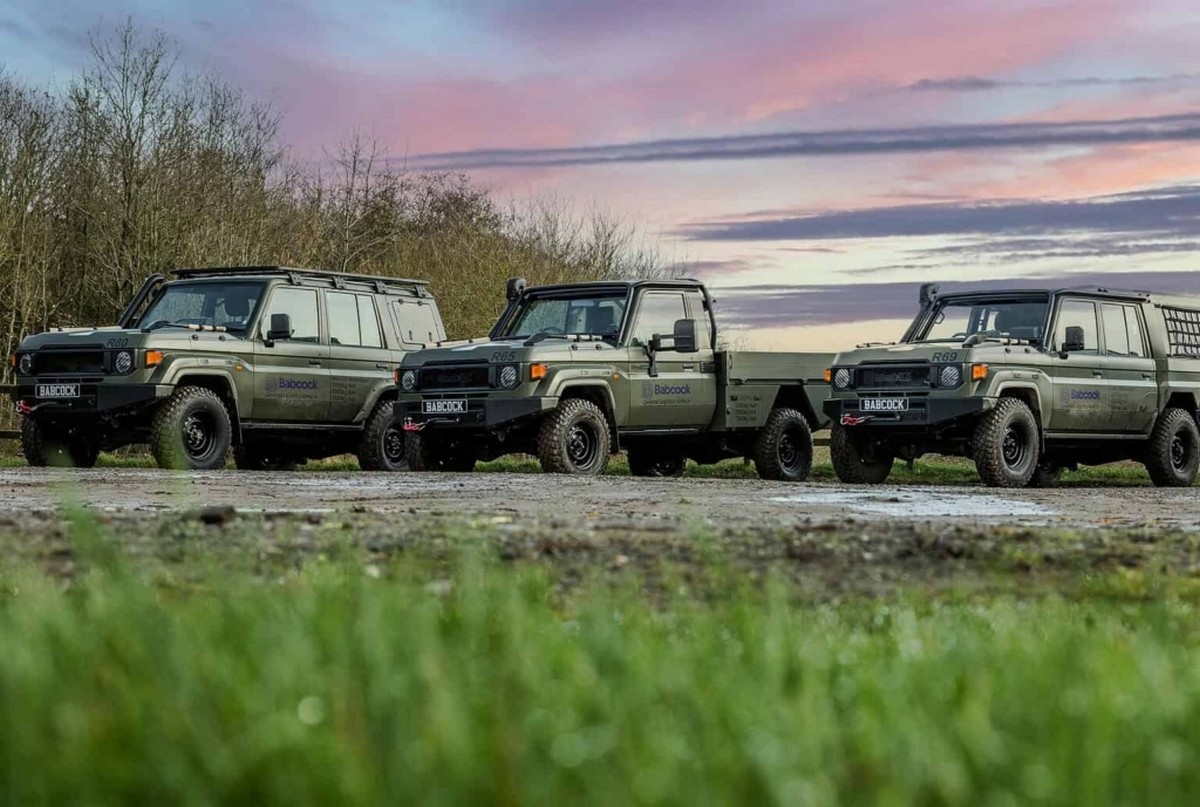
The Devon vehicle builder Supacat has been shortlisted for the trials stage of the competition to replace the British Army’s Land Rover fleet, working in support of Babcock International, the company stated.
The Light Mobility Vehicle programme will provide a modern light vehicle in several variants to take over from a fleet that has served since the 1990s, and forms part of the wider Land Mobility Programme. Supacat puts the competition at around £2 billion before VAT, potentially covering more than 9,500 vehicles, which makes it one of the largest land equipment buys the Army has run in years.
Babcock’s entry is the General Logistics Vehicle, a family based on the Toyota Land Cruiser 70 Series and offered in medium wheelbase, long wheelbase and utility versions. The two firms signed a memorandum of understanding earlier this year to work together on the bid, and have committed to delivering a sovereign capability underpinned by a British supply chain.
Phil Applegarth, director and head of Supacat, said: “We are delighted to be through to the trials stage in support of Babcock. The Land Rover has been the Army’s workhorse for generations and replacing it is a serious responsibility.”
Nick Ames, chief executive of SC Group, said: “This is very welcome news for Supacat and for our workforce and suppliers in Devon and across the UK. The LMV programme is an opportunity to build the Army’s next light vehicle in Britain, with a British supply chain, in line with the Defence Industrial Strategy.”
The partnership follows work the two companies did together on the Jackal 3 programme, and Supacat says it has delivered more than a thousand vehicles into service around the world over four decades.







Another bidder claiming a foreign built vehicle is somehow British because they slapped a Union Jack sticker on it.