

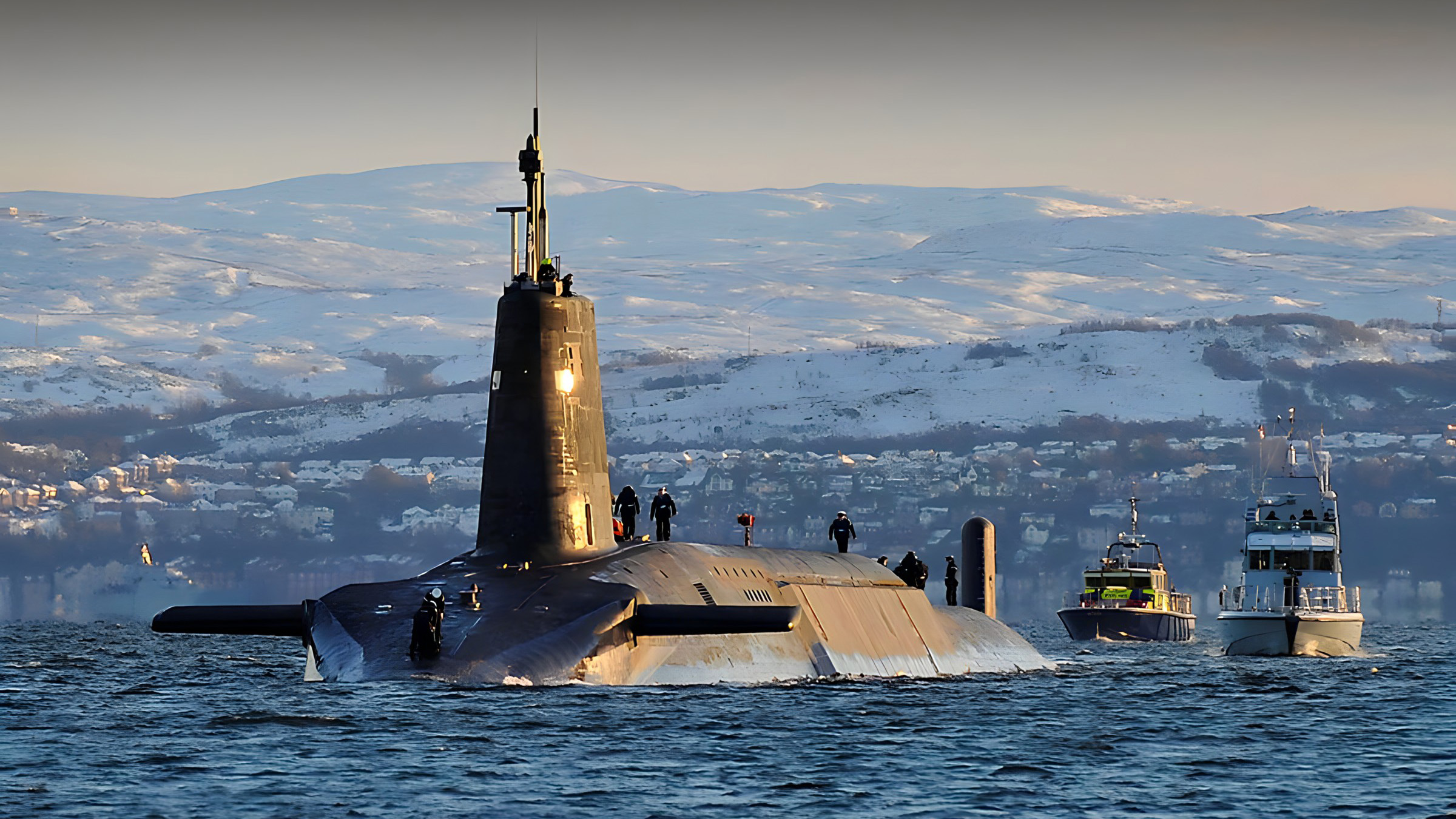
The Government has reaffirmed that the United Kingdom does not operate a formal “no-first-use” nuclear policy, instead maintaining a position of deliberate ambiguity intended to support deterrence.
Speaking in the House of Lords, Lord Coaker said the Government continues to hold to a long-standing approach on nuclear use, responding to concerns raised by Plaid Cymru peer Lord Wigley about the morality of first use. Lord Wigley asked whether it remained government policy to reserve the option of using nuclear weapons in response to a conventional attack, describing such a stance as morally unacceptable. In reply, Lord Coaker did not set out any change to policy, instead underlining continuity with previous governments.
“Of course, the Government’s position is to maintain the position that we have had over many decades,” he told peers. He added that the existence of the nuclear deterrent was linked to the protection of democratic freedoms, noting that open debate itself was enabled by national security. Successive governments have stated that the UK would only consider the use of nuclear weapons in “extreme circumstances of self-defence”, including the defence of NATO allies, but have deliberately avoided ruling out first use.
This policy of ambiguity is intended to strengthen deterrence by ensuring that potential adversaries cannot assume any form of attack would remain below the nuclear threshold. The UK’s position is aligned with NATO’s wider deterrence posture, which similarly avoids adopting a no-first-use commitment.
According to the House of Commons Library, the absence of an NFU pledge is seen by the UK and its allies as a means of preventing hostile states from calculating that they could launch large-scale conventional, chemical or biological attacks without risking a nuclear response. The Government has consistently argued that clarity about restraint, combined with ambiguity about thresholds, remains central to the credibility of the UK’s independent nuclear deterrent and to NATO’s collective defence strategy.





We’d have to be MAD to use them.
Given the vagaries of NATO’s main nuclear power we may need a major overhaul of our own nuclear policy and delivery systems. We should consider a significant increase of up to 500 warheads as well as an expansion of deliver systems including air launched cruise missiles and potentially road mobile IRBM’s.
The UK and France using their capability and potentially expanding nuclear sharing to Poland and Sweden may be the only way to prevent more countries going for nuclear weapons and the NPT collapsing.
The UK’s nuclear weapon capability is significantly more important to ENATO than any conventional force we may bring.
An airlaunched standoff weapon for both battlefield use and potentially for a similar “warning shot,” doctrine like the French have would be the best place to send resources for expanding the deterrence.
The biggest issue we have with Russia is that they have enormous stocks of tactical weapons (the bulk of their nuclear forces are low yield bombs desgined for striking battlefield targets not city killers). The issue we face here in a possible land confrontation is if Russia used a bomb to kill a few hundred British soldiers in Estonia insntead of engaging them directly for example how do we respond? Go straight to Trident and glass Moscow sealing the fate of humanity over a few hundred casualties in an area only a couple of kilometres wide affected, or do we ramp up conventional strikes which signals to Russia they could just do the same thing again without nuclear retribution or escalation and hand them a win in a land war.
In terms of mobile medium range ballistic missile or similar based in the UK is that we are to small a land area to benefit frorm such a system. Realistically, they would all end up being based in the same place as we are not building multiple places to house warheads or ballistic missiles and it would be so heavily monitored by satellite, spys and just general open source guys on the Internet that moving them and deploying them in secret would be impossible. They have no second strike capability due to being a extremely high value target and we would never launch a first strike anyway (and if we did the movement of them would be noticed immediately potentially warranting a response before they’re deployed anyway).
Air launch is more survivable and adaptable for multiple scenarios and gives us nuclear escalation abilities without going straight to ending the world, submarine launched weapons are by far the best all round options for MAD hence why it was retained but ground launched weapons just don’t work for a country with out geography and policies.
The reality is no matter our nuclear doctrine our deterrent is essentially a MAD deterrent nothing more nothing less.. the only ambiguity is we leave open biological and chemical weapons as triggering MAD.. but the UK could only ever use its nuclear deterrent as a response to a MAD level strategic attack ( be that nuclear, biological or chemical weapons) because we have no practical graduation of response we either fire the whole payload of our SSBN and functionally destroy whatever country we fire it at or we don’t respond with Nuclear weapons….
Now I know people will come back and say.. but we can fire one SSBM with one warhead.. NO we cannot.. the moment the Deterrent sub exposes itself it is at high risk of destruction and is no longer a strategic deterrent it’s a target.. the HMG used this as a way to get rid of the other elements of it triad and save money and then quickly dropped it as a solution…
So without a practical sub strategic nuclear option our nuclear doctrine and deterrent for a sub MAD attack by nuclear chemical or biological weapons is not really viable…
Not to mention we stick the warheads on before the submarines go out to sea and they will almost always be carrying more than one warhead per missile and so if we only use one of the warheads we have wasted all of the others on board that particular missile.
NATO policy has always been a strike first one. As an when it might give a tactical advantage or in desperation.
Primarily to take out Soviet tank armies and big arrow movements. Which is why Ukraine goes so slow to remove any justification for us to do something particularly stupid as we lose hands down.
But what the UK thinks it can do means nothing because unlike France we do not have an independent nuclear deterrent beyond gravity bombs.
So we are a glove puppet which is why we are desperate to keep NATO going far beyond its sell by date
Nothing you stated makes any sense & your knowledge of defence is seriously lacking, do some research! Are you an MP by the way?
Russia can turn all of the UK and it’s launch mechanisms into nuclear glass before any British assets will even be able to retaliate. 😂 😂 😂 😂
Sure it can. Considering it can’t even take put Ukranian assets, its unlikely it can instantly destroy all UK nuclear assets.
🤣🤣didn’t notice the mirv thing that is unstoppable and can launch 5 warheads at anything it wants then…
Any escalation with putler and our entire ,defenceless military would be gone in the first 10 minutes.
The UK couldn’t fight the Guernsey islands