


Britain is working to strengthen its defence industrial base and prepare for high-intensity conflict by increasing production capacity and reducing exposure to overseas supply chains.
In a written answer, Defence Minister Luke Pollard said the Strategic Defence Review requires the UK “to move to warfighting readiness” and that doing so means “increasing industrial production and capacity and adding resilience.” According to Pollard, the Defence Investment Strategy outlines how the Ministry of Defence intends to deliver those changes.
Pollard stated that the MOD is working to make procurement “more resilient, innovative, and agile,” and highlighted new efforts under both the Strategic Defence Review and Defence Industrial Strategy to test and stress supply chains. This includes “a collaborative wargaming capability focused on supply chain resilience,” designed to expose weaknesses before a crisis.
The minister added that work is underway on “surge capacity planning” as well as investment in UK-based production. He also pointed to circular-economy initiatives intended to secure critical raw materials and support “rapid production scaling during times of conflict.”
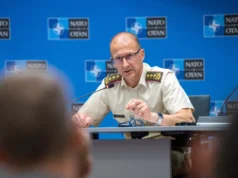
Yesterday, NATO Secretary General Mark Rutte warned that the Alliance is only at the start of a long effort to rebuild military readiness, telling reporters ahead of this week’s Foreign Ministers’ meeting that Allies must maintain momentum on deterrence, industrial output and support for Ukraine.
At a pre-ministerial press conference in Brussels, Rutte said ministers will assess progress since leaders agreed at The Hague to spend 5 percent of GDP on defence, including 3.5 percent on core military capability. He said this reflected a hard strategic shift: “That commitment to invest more in our security was a major leap which recognised our changing reality. But this is only the beginning of a long road, and we cannot be complacent.”
Rutte added that increased defence budgets will only be effective if industry can meet demand. “Increasing our investment is only truly effective if supply matches demand, and that’s why we are also rapidly scaling up production capacity,” he said, describing deeper cooperation with industry on both sides of the Atlantic as vital.
Ukraine will be central to tomorrow’s talks, with a meeting of the NATO Ukraine Council involving Ukrainian Foreign Minister Andrii Sybiha and the EU’s High Representative Kaja Kallas. Rutte reiterated that Allies are working toward what he called a just and lasting peace. He also condemned Russia’s intensified strikes on civilian infrastructure as winter begins: “Russia is systematically targeting civilian infrastructure, depriving Ukrainians of heat and light.”
He noted the role of states assisting Moscow: “Russia is not alone in this war, as China continues to be its decisive enabler and Iran and North Korea also provide support.”
Rutte said European and Canadian Allies have provided billions in equipment through PURL in recent months, and signalled that more announcements are expected. He closed by urging continued collective pressure: “Allies have shown they are already willing and able to work together to ensure we can tackle the challenges effectively, keeping our 1 billion people safe today and into the future.”







We’re doomed! Do you hear what I say? We’re doomed! We are not even stepping up production in “peace” let alone war.
A lot of confusing statements around ammo production. It’s strange that the US which is likely to be causing and or leading any major war is happy to provide details but the UK hides behind national security reasons.
We need clarity on whether production has increased or not and by how much and what is planned if anything to increase further. Exact numbers on current production can remain confidential but % change by year doesn’t need to.
The UK won’t be looking forward to the 5% assessment referenced above.
when the warsaw pact collapsed there were a large group of non-aligned country’s between NATO and russia, it’s NATO that have spread eastwards, despite the wests assurances to russia it wouldn’t, what would you think as an aggresive military alliance edged closer to your borders
you might also ask yourself what was the point of NATO after the collapse of the warsaw pact, why wasn’t it disbanded, rather than allowed to increase in size
it ain’t rocket science to see who the aggressors are !
What is the point of NATO. Since collapse of Russia empire and Warsaw pact. Russia has invaded Ukraine Georgia and Chechnya . As well as meddlINg constantly in other nations politics, IN FACT MEDDLING ALL EUROPEAN NATIONS POLITICS . Belarus an independent nation is now just a state of russia , exactly how russia would like Ukraine to go .
Its important to remember that the Eastern Europe nations who are independent nations chose to join Nato because the are tired of constantly being invaded by Russia and seek protection from Russian Aggression. NATO IS ALSO A NON AGGRESSIVE ORGINISATION . Nato only activates when a nation has been attacked by foreign aggression and requires assustance .
i see, so your saying russia should have allowed chechnya to break away, and, ignored the plight of russians in georgia, a former soviet republic, does NATO do that, in yugoslavia, libya, syria, etc, country’s that have never even been affliated to NATO !
and lets put to bed this ‘independent country’s can join nato if they like’ argument, that’s akin to saying if you want to join a golf club they must accept you, even if they’ve given the wider community assurances people from a certain district wouldn’t be allowed to join
you have to think outside the box you’ve been given by western media, read both sides of the propoganda war is a good start !
There’s nothing aggressive about a defensive alliance Vlad! 🤡
so are you saying NATO was defending itself from an attack by the former statees of yugoslavia, or libya, or syria ?
think for yourself, NATO is an aggresive expansionist block !
Ted,
Who was it (and when) who told Russia that NATO would not expand eastwards? No-one could have acted as the spokesman for the 17 countries who asked to join from the end of the Cold War. This is an urban myth surely, and one only trotted out by the Russians.
NATO is not an aggressive alliance – it has never invaded an innocent neighbouring country unlike Russia/USSR.
Does your last sentence suggest that this defensive alliance is an aggressor? Don’t you see that Russia/USSR has always been the aggressor mulitiple times (probably a dozen) from their invasion of Poland in 1939 to the invasion of Ukraine in 2022.
search on ‘nsarchive, what gorbachev heard’
so not an urban myth after all, and widely known in fact, as you must readily admit when you see the people and country’s involved, and yes nato is an aggressive alliance they attacked states of the former yugoslavia, libya, and syria when they were in no danger themselves
4 years of European war. The UK has not done diddly to get prepared for war nor has most of Europe.. and one wonders. Why other countries question the commitment