

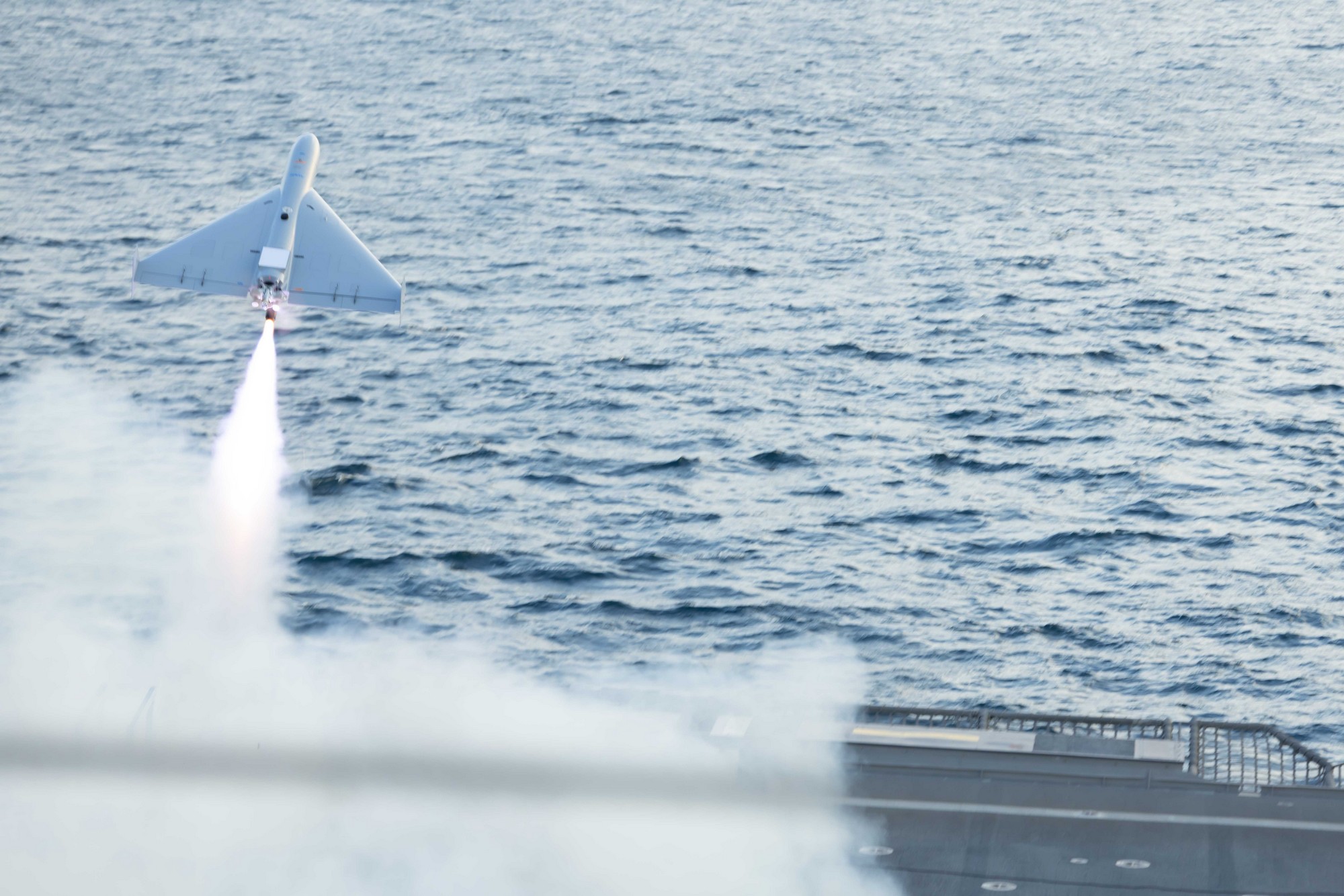
The U.S. Navy has launched a one-way attack drone from a warship at sea for the first time, according to the U.S. Naval Forces Central Command.
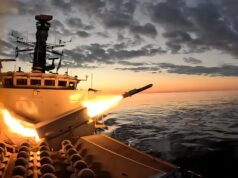
The milestone was achieved on 16 December when the Independence-class littoral combat ship USS Santa Barbara (LCS 32) launched a Low-cost Unmanned Combat Attack System (LUCAS) while operating in the Arabian Gulf. The U.S. Navy described the event as the first successful employment of a one-way attack drone from a naval vessel during operations at sea.
Vice Adm. Curt Renshaw, commander of U.S. Naval Forces Central Command and U.S. 5th Fleet, said the launch demonstrated the pace at which unmanned capabilities are being introduced into frontline service. “This first successful launch of LUCAS from a naval vessel marks a significant milestone in rapidly delivering affordable and effective unmanned capabilities to the warfighter,” he said, adding that the event showed the value of innovation and joint collaboration in the region.
The launch was conducted by Task Force 59, NAVCENT’s unmanned and autonomous operations task force, which has been responsible for integrating new uncrewed systems into maritime operations. The U.S. Navy said the LUCAS drone launched from USS Santa Barbara is part of Task Force Scorpion Strike, a squadron established to field one-way attack drones with U.S. forces deployed to the Middle East.
U.S. Central Command announced earlier this month that the first U.S. military one-way attack drone squadron had deployed to the region. According to the U.S. Navy, LUCAS platforms can be launched using a variety of methods, including ship-based launches, catapults, rocket-assisted take-off systems, and mobile ground or vehicle launchers.
Renshaw said the introduction of the capability would have a direct operational effect in the region. “This platform will undoubtedly enhance regional maritime security and deterrence,” he stated.
U.S. Naval Forces Central Command serves as the maritime component of U.S. Central Command and is responsible for naval operations across an area covering the Arabian Gulf, Red Sea, Gulf of Oman and parts of the Indian Ocean. The region includes several key maritime chokepoints, including the Strait of Hormuz, Bab al-Mandeb and the Suez Canal, which the Navy has identified as critical to global trade and security.





From a defending from strike point of view this sort of capability could become a real problem to defend against… when any small merchant can become a launch point for a strike, it’s a bit of a nightmare.. so many axis of potential attack, so difficult to track, it even becomes difficult to potentially see who ordered an attack…
Indeed as we already see if some of these ‘unknown’ drone incidents around Europe are indeed being launched from merchant ships. Very concerning that these things turn up over prized infrastructure even nuclear submarines in France and no one really knows for certain their origin, how they got there or who is behind them (as far as we are being told anyway). If these were one way attack drones it would be potentially disastrous. Let’s hope we are learning from these events.
One other point we are used to the US utilising weapons and technology first but frustrating that a weapon of this nature that almost any country can employ once again is first shown operational or in testing again by the US. Suggests a lack of urgency from others rather than lack of actual ability to achieve the capability.
Yes, as we had when Saudi Arabia’s petroleum facilities were attacked some time ago, with no official state claiming responsibility, but it clearly originated from Iran. It’s also a way of overwhelming a modern ship’s defences, using a low / high mix of drone waves with missiles. The increasing range of relatively low cost land based anti-ship missiles – DF-17 is about 1,600 kilometres – also poses a serious threat. One internet search suggests that the unit cost of a DF-17 might be as low as $2 million (which seems incredibly low to me), whereas a conventional prompt strike missile, with a range of something like 3,000 kilometres could be over $50 million each. So again, there’s that relationship between what a relatively simple technology can do ‘on the cheap’ that outweighs its relative low cost, especially compared to high-end / expensive western tech.
It’s more the spotting them before the launch as there are aways going to be way more targets than defensive systems.. a warship can be tracked and counter.. one merchant buried amongst all those other merchants..
Definitely a boost for the LCS’s, the long range gives them a much better standoff position. The “Cost-to-Kill” ratio will/should override their vulnerability, especially when the US sorts out and scales production.
The LCS has finished production
NSS! The LCS may have finished production, but they didn’t all vanish into thin air. Around 26 ships are still in service although, they continue to be decommissioned, especialy the Freedom class; the unwanted retirees, as the US Navy eliminates the problematic monohull Freedom class, while keeping the trimaran Independence class for their superior hangar space and stability in the Pacific. It is expected that they will keep around 15 / 20 Indies for mine countermeasure platforms and SW/C-UAS, I suppose any trouble free Freedoms might get to play as well.
My initial point was these ships were well known as “toothless” but the Lethality and Survivability (L&S) package will up their game. They are already being upgraded – the “unloved”Freedoms started with the RIM-116 Rolling Airframe Missile however the Navy is now switching the newer ships in that class over to the SeaRAM system as used by the Independence class and although the SeaRAM only holds 11 missiles, instead of 21, it has its own radar and sensors bolted directly onto the launcher. This allows it to find and shoot targets even if the ship’s main radar is damaged or jammed.
The L&S package will add NSM to the Freedom class, ships receiving them during their scheduled maintenance periods. The Independence class were already being fitted with them back in 2019. The Navy is testing MK-70 “containerized” missile launcher that can sit on the flight deck. This would allow an LCS to fire SM-6 missiles or Tomahawk cruise missiles, turning a small ship into a long-range strike platform.
And on top of all that now sits the Low-cost Unmanned Combat Attack System (LUCAS) matching the Tomahawk range – 1,350 Nautical Miles, roughly 2,500 Kilometers or 1,553.43 Miles. A “Hive” rack system with 5-cell or 10-cell racks launch racks that can be bolted directly to the LCS flight deck. Each drone uses a small solid-rocket booster to “leap” off the rail. Once it reaches flight speed, the booster drops into the ocean, and the drone’s primary engine takes over.
An Independence-variant LCS could realistically carry 3 to 4 of these racks on its massive flight deck, allowing for a 30-to-40 drone “alpha strike” in under five minutes. They say that the fleet-wide roll-out will rely on palletized RATO racks, because it’s the cheapest and fastest way to scale. The Navy doesn’t want a high-tech solution for a low-cost drone.
LUCAS- slow n steady, dirt cheap swarm.
Tomahawk – Fast n punchy, very expensive.
But your right the LCS has finished production.