

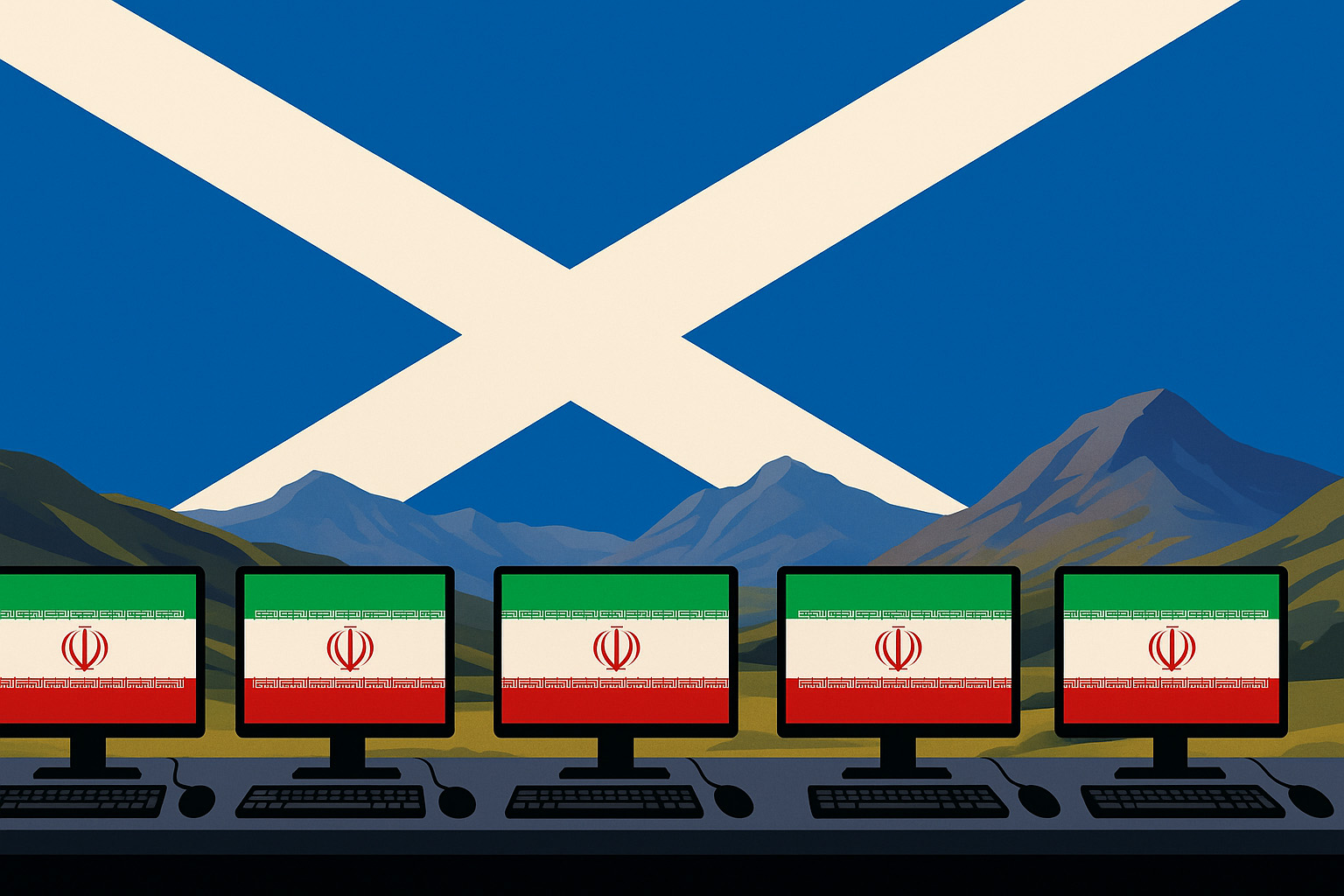
A network of social media accounts posing as Scottish independence supporters has fallen silent once again, closely mirroring a fresh shutdown of internet access inside Iran and reinforcing evidence that parts of the online constitutional debate are being manipulated from outside the UK.
The disappearance follows a brief surge of highly emotive and often extreme claims about events in Scotland, published in the days immediately before Tehran severed international connectivity. As with the Iranian blackout in June last year, the same accounts that had been posting intensively stopped almost simultaneously once Iran went dark.
Iran’s latest shutdown began late Thursday evening, when authorities disconnected the country from the global internet amid growing domestic unrest. International reporting described the move as a near total blackout, with even satellite services such as Starlink believed to be disrupted. Within hours, multiple X accounts claiming to be Scottish users ceased activity.
In the days before that silence, the accounts had escalated their messaging sharply.
One account, presenting itself as a Scottish independence supporter under the name “fiona”, posted a series of claims framed as scandals and emergencies. In one post, it alleged deliberate medical neglect, writing: “Scandal: Documents show Scotland received 20% fewer flu vaccines per capita than England this winter. The elderly in Glasgow were left vulnerable while stockpiles sat in London. This is calculated negligence. The Union is bad for your health.”
The same account then claimed political intimidation within universities, stating: “Student leaders reporting threats from university VCs: ‘Engaging in independence strikes may affect your degree.’ Academic blackmail orchestrated by funding threats from London. They are terrified of the student vote.”
It moved on to alleged covert military activity, asserting: “Reports that huge tracts of the Highlands represent being fenced off for a new UK ‘Drone Testing Range.’ No consultation with locals. Our beautiful landscape turned into a weapons lab.”
Another post alleged secret infrastructure projects and resource diversion: “Images surfacing of massive pipelines being constructed near the border. Rumor is they plan to divert water from the Tweed to drought-hit England by summer. First the oil, now the water. They will drain us dry if we let them.”
It also claimed immigration raids at medical facilities, writing: “Home Office vans spotted raiding a hospital accommodation block in Edinburgh at dawn. Deporting essential NHS staff during a winter crisis because of visa technicalities.”
Alongside these original claims, the account amplified content by reposting messages such as: “N.Ireland can #UnityRef Scotland can’t #ScotRef If we tolerate this then our children will be next” and polling commentary asserting: “Almost 75% of Scots now see themselves as Scottish not British. A sea change is taking place in Scotland.”
A second account, “jake” (@jakeq9170), which describes itself as a “Scottish lad” and “standing strong for #ScottishIndependence”, followed a similar trajectory before also falling silent. On 7 January, it claimed medical shortages, posting: “Pharmacists in Dundee reporting shortages of insulin and antibiotics. Suppliers admit they were ordered to prioritize stockpiling in the South East of England first. They are gambling with Scottish lives.”
The following day, it asserted financial panic in Westminster, writing: “Panic in London. Major investment firms are moving headquarters to Edinburgh in anticipation of the breakup.” It then described a fictional confrontation with an imposed authority figure: “Crowds have surrounded the residence of the newly appointed ‘Governor General’ imposed by London. He is trapped inside.”
One of its most extreme claims alleged media repression, stating: “Top BBC anchor resigned on air and was immediately detained by security services. Her last words: ‘Scotland is being silenced.’” Another post sought to evoke imagery of mass mobilisation: “Bonfires are being lit on every hilltop from the Borders to the Highlands. The ancient warning beacons are burning again.”
The account’s final message before falling quiet declared: “January 8th, 2026. The day the United Kingdom ceased to exist in the hearts of Scots.”
As Iran shut down internet access, the accounts stopped posting.
This pattern has been observed before. In June 2025, dozens of pro independence accounts went dark immediately after Iranian connectivity collapsed following Israeli and US strikes. At the time, Cyabra, a disinformation analysis firm, reported that “26% of profiles discussing Scottish independence were fake” and that “the bot network went dark immediately after the military strike on Iran on June 13.”
UK Defence Journal independently tracked a subset of those accounts and found that every one of them stopped posting during the blackout, resuming only once connectivity returned. Subsequent transparency data released by X later confirmed that the same cluster of accounts was connected via the Iranian App Store while routing traffic through European VPN infrastructure.
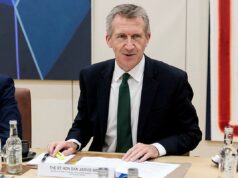
Government figures have already acknowledged the issue. Scottish Secretary Douglas Alexander previously said: “There’s been a lot of research in recent years indicating that there was Iranian activity in relation to the constitutional future of Scotland,” adding that a “significant reduction” in such activity followed previous strikes on Iran.
The existence of these networks does not invalidate Scotland’s independence movement, which continues to include many genuine supporters arguing their case openly. What it does demonstrate is how foreign influence operations can insert synthetic Scottish personas into a domestic political debate, inflating perceptions of crisis, consensus or mobilisation.
As Iran remains largely offline, the absence of these accounts may prove more revealing than their claims ever were.
This pattern has been on the record for some time. The initial reporting focused on a small number of accounts whose behaviour did not fit that of genuine Scottish users, and which fell silent in lockstep during Iran’s June internet blackout. Subsequent reporting expanded that picture as more data became available, including platform transparency indicators that later confirmed the technical link.
What is now being treated elsewhere as a developing story rests on groundwork that has already been published and documented. When later coverage relies on those same indicators while omitting the original reporting, readers are left with a distorted sense of how and when the story emerged. If you’re reporting our work, do give credit.



I’m sorry but how dare you blame Iran. It’s those evil buggers in Westminster have caught these patriotic Scots and are currently drawing and quartering them as they cry ‘FREEEEEEEEEEDOOOOOOM!’
So despite previous evidence, why has X not banned these accounts permanently.
Because has little interest in accuracy and facts – their drive is primarily ‘profit’.
Because some people don’t believe in censorship. It’s kind of a free speech thing, which I know is hard for most in Europe to believe. Think for yourselves. There’s obvious trolling everywhere but some people just can’t figure that out
What would be interesting is the fact Iran is actually a bit of a political warfare minnow, china has millions of political warfare staff. Imagine how many far right, far left, nationalists, antisemitic, incel, etc accounts would suddenly go inactive if we cut all Chinese and Russian linked accounts out as well..
I don’t think anyone really appreciates or probably understands the scope of the attack on our society.. any and all messages that create any form of conflict and divisiveness are being used in a massive way.. we have to look at why in the matter of 20 year has the US come to hate itself so much…and why we are heading that way.
It would be sound research if a government with guts was prepared, unannounced, to under a cut connections for a week or so. Then publish an analysis of the facts.
I believe yhe term is ‘Wumao’ for the CCP social media propaganda staff.
The Attention Economy is not healthy without foreign interference but muskrat will be delighted to yell Freedom Of Speech as a way to get more personal and corporate Attention. No, still not freedom to tell lies.
Ironic that his transition of Twitter minus Moderation equals X has been subverted by their own innovation on Location.
Of course VPN also subverts Location but presumably the tech bros are working on that because it drives their targeted advertising revenue. So quite dear to their hearts..
Clearly foreign interference can take many forms including media, people trafficking and funding politicians. However it’s obvious that kinetic war is much more expensive and risky than hybrid war as the FSB have demonstrated in many sovereign democratic nations. The old “Follow the Money” (Benefit) test is still a strong clue to actors and motivation.
Looking at USA, the weakness of media regulation is an enabler of misinformation and the misrepresentation of opinion as News, when only independently verified facts qualify for that identity, is an obvious failure. Faux News.
Only Constitution reform to prevent #47 foreign interference happening again will enable the eventual alliance rebuilding in the US national security interest.
America Alone is weaker and poorer until then…
I wonder if it’s the same for some Welsh independence sites masquerading as Welsh history sites, it’s absolutely full of stirring up anti English sentiment. I saw a site and I simply said ‘can’t we all get along’ and was told the Anglo Saxon DNA needs to be scrubbed off this island. Some of these sites look suspect and are there to wind up the Welsh to make them hate their brothers over the border. I almost feel like selling one of my 5 second homes in Wales.
Does that make you wonder about the identity management and location validation on this site?
Five second homes so ten council tax payments is really showing your love for Wales..