


British civil and defence drone manufacturer Windracers has announced that its dual-use heavy-lift unmanned aerial system, ULTRA, can now fly up to 2,000 kilometres in a single mission, a range comparable to the distance between London and Marrakesh.
The announcement was made at the Windracers LAUNCH 2026 event in central London, where chief executive Simon Muderack confirmed that the aircraft can be configured to carry a 200kg payload over the full 2,000km range. The upgrade builds on ULTRA’s existing long-range logistics and operational profile, which has already seen it deployed in some of the world’s most demanding environments.
Founder and chairman Stephen Wright said demand for the platform is increasing across defence, humanitarian, research and civil air cargo roles, with new missions scheduled to begin later this month. The event was attended by MPs, government officials and representatives from international research and innovation bodies.
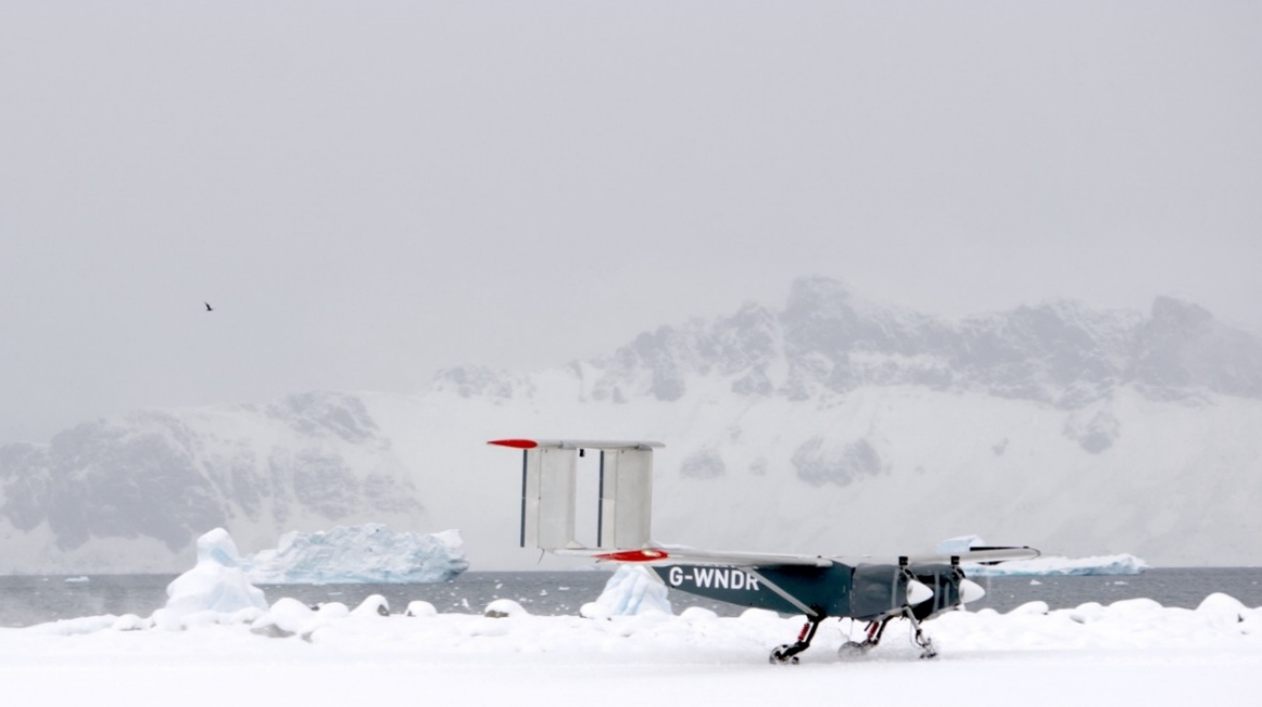
Demonstrations during the launch included a fully autonomous flight mission at Llanbedr Airfield in North Wales, highlighting Windracers’ focus on autonomous aviation and long-endurance operations. The company also showcased ULTRA’s drop-floor logistics capability, designed to support resupply missions in remote or contested locations.
Windracers’ head of engineering, Konstantinos Kontogiannis, confirmed that the aircraft can already carry more than 100kg over 2,000km, with the 200kg configuration expected to be available in the coming months. Head of manufacturing Joe Roberts outlined plans to scale production, with facilities being expanded to support the manufacture of hundreds of ULTRA aircraft over the next two years.
ULTRA is already in active use in regions including Ukraine, Alaska, Central Africa and the polar regions, supporting logistics, research and operational tasks in austere environments. The aircraft has also been deployed at Rothera Research Station in Antarctica, the UK’s largest research facility on the continent.
Stephen Wright said the new endurance milestone places ULTRA among a small group of long-range unmanned systems shaping future air operations. “With its combination of heavy-lift capability and 2,000km range now in development, Windracers ULTRA sits among a select group of long-endurance UAS that are redefining what is possible in both civil and defence operations,” he said. “Windracers is pushing the boundaries to make dual-use heavy-lift drones a cost-effective, reliable and safe aviation system for those who need it most.”
Simon Muderack said the company’s focus remained on operational relevance rather than technology for its own sake. “What we’re achieving with Windracers ULTRA is not just about the technology itself, but how it fits into wider operations and strategy to deliver missions that have a positive outcome on the ground,” he said.
The system has been described by government figures as a key British sovereign capability. Minister for the Armed Forces Al Carns said: “Operational endurance is key to any mission. Windracers’ new British-built heavy-lift drone, that can carry a 200kg payload over 2,000km, has it in spades.” He added that increased defence spending would help unlock further growth in the sector.
ULTRA has also been adopted by research organisations working in environmental and climate science. Cathy Cahill, professor at the University of Alaska Fairbanks and director of the Alaska Center for Unmanned Aircraft Systems Integration, said: “We chose Windracers ULTRA because of its proven ability to operate in extreme and remote environments. Using heavy-lift drones like ULTRA allows us to deliver vital goods and services to communities that are otherwise inaccessible, without putting pilots at risk.”
Windracers said the latest endurance upgrade reinforces ULTRA’s role across defence and civil domains, supporting logistics, research and operational resilience while contributing to the UK’s wider ambitions in sovereign unmanned aviation technology.







When was the last TUAS or MUAS of British design bought by the MoD?
Bought for British forces? Any recent Banshee purchases would count as TUAS, but I don’t know when that would have last been done. Originally for Ukraine, Dart 250 was bought less than a year ago under the Army’s Asgard. Shout out to Tekever as I know they do some design work in the UK (as well as in Lisbon). Stormshroud would have been integrated in the UK even if the AR3s were originally designed in Portugal. I think Tekever did enough upgrade work in the UK to count, and the Stormshroud purchase for the RAF came after the purchase of the Modini Dart.
Thanks Jon.
I knew of both Storm Shroud ( all 24 of them! ) and Modini 250 but did not count them as was not thinking of OWEs and Strike types.
My thought was the UK has a history of developing all these types of UAV going way back and we bought none of them, Indago 4, Stalker, Predator, Reaper, Protector all US types, Zephyr I think Airbus, Watchkeeper a copy of Israeli HERMES.
And then we get the minister Al Carns sounding off how important they are and increased growth in the sector through increased spending ( the usual ) without much it seems ever actually being bought.
Hi Daniele,
What is now Zephyr was a QinetiQ project that they sold to Airbus bacause at that time QinetiQ (officially) did not have the manufacturing potential to take it any further. I actually got to see one being built / refurbished for trials. We are talking 20 years ago now..! (Bloody hell where did that time go..!)
Cheers CR
Hi mate.
I had no idea Zephyr went back that far!
The Army is as usual clueless when it comes to new tech. My Great Uncle was OIC of his regiment’s machine gun section in 1914. He was therefore in charge of 2 Vickers. Not a lot I would suggest. One on the left flank and one on the right flank or two in the centre? Somehow he survived as an Old Contemptible. It wasn’t until the founding of the separate Machine Gun Corps that the Army finally got the Message that you need lots.
I would suggest we form a Drone Corps to push this new fangled weaponry into the front lobes of our military thinking. At present its all experimental stuff. Get on with it F+S there must be thousands.
nice will we order any or just talk about it while banging on about incressed defence spend while buying nothing. Increase defence spending by adding more things defence now covers its a paper work exercise only.
These aren’t even useful to us.
Did this drone not already fly off of Prince of Wales? Seems like a great platform to develop for AEW. More power than a MQ9B with a bigger radar.
It was looking to fulfil a longer range role, so it took off from land and flew to the carrier and back rather than just operating from it. I can’t think of any other drone that’s done that. However, it’s nowhere close to the MQ-9B and has only about a tenth of the power.
‘Lightness is strength’ and ‘What looks right is right’. This doesn’t look right. Does anyone in the UK still study aerodynamics. Since we shut down Farnborough it seems not.
I suggest we look at some of the work done by the USA or Italy or the amateurs in the Eastern European Countries or some Aeromodellers who were experimenting with drones in the UK in the 1990’s!!!! (and we reopen Farnborough.)
We even had DeHavilland Mosquitoes and Hornets in the 1940’s ( I think the first Mozzie flew while the Battle of Britain raged above) which if you want long range were world leaders in aerodynamic efficiency. The DH Hornet combined the laminar flow wing with top shp Merlins and was probably the finest of its age. Flying non stop from UK to Gibraltar with ease.
There are a lot out there with more ambition to do a better job.
They’re heavy lift drones, they are hardly likely to have the lines of a Hornet. They look rugged and functional and that is what they are, top speed is a long way down the list of considerations.
Not really, if that was the case someone wouldve suggested as such but no ones looking at this platform.
It’s very much smaller than MQ9B, 200kg payload Vs 2200kg weapon capacity. Might be able to carry the Watchkeeper radar but that’s about it.
I think it could take something bigger than a 40kg I-Master, even a 100kg Seaspray 7500EV2 (like on a Wildcat), but it’s supposed to be cheap and cheerful. Once you start putting an expensive radar on it, it becomes less attritable. Also we are already blessed with a lot of possible ISR drones. I don’t think we need another.
Windracers should be all over the Watchkeeper replacement requirement, Ultra is cheaper and superior in nearly every way. But at sea we have 280m carriers, we can do better than this.
Having now come across your later micro MPA seaplane idea, I could change my mind.
This drone range is getting serious traction in the disaster relief and supply of hard to reach places.. it’s becoming the light logistic aircraft of choice for organisations like Aviation Sans Frontières in Africa, it’s even being tested in Alaska for delivery services of emergency supplies to isolated communities.
It’s short take of very rugged and cheap. Now can do 2000km+ and carry 200kgs.. it’s even more interesting. For both logistics, as a sensor platform, but also as a potential cheap strategic strike option.
A very very good sovereign capability.. why are they not buying some and plugging in a maritime sensor package as a cheap and cheerful way to monitor EEZ or even ordering a number to see how they could work as a low end cheap ( keep the pressure up ) strike option.
If we paint them green, it will quadruple the price.
🤣🤣🤣
Could be very useful in Greenland then.
I wonder if there’s a place for them on the River B2s. Not to take off from the deck obviously, but carried for use in HADR.
Or perhaps a seaplane equivalent? Some light amphibians pack away into a footprint a lot smaller than our RHIBs, which could be interesting to give every ship a micro MPA.
That sounds interesting. I know the Windracers can take off from highly austere runways, like a field, but if you are going to pack it on a ship, using floats could be ideal. The crane should be able to deploy it.
That would take us full circle.
I’ve mentioned this before. We had all sorts of aircraft embarked on many different ships in the early pre jet age and many in WW2 were Incredibly Influencial.
Can’t see why there Isn’t still a significant use for these.
There could be a Swordfish varient carying your Torpedo J !
Drones completely change the rationale around aircraft for small ships in a way that nobody has really explored the limits of yet. CIC will be 19m long and 6m wide, a seaplane with folding wings in that footprint would be hugely capable in ISR and strike for MRSS ashore, or a slightly smaller one could do ASW for a T26 at long ranges.
As you say warships in the past carried spotters, torpedo bombers and occasionally even fighters, because they were small and cheap. Drones provide a return to that after the jet age.
I have posted about Landing back on the sea; you don’t need an arrester. TO is much harder. My Dad flew Supermarine Walrus 1941 till they were landed (which was a bad Idea since Radar which they said took over, betrayed your position) and knew about this stuff.
China has an exact lookalike already…coincidence? Just saw it on Janes yesterday.
Bugger, that’ll be the A400’s scrapped then. 😉
Given its used to airdrop supplies…
presumably if it could airdrop munitions then fly itself home, which would be cheaper long-term than kamikaze drones. Reusable but also expendable.
This! I was also thinking more it could carry 1 or two smaller drones and act as a mothership / signal repeater (Starlink on top) that can then can go and do kamikaze atacks and then it returns back. Gives you options to attack from undefended vectors?
I was thinking more of bombs or small missiles, things which like the ULTRA itself don’t need a comms link back to base.
Finally, some news that’s actually cool.
2000km range is insane for a 500kg MTOW, we really need to figure out some ways of using that.
Disaster relief is a great option.
Rapid supplies of medicine or small arms munitions.
Anything we want quickly that’s too small to warrant it’s own A400
Resupply of drones, ammo, food, and medicine
A signal booster, reconnaissance…. 🤔
Whatever it can carry to help the front line, etc👍
Checkout Janes 13th Jan. China has a copy lookalike “Tianma 1000”. Better check for secret cameras or computer leaks?…not sure if this is a LOL or not. Just coincidence?
Not an exact lookalike, it doesn’t have the same lifting body between the tail booms. More of a sign that these logistics drones are being looked at more widely than just Ultra.