

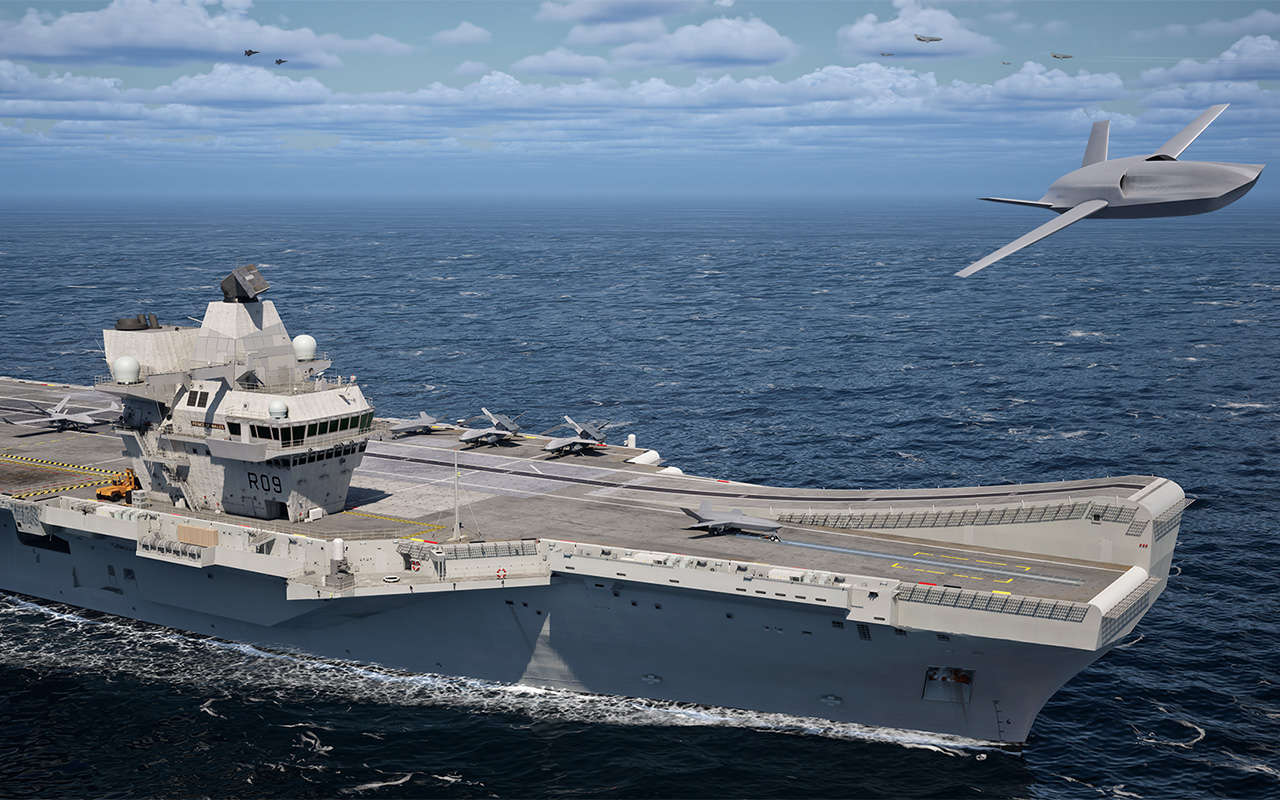
The Ministry of Defence has confirmed that Royal Navy programmes Project VIXEN and Project ARK ROYAL are no longer in use, with both efforts now absorbed into a broader Maritime Aviation Transformation Strategy.
In written answers published on 11 February, Defence Minister Luke Pollard said the two projects have been incorporated into the Royal Navy’s Maritime Aviation Transformation Strategy (MATX), which he described as a plan to deliver a Fleet Air Arm that is “uncrewed where possible; crewed where necessary.” Pollard said MATX is intended to support the development of a “Hybrid Air Wing”, as recommended in the Strategic Defence Review.
Responding to questions from Conservative MP James Cartlidge on the progress of Project VIXEN and Project Ark Royal, Pollard said: “Projects VIXEN and ARK ROYAL are no longer in use.” Instead, he said the Ministry of Defence has established a new initiative, Project VANQUISH, designed to demonstrate a short take-off and landing, jet-powered Autonomous Collaborative Platform capable of operating from a Queen Elizabeth Class aircraft carrier.
According to Pollard, the project is intended to generate evidence to support the future development of uncrewed fixed-wing aircraft for carrier operations, while avoiding the need to install Assisted Launch and Recovery Equipment (ALRE), such as catapults and arrestor gear, on the UK’s carriers. “The project will generate evidence to inform the development of uncrewed fixed wing aircraft for operation from Royal Navy aircraft carriers without requiring the installation of Assisted Launch and Recovery Equipment (ALRE), subject to Defence Investment Plan decisions,” he said.
The shift marks a notable change from earlier Royal Navy thinking around Ark Royal, which in previous years was associated with more extensive modifications to the Queen Elizabeth-class carriers to support launch and recovery systems for high-performance uncrewed aircraft.
In 2023, Royal Navy officials had publicly outlined a vision for future carrier aviation that included potential retrofitting of arrestor gear and assisted launch equipment, alongside concepts for a new generation of uncrewed strike and support platforms.

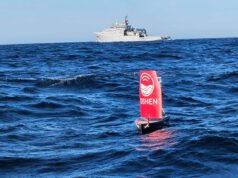
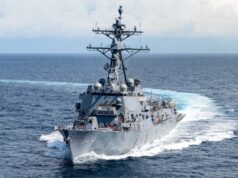


Shortly to be renamed ‘Project Vanished’
It is in line with current naval project naming naming
Constellation -> Consternation -> Cancellation
now we have
Vanquish -> Vanish
Maybe RN & USN are more coordinated than we thought?
Or maybe it is just a line from a Bond film?
Hi SB , to brighten your day on things James bond – herewith a bad joke:
“Produces OF the franchise confirmed the character will now be played by a woman. Fans are assured there will still be crazy car scenes with spectacular crashes and explosions -and all that just as she’s just parking.”
You should see what my wife did when she was parking…
😁
Yep, it’s this governments way of wasting money and producing nothing.
If we look through all this from Pollard it’s cuts.
So Vanquish really is the MoD searching for a way of getting drones on the carrier without arrestor gear.
Not sure why can’t do barrier recovery at least. Complicates too much? Or not really needed for slow thing with brakes.
Can’t load a drone safely with a barrier with a full or half payload maybe
Sounds like that.
Very hard to understand why other than lack of ££££.
Really very dangerous to do other than VTOL – there is a reason for the angled runway and it wasn’t for fun.
Problem is because QEC has two island the parking on the roof has to be down both sides which makes it very dangerous.
I think the Navy see themselves with a STOL air wing of Vanquish, Protector and F35 SRVL. It’s the same argument as B Vs C; they save on the carrier itself in order to procure more but compromised aircraft.
Re safety and the deck layout, the port sponson is hardly ever used in pictures when they are doing actual flying operations as the helo/landing spots are to port of the runway. So an angled deck wouldn’t make too much of a difference.
There are three options possible as I see it:
1. have crew run along side on landing and hold onto wing tip hand rails.
2. reinvent the autogyro.
3. think of a name run with it for 12 months, cancel and repeat.
I think #3 is the winner!!
Hi SB My first reaction was Oh here we go again it’s a capability cut by any other name driven by a cash shortage. Then I got thinking about the timescales and what progress has been made with drones, UAV and out of the box thinking over the last 2 / 3 years.
I’m not sure this isn’t actually a very sensible conclusion to cancel 2 projects that would cost a lot of money and not deliver much more capability than a cheaper less conventional option.
You just need to take a look at Turkey to see what’s possible without Cats n Traps, they have taken the Spanish Juan Carlos 1 class LPH design and adapted it as the TCG Anadolu which is just 232m long and designed to operate F35B (if US allows them to buy them) and fixed wing UAVs.
They are developing the Baykar Kizilelma which is a stealthy, single jet, supersonic, stealthy, STOL UAV, it’s designed to work off a ski jump and land without arrester gear. Turkey are at present throwing the kitchen sink at this tech, this one has an AESA radar and can carry an offensive load including BVR missiles (Loyal wingman !).
Everyone thinks that conventional take of and landing really needs Cats n Traps, what they forget is Naval Aircraft are heavier than non Naval ones and for very good reason’s. But not having a pilot saves an awful lot of weight and space, no cockpit, no oxygen system, no ejector seat, no life to lose if using a single engine and if your not using arrestor gear far lower airframe stress so even more weight saved.
So just maybe the RN are thinking well if Turkey can do that what can we do with a much larger ship ? Personally I’d fit an angled deck for landing purposes as it just adds extra safety and redundancy and I might just take a look at Turkeys UAV and maybe Aeralis.
Yup, Most of the pre 1945 aircraft carriers had no such tech, I can’t see why this fact Is overlooked.
BAE’s ACP is apparently STOL (the big rhombus wing one) so that would be a good option. As long as they can fit a pair of Meteor and have comparable range to F35 it’s a good capability for filling out the spare room on the carriers.
I agree with what you have said. The technology is already there. This is achievable. As for the angled deck, it’s already fitted (sponson). They just need to repaint the deck markings and install the Bedford array.
…and taken nearly three years apparently to deremine that they were not indeed going to do that and instead establish a new project with less adventurous expectations. Three years to effectively go backwards. It really is about active setting up of new projects to look like they are doing things while in effect just deciding how to make turn those studies into inactive conclusions, requiring a brand new project with a brand new name until the next Govt reassesses the whole thing again with their own defence review and the greater hope no doubt that a new President won’t be so fussy about defense spending but more committed to protecting Europe. How very Starmer.
In the meantime it would be nice to know about the proposals from industry that they received in those years if in reality any.
Probably more of a case they have been recently informed the Treasury won’t fund what they had in mind. Takes pathetic to a whole new level when we have 2 big Aircraft Carriers and can’t even afford to put drones on them.
Spy agree think industry needs to propose a stovl drone. There are several navies with similar issues.
Ah, everything if fine then. All “absorbed” so another new planning group, no need to buy anything and all is right with the Whitehall world.
“Projects Vixen and Ark Royal are no longer In Use”.
Pffff 🤔🙄🤦♂️
Likely all to do with cash. Talking of which, i am struggling with the bbcs latest report into chaos islands and how it averages at 100m per year when every payment is more than 100m. Wish they would probe and explain more.
The UK will hand sovereignty of the archipelago to Mauritius, and lease back Diego Garcia for a period of 99 years – at an average cost of £101m a year.
The UK will pay £165m in each of the first three years. From years four to 13, it will pay £120m a year. After that, payments will be linked to inflation.
Bargain ain’t it🙄
I had assumed the US paid rent for the Island, but it seems not. Why the heck have we agreed this deal without some contribution from the country that actually uses it. We may as well have handed it back for free, or at least threatened it so the US would pay up.
Would love to see the ‘volunteer’ willing to relate that idea to Trump or Pistol Pete, it would need some effective flak jacket.
All to do with the deal Super Mac did for Polaris.
The reason it’s listed as £101 million is because of what’s called GDP deflation provided by the OBR. Because the economy grows over those 100 years the effective cost compared to UK GDP is less. So to give a value in today’s terms the “pain” to UK budgets is the equivalent is £101m per year in today’s economy.
This isn’t some conspiracy or poor journalism from the BBC, it’s just the most accurate way to present the cost from the OBR.
Ultimately 100 years is a really really long time so you have to make these adjustments so it makes sense.
So, smoke and mirrors
In not a single year is it 101m, its starting point is realistically over 120m, and then it increases in line with inflation each year.
I feel like I just explained this. But it’s not smoke and mirrors, it’s trying to give a cost that makes sense in today’s terms.
We will pay £120m a year plus inflation for the final 86 years. To put that in context £120m 86 years ago is £5.9b today! So 100 years from now we will be paying ~£6b per year to Mauritius. But of course it would be far more misleading to say that figure, so it’s better to put in today’s terms.
Which is why £101m is the most accurate way to present it, and it’s what all long term government costs do.
If you want to complain about smoke and mirrors then I can say that when the government talks about massive long term investments they always “forget” to make that adjustment so it sounds like a bigger number.
If GDP consistently underperforms inflation:
The payment becomes progressively more burdensome. It consumes a growing share of tax revenue.
It could require:
Higher taxes
More borrowing
Cuts elsewhere
Even though £100m sounds small today, over a century the relative burden compounds if the economy doesn’t keep pace. And even more worrying is the % of the defence budget is may end up consuming. They deal currently cost us the same as one fighter jet per year or 15 more upgraded Challengers or 1 new T31 every 3 years. It gets worse every year growth is less than inflation.
GDP hasn’t, and rarely does underperform inflation though. GDP figures are after taking off inflation. Only in a recession is GDP below inflation by definition. So as I said, the burden gets less and less over time as GDP grows (over inflation).
GDP falling in real terms for two quarters in a row is the definition of a recession. Do you really expect us to be in a century long recession?
100m a year could get us a whole lot of Patria or Boxers. Stuff we need real bad,
It seems to me that the concept of GDP deflation only works if the economy grows at a rate that is consistently higher than the ongoing rate of inflation. That’s a huge assumption for the Government to make. It’s not an assumption any private company could get away with.
If the assumption is wrong then the ‘cost’ goes up. And guess who pays it.
It’s not a huge assumption at all, in the last 100 years growth has only been below inflation about 12 times. And has usually had a boom afterwards. All private companies make these same assumptions.
Of course they have to use growth projections, if growth is lower than expected then the cost will be more significant, but if growth is better than expected then it will be much less.
Just to remind people that might not be aware, GDP figures are always adjusted for inflation. Ie 4% growth and 3% inflation would give a 1% GDP figure. This means the cost of this deal will be easier and easier each year.
I understand what you are saying, but what with climate change, the net zero nonsense, the growth of populism, global militarisation, and the low growth doom-loop so many economies are stuck in these days, I for one would not dare make that assumption for the next 100 years.
One can see its Accountants in charge of our Defence policy.
Accountants are in charge of the budget, otherwise you end up in Soviet Union territory where unchecked defence spending caused the union to collapse because they couldn’t afford it (among other things).
We’ll see how it works out for Russia in a few years I guess.
The BBC doesn’t know how to count Mike, otherwise they wouldn’t need our nigh on £200 a year to produce nothing.
Drops to £20m per year from Year 15 to 99.
Simples the next Government wont pay, cant pay, nor should they pay. Only about 5 people agree its a good idea.
“According to Pollard, the project is intended to generate evidence to support the future development of uncrewed fixed-wing aircraft for carrier operations”.
A direct translation of this crap is ‘kick it down the road past 2029, along with every other major unfunded programme’.
Absolutely, as any such study should have been part of or concluded before the previous study surely. I mean why would you determine the viability of more complex and expensive cats and traps of any nature and the drones that would exploit them, without first determining if and how much better it might be than whatever could be accomplished, quicker and cheaper without them. It’s rather as if we were studying the capability of a jet fighter circa 1938 without determining in the meantime what can be achieved with monoplane prop fighters, then cancelling the jet study to start the prop study. Meanwhile Hitler wins the BofB and invades the UK while the committee is deciding what Brandy they want only to be told France has fallen, the last bottle consumed and if only they had anticipated it they could have placed an order earlier. Aah the priorities, the carriers will be obsolete before they make them truly useful at this rate.
The original study might not have been anywhere near complete. The RN probably told HMT that they were looking at a capability that will cost between A and B. The Treasury says good for you but we will only provide funds for C. Original plan gets scrapped, or as they say absorbed into new plan C. Plans A and B’s contribution to the new plan being “get cheaper than this”.
You are right, apart from limited trials of various low tech STOL platforms, there most certainly won’t be any significant investment in the Carriers, or their air wings over the next 10 years.
Theres no money in the pot to develop and field the so called affordable and mythical’ fancy jet powered, (somehow STOL) loyal wingmen, with their highly sophisticated avionics and nightmarishly complex flight control software. I suspect Merlin AEW will be allowed to quietly carry on and F35B might one day get its UK weapons, but thats about it folks.
It will be 2030 before they are properly utilised, thats assuming somone actually turns the funding taps on and stops just talking about it.
Pollard speaks with forked tongue John. Always has, always will.
Absolutely Geoff, the old ‘long jaded’ defence watchers like us, have seen this sort of shite, over and over again, press release or question answered in parliament, kicking whatever the topic is, way off into the long grass the other side of 2029.
The simple fact is that GCAP and AUKUS will be sucking up 70%+ of a procurement budget soon, as both projects cant be stalled, slowed, downgraded or realistically cancelled without massive international repercussions and that available budget simply won’t be increased by any significant amount under Labour, so ‘sod all’ will be ordered this parliament.
“long jaded” eh? 🧐 I’ve thought about the cost of GCAP and AUKUS of course but I’ve never really thought out the numbers but you’re right. Add in Dreadnought and Co. and what are we going to able to buy?. There’s no money now and with this shower there won’t be anytime soon. There is now the fact that they have delayed the signing of the next stage of the GCAP programme. As for the D.I.P. who knows?
I think the DIP ( as agreed by the government) is currently unfunded and the treasury simply won’t budge, so it just sits there mate.
We all suspect deep cuts elsewhere will have to made to fund the two huge programmes and tackle the massive defence deficit.
Its making Italy, Japan and probably Australia a tad nervous I would think.
Obviously, if you were a betting man, its probably time to pick up some BAE Systems shares, GCAP and AUKUS are just too big and too integrated with international defence obligations and the domestic industrial complex to cancel.
The share price will shoot up when the contracts are confirmed.
JC,
Sorry, remain confused to a significant extent. Thought HMG has committed to increase MoD budget to 2.5% of GDP by FY27, followed by incremental increases to 3.5% of GDP by FY35? Could HMG plausibly resist interim, incremental increases and the consequential opprobrium of other significant ENATO powers? 🤔
Yes, because they don’t care. Have a look at what the 3.5 per cent really means. Everything includedfrom rural broadband to roads, presumably filling pot holes because we can’t affrod new roads for sure!
The pertinent phrase they use is
‘when the economic conditions allow’
In other words, never, no chance and sod all change.
The Labour back benches and mostbof the front bench are fixed on maintaing the current direction of travel, an NHS that will consume as many billions as you throw at it without significant improvement.
9 million people on benifits, 1 million 18 to 25 year olds who simply can’t be arsed to work, a million strong fleet of mobility cars, etc, etc.
This is Labours core vote and they won’t allow a single penny of that vast spend to be allocated to defence.
If Starmer was serious about it, then we would be spending 3.5% now and the last Defence review would have been written with that in mind.
It wasn’t and they won’t, pointless, useless government, just like the last mob.
JC,
Thanks, appreciate the explanation. UK may have viable alternative political parties (Lib-Dem, Reform, etc.)? Not certain re defence policy. Wonder whether an alternative choice will arise on this side of the Pond?
Is anything funde. Just about all the programmes across departments, with the possible exception of milliband who is determined to bankrupt us, are on hold. Reeves has reportedly pushed up taxes by over £120 billion and they have no money? Incredible. How about Defence Ignorance Paper for D.I.P.
Can’t afford shares. Busy paying thirty quid for a round of drinks!!
Probably end up getting Strix, or XBAT if that ever comes to anything. I’m expecting bad news from the DIP if this is the direction,.
Seems the DIP is perfectly able to cut spending before its publication even though it’s used as an excuse to explain why it actually can’t allow them to spend money till it’s published, how convenient.
If Vanquish is properly funded, I don’t think it would be a bad thing at all. Having properly designed and built extremely short take off and landing drones of various sizes would not only be useful on the QE carriers. If it’s done on the cheap, we’ll have another Crowsnest: over-budget, late-delivered, under-performing waste of effort that will need replacing by the time it’s FOC. Let’s hope they realise they’ll eventually be providing mass on a par with F-35Bs and budget accordingly.
As I said elsewhere why would you NOT determine what is possible with the carrier as is rather than exclude that and decide what can be done modifying them, before going back to the option one presumes you initially rejected out of hand. What made them it seems think it not worth studying (or alternatively studied and rejected) in the first place that they are now de icing is preferable. Money and delays seem the obvious answer, otherwise it has to be overt incompetence and confused thinking. I fear this new project will determine either it won’t be worth the investment as things stand or something very basic with limited utility will be recommended sometime in the future if money can be found. Delays will then very possibly lead back to square one with new studies to determine if developing technology could change that decision, rinse and repeat. Might as well order a roundabout.
I assume from this statement that the response to the RFI issued in 2021 ( to be ready by 2023) was either “ can’t be done” or “ can’t be done for less than £xbillion”.
Who could have imagined such an outcome? Just about anybody remotely interested in the issue.
If the RN want a jet powered high subsonic UCAV without cats and traps, then it really has to be STOVL at least.
I do remember we were more than surprised when that study was launched as most doubted anything of substance would come of it
even if we hoped otherwise. Pretty much the routine sadly, all talk little to no action beyond work for the boys.
Which will end up costing more in the long run as it will have to be designed from scratch and end up with less capabilities and carrying less. A bit like the planes we have really. Another false economy.
A carrier-specific CTOL air wing might only be 30 airframes each of £50M. If you assume it costs £75M to get the same capabilities from a STOL or STOVL aircraft (a wild overestimate IMO) then that only leaves you £750M to make modifications to both carriers. It’s not as silly as it initially sounds.
I have long wanted QE/PoW to get AAG & turn them STOBAR. A few lines on deck does not stop STOVL either. Just gives you more options. However, it is clear Rachel will not spend anything on defence.
And what would Stobar do exactly? Also it is not just “a few lines on the deck” it’s a massive amount of space and work under the flight deck and requires reworking how the deck operates to allow for bolters
Give you options. QE/PoW were designed with AAG in mind.
They were certainly not. Apart from a few empty compartments there is no provision for the system.
From Navy Lookout, “Development of the Queen Elizabeth class aircraft carrier”. ” In Sept 2002 it was confirmed the design would be an “adaptable carrier” configured with a ski ramp for STOVL but capable of being fitted with catapults and arrestor gear if required at some point in the future.” Later in the article it states that caps & traps would require ballast to counter the extra topweight on the built Delta design.
Oh wow, so they said it could so it must be so easy to convert it then…..
They only said that to appease those calling for cats, you’d have to spend billions ripping the ship apart to get what you want
AAG would be far less disruptive than fitting cats. That is why I think STOBAR makes more sense than CATOBAR for QE/PoW. Academic, as Rachel & Kier seem determined to bury any plans for extra defence money.
Why does it have to be STOVL? They’ve had a Hercules land and take off from a carrier, so why would vertical landing be necessary? Bell is working on a high-speed tiltrotor, which looks like a promising STOVL solution, so it seems that both STOVL and XSTOL are technically reasonable routes.
The biggest problem with Vanquish always seemed to be the unrealistic budget and timescales pointing to an off the shelf solution which doesn’t exist.
Because it needs to keep up with an F35? A prop isn’t going to do that
None of the mainstream proposed CCA/ACP/Loyal Wingman concepts are supersonic, it’s been recognised that trying to accommodate internal weapons and maintain the significantly lower cost largely rules it out. I think one of the SAAB concepts was supersonic but that was intended almost as an alternative to manned fighters rather than in a supporting role.
So as long as they have the same combat radius I think high subsonic is OK for a STOL aircraft rather than supersonic.
I wasn’t suggest using a turboprop, or at least in the case of the tiltrotor, prop only. Bell are developing a prop/jet hybrid, with both turboprop and turbojet engines on the same plane. The first generation is aiming for about 450+ kts and more is promised. I think high subsonic will come too far in the future after another iteration – my gut feel at least a decade. As for an XSTOL/VSTOL design: I don’t know of one in existance, but we’ve discussed a blown-wing turbojet design several times on this site. It wouldn’t be STOVL and would land at relatively low speeds (say 60 kts), and would brake to a halt in <200m (I think that could come down to 100m, less if the carrier is making speed into the wind). It would use the ramp for takeoff and would be naturally high subsonic.
True. When the switch to Vanquish was announced last autumn, the hope was for a demonstrator by the end of 2026. Given the total lack of anything from previous UCAV projects, this seems wildly optimistic.
And how much of MoDs money vanished into Ark Royal and Vixen? And for what tangible benefit?
More words.
More informing decisions.
More considerations.
A new name and a new round of money vanishing into the ether.
How about buying that Turkish kit? Does it work?
Can it work on QE?
If by that Turkish kit you mean Kizilelma, as far as I know it’s not even been ramp tested yet. The TB-3 looks good to party, but it’s Kizilelma we need. We might have to wait for the third iteration — the two engine version — to work properly on a ramp carrier, and it’s still likely to need arrestors. We are on the second iteration and the Turks are upgrading at a fair speed, so we’ll probably know within a few years if it’s doable.
Thanks Jon.
Morning mate, they don’t have the slightest intention of funding anything do they.
Labour know the chance of a second term is vanishingly small, so they will kick absolutely everything that isn’t nailed down and requires funding beyond 2029 and someone else’s problem.
Defence will be in a truly perilous state in 2029, the next government is going to have a real poisoned chalice dropped in its lap.
Its bloody obvious to us that the QE class require the full Ark Royal refit, with cats, traps and angled deck, to allow off the shelf combat drones etc.
Development of a truly combat capable, Hawk sized drone, that’s someone STOL capable, will be extremely expensive and complex it certainly won’t be cheap, or attritable.
It simply won’t happen.
“We will always act in the nation’s best interests…”
Quote from Starmer. Riiiight.
To be fair, the Tories did the same.
Ambush the next party, then wail.
I was amused that one Labour supporter here, amongst many who’ve gone rather quiet this last 18 months, quit the forum the other day as it was too political.
Quite….it is, people are at their wits end….
Why is it obvious to modify the ships for a drone that doesn’t exist?
Another year, another can kick….
This feels like designing capability around limitation rather than expanding the operating envelope.
Avoiding catapults doesn’t remove physics — without assisted launch and recovery you cap aircraft mass, fuel fraction and payload, which directly limits range, persistence and sensor depth. That also closes off heavier tanker or ISR concepts before they’ve even matured. It’s shaping aviation around constraint rather than building flexibility into a 50-year platform.
Deck cycle margins matter too. STOVL simplicity comes with throughput and sequencing trade-offs, especially as crewed and uncrewed aircraft mix on deck. Assisted launch exists because it expands sortie flexibility and aircraft choice, not because engineers wanted extra complexity.
We’ve already invested heavily in building large, modern carriers. Treating aviation infrastructure as fixed rather than evolvable feels short-sighted. Strategic assets should be growing capability over time, not designing future concepts to fit inside today’s limitations.
They landed a Hercules on a carrier without aid (and yes, it took off again). Even empty, Hercules weighs 36 tons, that’s far more than the MTOW of MQ-25A Stingray. How then can you claim that weight is capped by physics?
It is not a simple upgrade to switch to cats, in fact it involves rebuilding the flight deck entirely so no, not very reasonable
A crewless jet providing air to air refuelling annd other roles that can launch and recover without the needs of a catapult or arrester wires. It’s going to require some serious power to take off with the extra fuel for A2A plus loitering needs, and thrust vectoring is a must if it is to safely return to the deck using bedford array/SRVL. Sounds complex but the potential is huge. The technology is there. It’s now a question of fusing it all together. But it’s not just about launch and recover. It’s also about how this aircraft is ‘marshalled’ on a very busy flight deck at the same time as other movements are happening. Safety is paramount.
An angled flight deck is ‘absolutely’ critical, landing a large uncrewed aircraft down the center line represents a totally unacceptable level of risk.
Development of a large fully combat capable STOL drone is of course doable, but it will be extremely expensive, we cant and won’t fund that capability.
Prior to 3.5% on defence, there’s no money in the piggy bank for such exotic and niche equipment.
We will simply get further ‘ this trial will inform that trial’ bullshit, that will rattle on for years with nothing being done.
We all recognise that by cancelling Ark Royal, they are deliberately abandoning the capability, because they know that means all current, in development combat drones require cats and traps.
Its a simple way of self sabotaging the whole idea and effectively cancelling it, while pretending not too….
Ah hah the programmes have become a strategy. Classic obfuscation and delay tactic used by CS and politicians to avoid doing anything.