

The Ministry of Defence has set out its approach to procurement speed, technology transfer with Ukraine and support for smaller firms, in response to a parliamentary question referencing the UK/EU-Ukraine Defence Innovation Corridor roundtable held at Westminster last month.
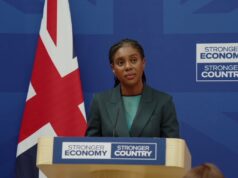
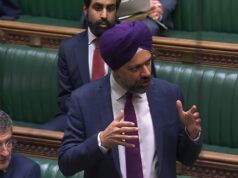
Luke Akehurst, Labour MP for North Durham, asked the Secretary of State for Defence what steps the department was taking on each of the three areas, citing the roundtable held on 23 June 2026. Answering, Minister of State Luke Pollard said: “Since Russia’s full-scale invasion, MOD Ministers and officials have maintained a continuous dialogue across government, the private sector, and with Ukrainian counterparts to enable UK industry to collaborate on and support Ukraine’s highest priorities.”
On procurement speed, Pollard pointed to the National Audit Office’s September 2024 report on UK support to Ukraine, stating: “The National Audit Office report in September 2024 on UK support to Ukraine recognised the speed, innovation and collaboration shown by MOD in equipping and supporting Ukraine. The changes we are making to our procurement rules are similarly increasing the speed of procurement for our own armed forces.”
Turning to technology transfer and support for SMEs, the minister said: “Our bilateral arrangements with Ukraine facilitate the exchange of battlefield technology, the co-development of cutting-edge military capability and the creation of new intellectual property, all of which will be reinforced by the UK defence business centre about to open in Kyiv to provide UK companies, particularly SMEs, greater access to Ukraine’s military challenges and Ukrainian industry.”
The roundtable referenced in the question was held at Portcullis House on 23 June, hosted by Graeme Downie MP and organised by Tech Connecta Vertex Ltd and Stephen Hoffman Consulting Ltd. As the UK Defence Journal reported at the time, the event was built around a proposed framework intended to connect Ukrainian universities, manufacturers and researchers with UK and European industry, investors and government, on the argument that collaboration is already happening in pockets while a reliable pipeline is missing. Pollard took part, a presence organisers treated as a signal of how seriously the initiative was being taken. Downie described the initiative as “a vital step forward in our shared security architecture.”
Speaking at the event, Denys Kalachov of the Association of Ukrainian Defence Manufacturers traced the sector’s growth from a handful of firms when the association was founded in 2017 to more than 150 today, while warning that scale had not removed the barriers to working with foreign partners. He described regulatory obstacles, particularly around intellectual property, that can expose Ukrainian firms to criminal investigation at home, deter investors and stall partnerships before they begin. For him, the structure was the point: “this corridor of innovations, and the framework around it, would be the innovation itself.”
The corridor concept remains an early-stage proposal rather than government policy. In an earlier written answer, the MOD confirmed that officials met representatives of the initiative in March 2026 and advised on how any proposal could best align with existing UK-Ukraine defence engagement, adding that early-stage initiatives would be kept under review. That answer also referenced the Kyiv business centre as part of a move toward a permanent UK presence in Ukraine, building on the seventh and largest UK trade mission to the country in March 2026.




Off topic, apologies to George
The UK remains deeply tethered to global fossil fuel networks, leaving its economy acutely exposed to geopolitical shocks. While low-carbon sources generate over half of British electricity, nearly three-quarters of the UK’s total primary energy demand still relies on oil and gas. Over half of our natural gas is imported, and transport depends almost entirely on foreign petrol/diesel. Proposed extraction projects like Rosebank and Jackdaw offer minimal insulation, covering just 3% to 4% of daily consumption at peak. Furthermore, because our remaining domestic refineries require different oil grades, most of Rosebank’s crude would be exported. The UK is no longer energy independent; it is a price-taker bound to global supply chains
This dependency becomes a critical hazard during systemic crises. Should military tensions surrounding the Straits of Hormuz escalate into a full scale war with American boots on the ground, the disruption of key maritime chokepoints would trigger catastrophic global resource depletion. A synchronized blockade—with the Houthis closing the Red Sea and the IRGC bombarding the Suez Canal—would sever the primary energy artery between East and West, draining global oil reserves within 2-3 weeks. Denied sufficient hydrocarbon imports, the UK would have to pivot instantly to a wartime-style emergency energy transition
This survivalist shift would expose a severe mismatch between available power and existing infrastructure. In the initial 24 months, the crisis would be managed through aggressive demand-side rationing rather than immediate infrastructure additions. The UK’s current grid-scale battery fleet stands at 7.5GW (12.9 GW hours). If forced to carry the nation’s baseline electricity load during a total blackout, these batteries would drain within 30 minutes. Combined with pumped-hydro assets, the entire national storage buffer provides barely one hour of emergency power.
To bridge this, the UK is expanding grid battery capacity at a blistering pace, averaging an additional 439 MW every quarter and growing the fleet by 45% annually. However, structural baseload support remains years away, as the nation’s new nuclear pipeline offers no immediate relief; Hinkley Point C is not scheduled to come onstream until around 2031, while Sizewell C remains locked in early-stage development well into the mid-2030s
Consequently, the first phase would mandate strict fuel rationing, manufacturing caps, and work-from-home orders to preserve remaining North Sea reserves. Simultaneously, the state would bypass localized planning laws to fast-track the 11 GW of wind and solar projects stalled in connection queues. Under emergency provisions, the state would force a rapid buildout of Small Modular Reactors (SMRs) using standardized factory parts, aiming to bypass the mid-2030s commercial timeline to deploy compact SMR 1.5GW clusters within months. Yet, during a total blockade, the UK’s 10.3GW of subsea electrical interconnectors would become a critical geopolitical wildcard. If neighbouring European countries face a parallel gas collapse and shut down cross-border power flows to protect their own grids, the UK could lose ~13% of its power supply overnight, instantly exacerbating the domestic shortfall. While emergency mandates could achieve a decarbonised grid over a three-to-five-year horizon, the ultimate bottleneck remains retrofitting the 85% of British homes reliant on gas boilers before new nuclear arrives.
Ultimately, an escalation of the Iran war would force a compressed, high-friction energy transition driven strictly by national survival.
Russia. Ukraine. Special Operation. Putin will lose. Kyiv. Crimea. Western aid. Azov. Zelensky.
I wonder if key words set the bots off, a bit like Echelon?
I hope not, ruins the comment section when most of it is an argument about trolls
😁😂 Hello Ulya! Apt you reply here.
Hello Daniele,
I couldnt resist the urge 😀
I will go back to just reading comments, they are very interesting for my understanding
It looks like I won’t be coming to the Mamayev Kurgan to pay my respects any time soon.
The respect remains, though.
You would be safe coming to Russia for visit but flights are a little longer and maybe your government not be happy when you go home?. My partner wanted to visit family in Spain but they tell her it not safe from Spanish government, not sure if fear is true but not worh risk.
Maybe things settle in 2-3 years and you can visit. Even though we are enemies now, Volgograd only a few hours away from my home, my offer from long time ago still stands, I will happily be your guide and show you the sights
👍
I remember our conversations well.
Though having seen what happens to people who visit Russia via various documentaries, including with Russian reporters, I don’t think as a westerner I’d be safe at all while your current government is in charge.
I don’t want to end up in a reinforced glass cell in a courtroom on trumped up charges thank you!
However, the respect remains. Maybe one day.