

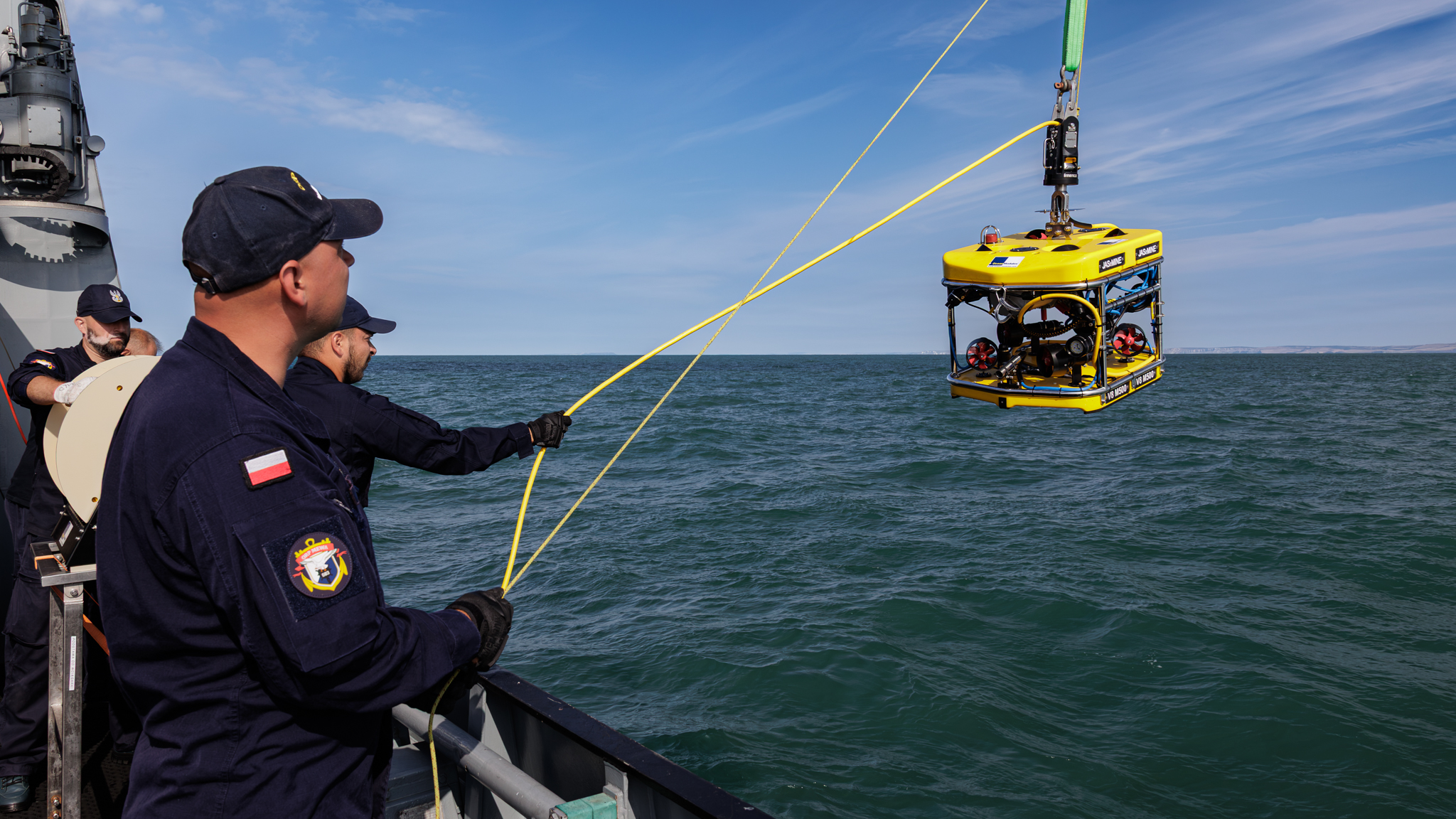
Explosive ordnance disposal units from NATO allies and partner nations have been training together beneath the waters of Weymouth Bay during the second portion of Sea Breeze, an annual maritime exercise aimed at building capability to restore security and stability in the Black Sea, US Naval Forces stated.
Sea Breeze 26-2 ran from 13 to 24 July, co-led by the United States and Ukraine and hosted by the United Kingdom. According to the US Navy, the exercise brought EOD technicians together for joint training focused on expeditionary mine countermeasures and on improving interoperability between participants working in a multinational environment.
Participating units included US Navy Explosive Ordnance Disposal Mobile Unit 8, the Royal Navy’s Diving and Threat Exploitation Group Delta Squadron, the Japan Maritime Self-Defense Force EOD team and Ukrainian Navy EOD, alongside other counterparts. Divers from the British Army’s 22 Engineer Regiment dive team and the Royal Navy’s 33 Explosive Ordnance Disposal and Search Regiment also trained with Ukrainian Navy EOD personnel from a rigid-hull inflatable boat at Chesil Beach.
A Ukrainian naval officer and EOD team leader operating under the callsign Morgan was quoted as saying: “In any exercise, when we share the experience between each other or we can work together, we can understand together.” On the practical difficulties of multinational work, he added: “One of the biggest challenges is the difference in systems. NATO countries have their own standards and procedures, and we have our own procedures to follow. That can cause conflict between teams.”
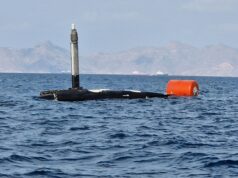
The daily drills covered diving and salvage missions and the use of remotely operated vehicles, including the VideoRay Defender-Viper mine disposal system. US Navy Explosive Ordnance Disposal Technician 2nd Class Ezra Cimino was quoted as saying: “If we can go out and do something in a different environment that gives us a different result, we can use that information to adjust our position next time we’re in that type of environment. We are just adding tools to the toolbox.”
Personnel from EODMU-8 conducted search and identification operations alongside clearance and dive work, and provided training to participants on remotely operated vehicles. Speaking about the threat picture in the Black Sea, Morgan said: “Our enemies are improving their weapons, such as placing sensors on their bombs that can explode underway at any given time. We should always prepare for the worst.” He added that older ordnance remains a hazard: “We are still finding old mines planted [in the Black Sea] from World War II, especially air bombs, and some may date back even further.”



…—…
Royal Navy Explosive Ordnance Disposal and Search Regiment? New one on me. Can anyone shed some light on this?
Error.
UKDJ, Mods.
33 EOD Regiment RE is British Army, not Royal Navy.
RN Diving and EOD assets have been rebranded ( like so much else ) from the Fleet Diving Squadron, the regional SDU1, SDU2, and so on, into the mentioned DTXG.
Daniele, having you here keeping close tabs on how military branches change names, downsize, or get absorbed into other regiments … tracking changes to Royal Marine units or Army formations, understanding procurement realities … recognising the constant friction between what governments promise on paper versus the actual state of military funding, equipment readiness, and personnel numbers … is a boon!
Morning Magenta.
Thank you, yes, I try. I’m a right old ORBAT “spotter” anorak, the only way I can effectively contribute.
I leave the deep technical stuff to other real SMEs!