


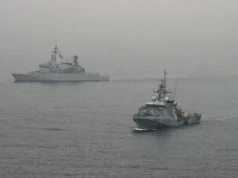
A Russian Kilo class submarine has been observed in the High North by Standing NATO Maritime Group 1, according to NATO Maritime Command.
The command said: “SPOTTED: A Russian Kilo-class submarine in the High North, observed by Standing NATO Maritime Group 1 (SNMG1).
“Anti-submarine warfare is a team effort. Ships, submarines, aircraft and helicopters from across the Alliance work together every day to detect, track and, if necessary, counter any threat beneath the surface. Our posture is defensive, our readiness is credible, and our resolve is clear: to deter aggression and keep our one billion people across Europe and North America safe.”
Standing NATO Maritime Group 1 is one of the alliance’s permanently available naval forces, drawing warships from member navies on rotation and operating principally in the North Atlantic and northern European waters. The Royal Navy contributes to it regularly and has commanded it in the past.
The Kilo class is a diesel-electric attack submarine built in large numbers from the 1980s, and the improved Project 636.3 boats are quiet enough on batteries to have earned the nickname Black Hole from American analysts. Russia operates them in the Northern Fleet, the Baltic, the Black Sea and the Pacific, and the type carries torpedoes, mines and the Kalibr land attack cruise missile.
The Defence Committee reported this month that Britain does not have what it needs in the High North, urging ministers to retain Type 23 frigates until the Type 26 arrives and questioning whether the Royal Navy’s attack submarines are putting to sea as often as they should. The committee also called for the return of under-ice submarine skills and warned that Britain sells its nuclear contribution to NATO short.
HMS Prince of Wales is currently in the Arctic and North Atlantic on the second phase of Operation Firecrest with the Type 45 destroyer HMS Dauntless, carrying Merlin Mk2 anti-submarine helicopters among her air group, and RAF Poseidon maritime patrol aircraft operate over the northern approaches from Lossiemouth. NATO warships began the current High North deployment earlier in the year.



Why did the Soviet Union build conventional submarines in years when it had ample funds to go all nuclear? The Kilo class has operated in all Russian fleets, not just shallow waters for which it is ideal. Russia continues to build conventional submarines.
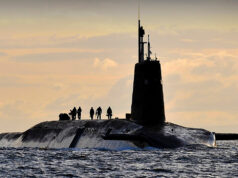
The US can afford a large all nuclear fleet ( although it is struggling to maintain numbers). But if UK wants a larger submarine fleet, why do we need to remain all nuclear, given both the high cost of AUKUS and the difficulties experienced for years in maintaining nuclear boats.
Good questions, again as I expressed elsewhere, I wonder if what suits a peacetime scenario might not be the best should we be on a wartime footing, but were conceived and taken when the latter wasn’t seriously contemplated so a gold plated technologically impressive looking fleet giving a higher status that Britain loves to project to the World while neglecting actual mass or splitting capabilities that might add to overall perceived cost despite adding potential wider capabilities when required. The fact that most of our submarines couldn’t go to sea due to the rather less glamorous aspects of supporting them were neglected, seems to back up the boast-able style over substance approach. Of course in reality Russia has never really seen itself in a time of peace so perhaps has pursued a different approach offering more flexibility, while of course pursuing a far less rigorous H&S regime and other perceived added outlay no doubt which doesn’t create running and maintenance costs in a slit fleet to the extent it would us. And of course it isn’t under the political pressure a democratic Country is in finding hard pressed money for other societal needs generally.