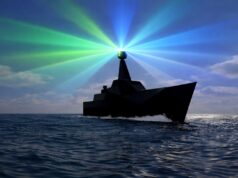
The Spanish Navy is to receive three SIMBAD RC shipborne air-defence systems from MBDA, giving it a capability specifically intended to counter missiles, aircraft and drones, according to the company.
MBDA has signed a framework agreement directly with the Spanish Navy for the three systems, which will be integrated aboard ships already in active service as part of plans to strengthen the fleet’s protection against aerial and missile threats. SIMBAD RC is a remotely operated naval self-defence system built around the MISTRAL surface-to-air missile. It can provide a ship’s primary short-range air defence or operate as an additional layer alongside larger air-defence systems.
MBDA says the system is designed to counter a range of threats including anti-ship missiles, sea-skimming missiles, aircraft and uncrewed aerial systems. A single operator can control the system remotely, with MBDA saying it is designed for round-the-clock operation in all weather conditions.
The company described the agreement as the first direct contract between MBDA and the Spanish Navy.
Eric Béranger, CEO of MBDA, said: “This first direct agreement with the Spanish Navy is a historic milestone for MBDA. It demonstrates our growing footprint and long-term commitment to Spain.”
He added: “By delivering critical defense capabilities, we are enhancing fleet security and building a strategic partnership based on innovation and cooperation with the Spanish defense industry.”
The three SIMBAD RC systems will add a relatively compact layer of defence intended particularly for threats approaching at short range, where a ship may have little time to detect, classify and engage an incoming target.
The MISTRAL missile used by SIMBAD RC is employed in a variety of ground and naval air-defence roles, with the remotely controlled naval installation allowing the weapon to be operated without exposing personnel at the launcher itself.
For the Spanish Navy, MBDA said the acquisition introduces an operational capability that it does not currently possess and forms part of a wider Ministry of Defence and Navy programme to improve ship self-defence.