

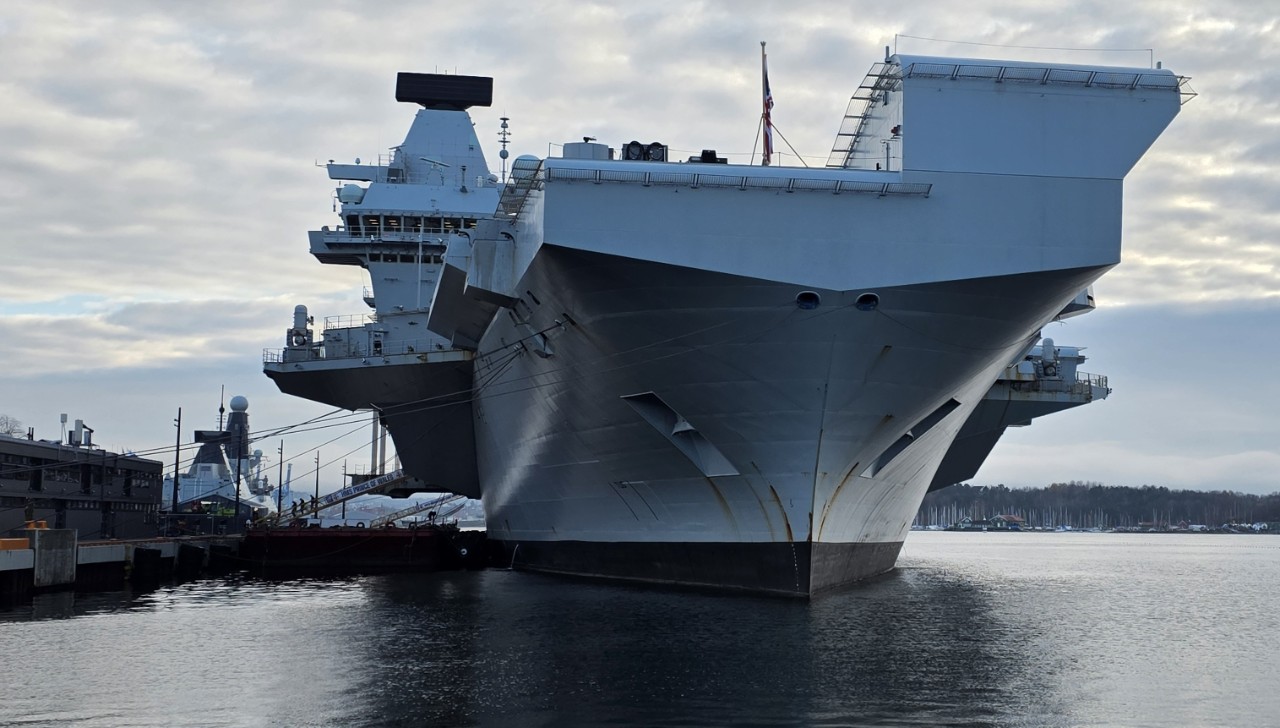
Wes Streeting, the Defence Secretary, has said talking Britain and its military capabilities down has become something of a national pastime, insisting the UK still has one of the most powerful navies in the world.
Speaking at the Atlantic Future Forum on board HMS Prince of Wales in Oslo, Streeting set out the Royal Navy’s growth, including 13 new frigates, six Common Combat Vessels, four amphibious transport ships, two new Astute-class boats, four Dreadnought-class submarines and twelve next-generation attack submarines, alongside the recapitalisation of the entire nuclear enterprise for the first time since its creation.
He acknowledged that rebuilding forces hollowed out over a long period cannot be done overnight, and said: “Talking our country and its capabilities down is becoming something of a national pastime in the UK.
“But Britain still has one of the most powerful navies in the world.” He said strengthening the armed forces is crucial to being ready for war by 2030, “Not because war is inevitable but because the more ready we are to fight and win, the less likely war becomes.” He compared defence spending to an insurance policy, saying home insurance does not make a fire less likely, while investment in defence makes war less likely as well as offering peace of mind.
Streeting said Ukraine shows military power is no longer measured simply by who has the biggest and most expensive platforms, but by who can innovate fastest, produce at scale and turn relatively cheap technology into devastating military effect. He said: “A prototype can demonstrate our ingenuity. But it is production at scale that turns innovation into military power.
“It is one thing to out-innovate our adversaries. We need to out-produce them too.” He said Andy Burnham, the Prime Minister, sees record defence spending as an opportunity to reindustrialise Britain, create well-paid jobs across the country and reawaken naval traditions in places from Glasgow to Portsmouth.
Stressing cross-party unity on Ukraine, Streeting said: “And whatever the ups and downs and trials and tribulations of British politics over the last decade, I’m immensely proud that I can stand here on this platform as a Labour Defence Secretary in a Labour government and assure you of our commitment with exactly the same force and unwavering determination that you would hear from a Conservative minister.” He added: “Putin’s denial that he wants war with Europe would be more convincing had he not given the same assurances before the war he is waging in Europe now.”
Britain has committed to spending 3 per cent of GDP on defence in 2030 and 3.5 per cent on core defence by 2035, and Streeting opened his speech by calling the gathering “one of if not the best AFF that we’ve had”. General Sir Gwyn Jenkins, the First Sea Lord, told the Sea Power Conference earlier in the week that the Royal Navy has turned a corner and is undergoing its biggest rebuild since the Second World War.



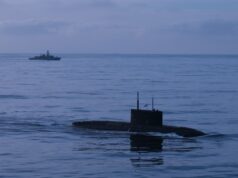
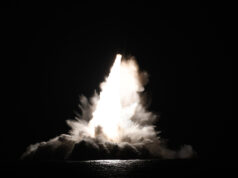



If you look back at my posts from 5 years ago many accused me of being an RN cheerleader.
In balance I have to point out the vanishing fleet. The constant cuts and the slothful rebuild rate of the fleet when it finally got ordered.
These are what the government is hoping and planning for in an uncertain future, NOT what we have.
13 new frigates: we have 5 old ones, with no certainty that we will keep that many.
6 Common Combat Vessels : we have 6 destroyers
4 amphibious transport ships: we have 3 Bays.
2 new Astute-class boats: we have 5 old ones, one of which, Ambush, is permanently unusable.
4 Dreadnought-class submarines: We have 4 Vanguard class submarines
12 next-generation attack submarines. None of these exist and we wouldn’t reach 12 until around 2050.
People aren’t talking down a planned future, although it still will be nowhere near enough. They are talking down a depleted present. When we compare 5 frigates now with the 100 frigates the Navy had when I was born, we instantly see how far we have fallen.