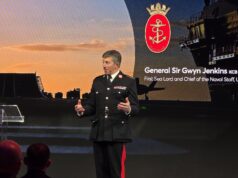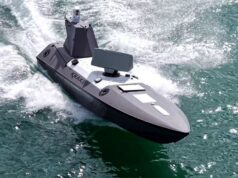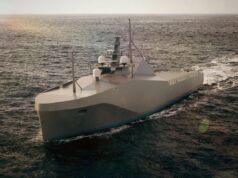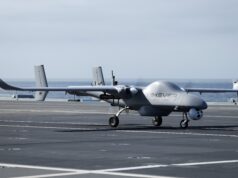
Eirik Lie, president and chief executive of Kongsberg, has said the drone warfare seen over Ukraine will spread to the sea and under it, and that countermeasures need more work, according to remarks made at the Atlantic Future Forum in Oslo.
Asked on board HMS Prince of Wales about the gap between what is technically possible and what has been bought to protect cables and pipelines on the Norwegian shelf, Lie said: “So what we see in the air in Ukraine today, I expect that will happen on the sea and in the water.”
He said a lot of technology already exists and is in use, but singled out “the lack of countermeasures” as an area that needs to be explored further. He said Norway has about nine thousand kilometres of pipelines alongside other infrastructure such as fibre cables, and that allies have to be realistic because they cannot guard everything at once.
Lie said effective protection rests on three layers, beginning with “the persistent awareness” from seabed sensors and autonomous underwater vehicles, followed by “rapid response” to investigate quickly, and “resilience”, meaning repair capability to recover from an accident or attack.
He said close coordination between operators, authorities and industry and clear roles and responsibilities are fundamentals, and that a different model for fielding equipment is needed because threats and technology change so quickly. On Lunna House, he said: “It’s a strategic direction.” He said he hopes the next step brings industries in Britain and Norway together on capabilities.
Russian vessels have been mapping UK undersea cables, and Amy Baker, Canada’s ambassador to Norway, told the same panel that Canada is entering a submarine partnership with Norway and Germany and negotiating an enhanced defence cooperation agreement with Norway.