European governments and companies should stop guarding their high-end technology from Ukraine, because the time spent recreating it from scratch is measured in Ukrainian lives, an officer of Ukraine’s Unmanned Systems Forces told the Apex Europe conference in London on Wednesday.
Volodymyr, who was identified on stage by his first name and callsign, was asked for a closing message to the room at the end of a panel on deep precision effects chaired by Lieutenant General (Retired) Stuart Skeates.
He said: “I would encourage all European companies, and I think it’s mainly for governments, to share with Ukraine technologies, because now, as soon as we come to some high tech, everyone is very closed. If we speak in radars or any other systems, they are extremely expensive, so we can’t afford. And for us to create or duplicate, it takes us a lot of time, and it takes a lot of lives of our people. So please share your technologies, because it gives for general European security and is needed for all of us.”
Earlier in the session he had made the same observation about proximity that Ukrainian officers have been making all day, and his version was blunt about where Western firms fall short. “The effectiveness of any product in Ukraine depends on how close is produced with military guys. With Ukrainian companies we don’t have such issues because we are on the same soil. With Western countries there’s always some issues. There are just few companies that open their offices and effectively communicate and exchange,” he said.
He also gave a sense of the tempo that shapes everything else, saying “We are using these strikes almost on a daily basis. So it’s like daily routine. That’s not an operation that you are preparing for several weeks,” he said. “That’s why you need SOPs, all the things to be ready, so you’re effective, and learn from mistakes that you’ve done.”
Iryna Terekh, the chief executive of the Ukrainian missile manufacturer Fire Point, used her own closing remarks to tell the room to plan as though the worst is coming.
She said: “My take would be to work on strategic crisis and risk management from the perspective like you’re preparing for the apocalypse. Be the most anxious and crazy person in the room while you’re planning your production, your procurement policies, everything that you’re about to do, and then you will be very happy when not the worst case scenario will happen, but just the middle one.”
She then put a question to the audience that Ukraine answered too slowly itself. “If you ask yourself whether the war is already here or it’s not yet a war, there is just one answer to this question. We already missed this answer in a proper time, in 2014, asking ourselves whether it’s a real war or not a real war. And now we are paying the bloody price for that,” she said, before telling the room to stop showing deep concern and concentrate on what actually matters.
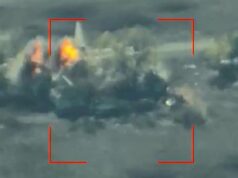
Her final point was about the conference she was standing in, and it drew the sharpest reaction of the afternoon. Fire Point had brought video material with it and was not permitted to show it, she said, on the stated grounds that attacks and lethal effects could not be displayed.
She said: “It was pretty much the same experience that I had two days ago at a stationery store when I wanted to buy a scissors, and turns out in London you cannot buy a scissors if you don’t show your ID that you’re over 25. Welcome to London. This is a great metaphor when we’re talking about readiness for challenges.” Europe needs to be more honest with itself about where it is standing, she said.