Supply deserves the same attention now going into autonomy and sensors, the co-founder and chief technology officer of the defence software company Rune Technologies told the Apex Europe conference in London on Wednesday.
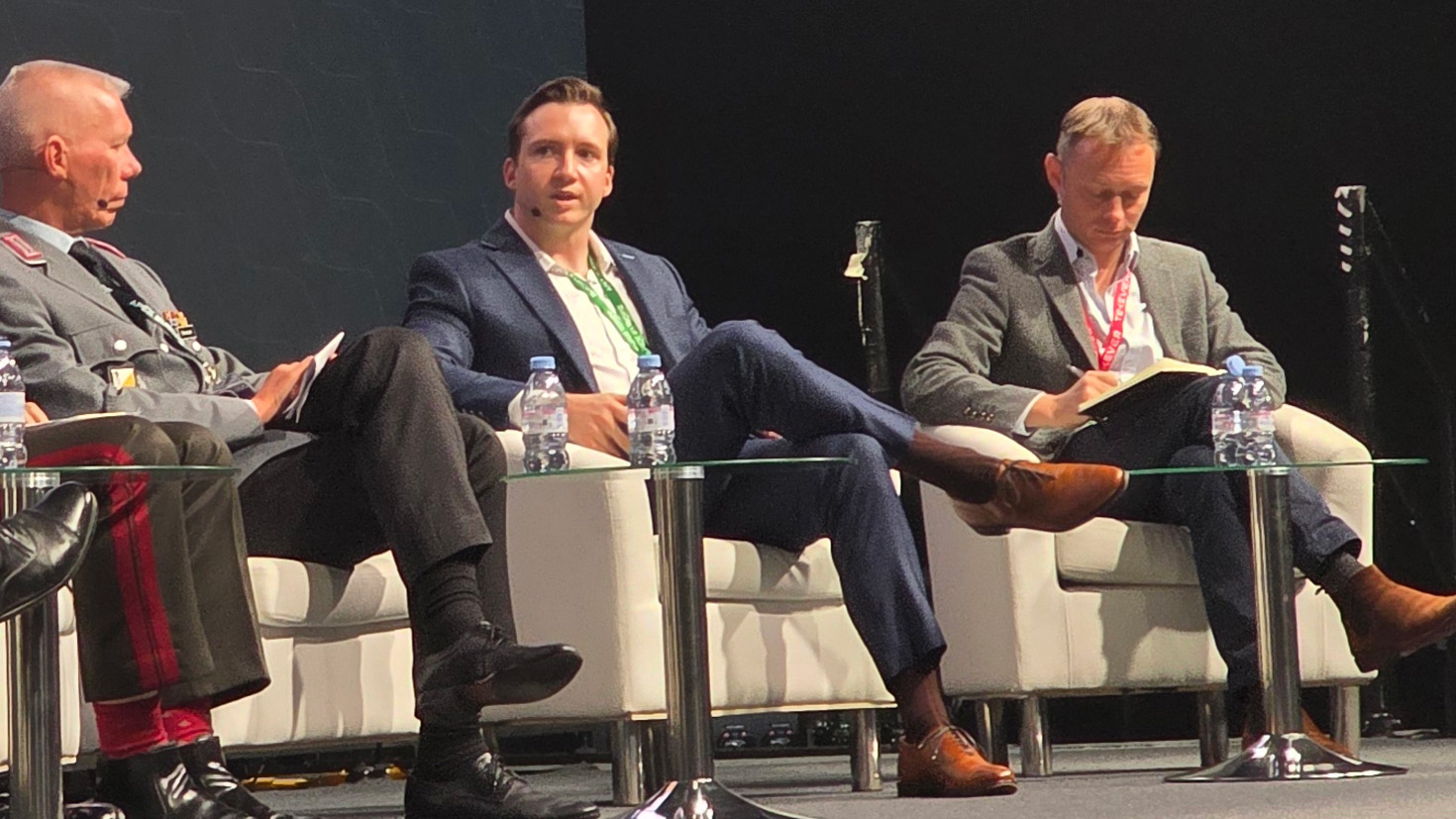
Peter Goldsborough chose it as his closing message to a panel on the interoperability of uncrewed systems, and he made the case in four sentences.
He said: “My purpose here is to remind everyone that logistics wins wars. Thomas and I were just talking before the panel that even today in simulations and war games we still often white card or hand wave logistics. Fuel just appears. Munitions are infinite. Amazing. So whether we’re building technology or buying technology, let’s not forget the logistics tail.”
White carding is the practice of settling an inconvenient part of an exercise by administrative decision so the scenario can keep moving, and supply is the usual candidate for it. Modelling it properly is harder work, which is precisely the gap a company building software for military sustainment exists to close.
Mr Goldsborough was sitting alongside Colonel Thomas Erlenbruch of the Bundeswehr’s Cyber and Information Domain Service, whom he named as having raised the same point in conversation before the session started. Both men spent much of the panel on whether systems built by different companies can exchange data at all.
On that, he was encouraging about how far industry has already come, and said the concern most often raised as a reason not to open interfaces does not hold. “In general, exposing interfaces isn’t really a danger to intellectual property. There’s a separation between what the thing does and what you expose to the world,” he said. “From industry it is common practice to have interfaces that are exposed without any risk to intellectual property, so I think we’re ready to go there.”
Colonel Erlenbruch asked for something in return when his turn came, which was earlier involvement in development instead of a finished product arriving at the door.
He said: “To be able to be data centric, please try to develop to common standards if they’re out there, and involve the military during your development process with pre-tests, so that we can tell you you’re on the right track or we have the wrong requirements, and that will help us all to get faster to a good new product.”
Supply has been one of the quieter lessons of the war in Ukraine, where keeping forward units fed with drones, batteries and ammunition has mattered as much as the systems themselves, and where uncrewed ground vehicles now do resupply runs that once cost lives.