

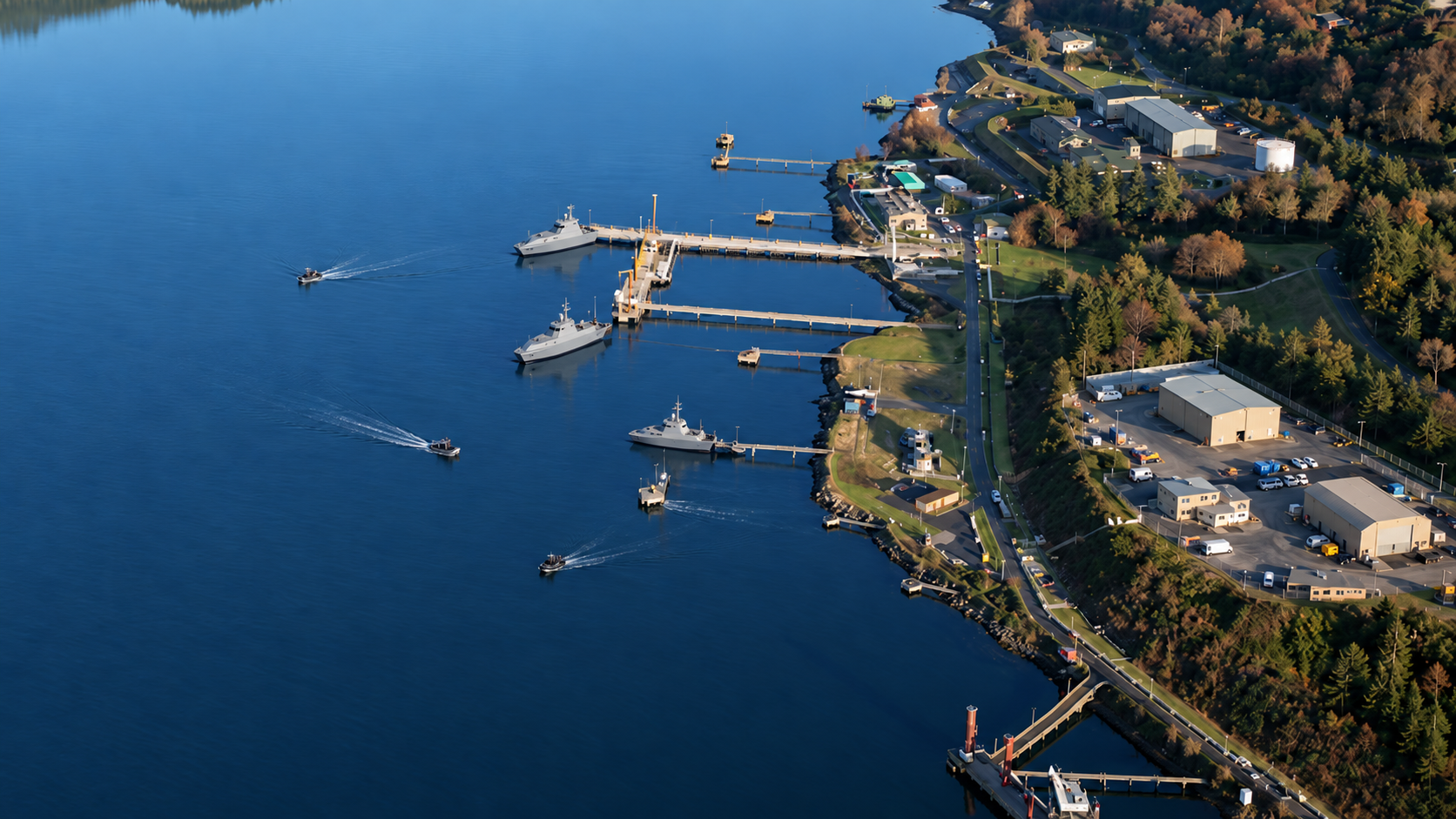
Mine hunting equipment, autonomous systems and support vessels will begin moving to the former Finnart Oil Terminal in 2028, though the MOD will not say what the site will cost to run, how many jobs it will create or when it will be fully operational, according to answers given in Parliament.
When the purchase of the terminal on Loch Long was announced in July, the department presented it as a naval fuel depot, to be operated by the Oil and Pipelines Agency and intended to expand sovereign fuel holding capacity. General Sir Gwyn Jenkins, the First Sea Lord, said afterwards that the site “will also become a new mine hunting base for the Hybrid Navy”.
Dave Doogan, the Scottish National Party member for Angus and Perthshire Glens, asked for the planned timetable for establishing mine hunting operations at Finnart, and separately what estimate had been made of the facilities required there and of the autonomous mine countermeasures systems and support vessels to be based at it.
Luke Pollard, the Minister for Defence Readiness and Industry, gave the same answer to each: “The Ministry of Defence has purchased the Finnart Oil Terminal on Scotland’s west coast, marking a multi-million-pound investment to strengthen the United Kingdom’s national security and defence resilience. There will be a phased relocation of equipment, autonomous systems and support vessels to support mine hunting operations from 2028. This approach allows investment and capability growth to be matched to emerging operational requirements, ensuring continuity of mine countermeasures capability while supporting the longer-term transformation of the HMNB Clyde estate and MHC operating model.”
James Cartlidge, the Conservative member for South Suffolk, asked how many additional jobs the acquisition would create and over what timeframe. Mr Pollard said: “This acquisition and subsequent investment into the current Finnart Oil Terminal site will help create new opportunities and strengthen the local supply chain, supporting long-term economic growth in the West of Scotland. Specific numbers cannot be confirmed at this early stage within the project, but an increase in head count is anticipated to support the engineering, construction, and commissioning phases over the coming years.”
Asked in two further questions for an estimate of annual operating costs, and for the timetable for the terminal to become fully operational, the minister gave the same reply to both: “This project is in the planning stage, and detailed work is now underway to deliver the next phase. Given this, and commercial sensitivities, it is not currently possible to provide further details regarding estimates of operating costs or when the site will be operational.”
The five answers between them yield one firm date, the 2028 start for the phased relocation, while the running costs, the headcount, the date of full operation and the scale of what will be based there all remain undisclosed.



So business as usual. No news.