

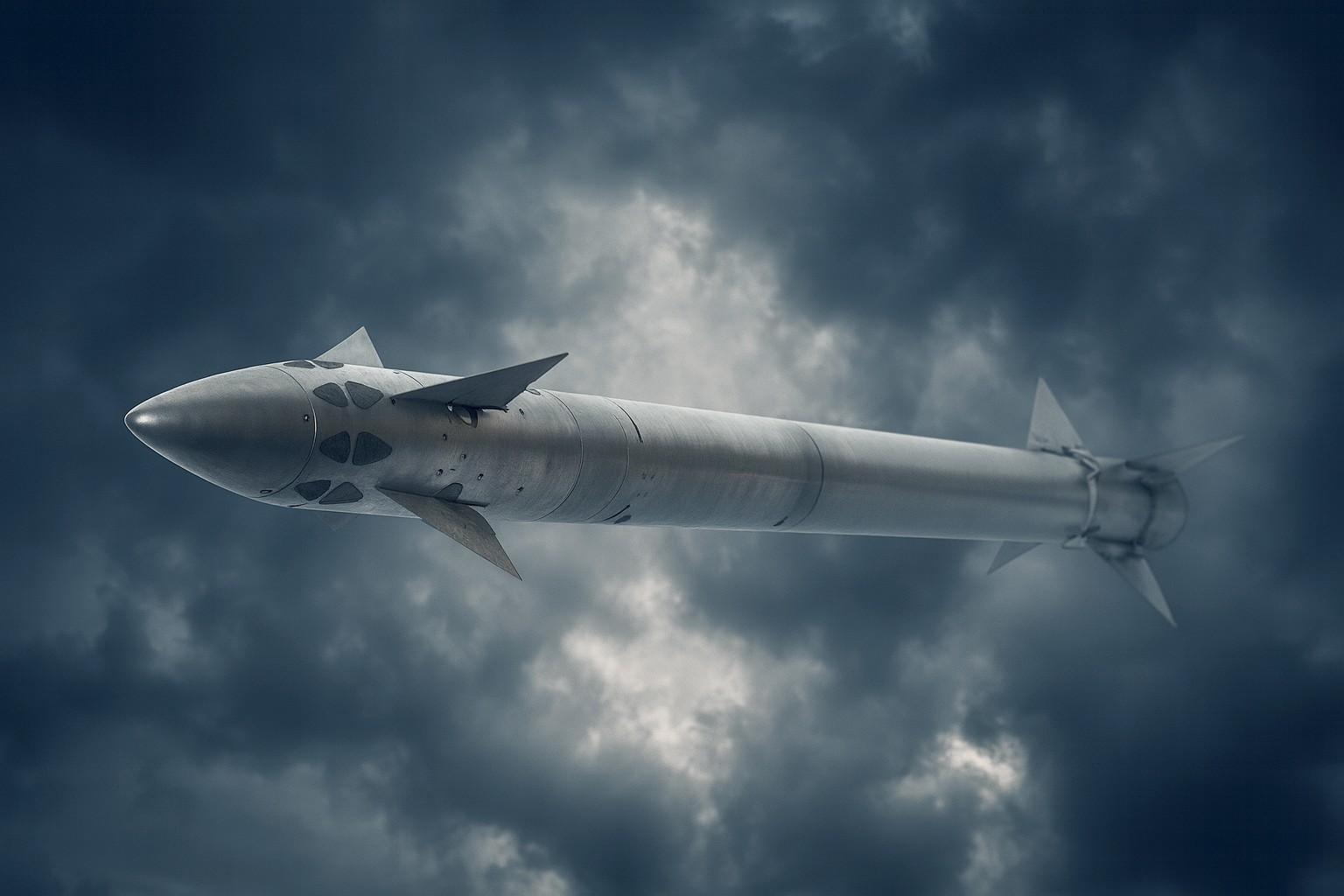
Thales is now building Lightweight Multirole Missiles at its Belfast site at four times the rate it managed in 2022, and has committed £100 million to expanding that capacity further, the company told the UK Defence Journal after the Prime Minister announced accelerated deliveries of the weapon to Ukraine.
Phil Siveter, chief executive of Thales in the UK, said: “We are proud that the Prime Minister continues to see Thales in the UK as a trusted partner of the UK Government. Our Lightweight Multirole Missiles are designed and built at our site in Belfast, which has been supplying complex weapons to the UK for more than 70 years. With the support from Government, we have been able to quadruple our production to meet the global demand, and we are committed to investing £100m to expand this capacity further.
“The work carried out in Northern Ireland helps to sustain 1,100 direct jobs and supports around 700 more across our UK supply chain, giving the UK a sovereign capability it can rely on when it matters.”
Andy Burnham hosted Volodymyr Zelensky in Downing Street on Wednesday, pledging faster deliveries of air defence missiles alongside further military aid and tighter sanctions on Russia, with Britain pressing international partners to restrict Russian liquefied natural gas exports and to lean harder on Moscow over its attacks on Ukrainian energy infrastructure.
The Prime Minister said: “Our rock-solid support to Ukraine is vital for keeping us safe here in the UK and ensuring those on the frontlines have the equipment they need to push back Russia.”
All of that rests on a single production line in Belfast, a site that has built complex weapons for Britain for more than seventy years, through Shorts and then Thales, and it is the home of the Starstreak family from which LMM descends. Starstreak and LMM share the launcher and much of the surrounding equipment, which is part of why the line has been able to grow quickly.
LMM is a laser beam riding missile weighing around thirteen kilograms, with a range of about six kilometres. It is fired from shoulder launchers, from lightweight multiple launchers on vehicles, and from the Royal Navy’s Wildcat helicopters, where it carries the name Martlet. Against drones it is substantially cheaper than the surface to air missiles that would otherwise be expended on them, which is the characteristic that has driven demand since 2022.
The Belfast expansion is the kind of industrial response the Strategic Defence Review and the Defence Investment Plan have both called for, with onshore capacity that can be surged when a war consumes stock faster than peacetime contracts replace it.










This is good news and a sign of what can be achieved, although it has taken 4 years for that growth in production to occur. Some of that ‘delay’ might be down to political reluctance to provide Ukraine with complex weapons in quantity in the early stages of the war.
However, the big weakness highlighted above is that there is only one production line which is undoubtedly a High Value Target (HVT) and as such an obvious objective some sort of attack, perhaps using proxies rather than missiles launched from naval assets.
We need more air defences, sufficient to protect key assets such as this Thales factory and the H&W shipyard as well as diversified production capacity.
Cheers CR