Private companies must prepare to operate in a crisis or conflict, not just in peacetime, because they are already targets and will become bigger ones if war comes, NATO’s Deputy Secretary General has told industry.
Speaking at NATO Edge 26 in İzmir, Radmila Shekerinska said protecting allied security could not be done by NATO alone.
It needed governments and industry working together, understanding the threats they face and developing technologies resilient against them. That resilience, she said, had to go far beyond military networks and digital services, to every system connected to the internet and every piece of critical national infrastructure that operations rely on.
She set out how wide that net was: food production and storage, water lines and pumping stations, energy transmission lines, fuel distribution systems and transport networks, “and many, many more”. “All of this is potentially vulnerable, and all of this must be reinforced so that it is resilient in peacetime, but it is also resilient in crisis or in conflict,” she said.
“Our strategic partner”
Her message to the private sector in the hall was direct. “We prepare to operate in crisis or conflict, and not just in peacetime. So we need you to do the same,” she said.
If a crisis hit, she said, militaries and governments would have different operational needs, and there would be a surge in demand for services. Companies had to be ready for that. “You need to recognise that you are not just a service provider; you are really our strategic partner. You are essential for our shared security.”
She warned that firms were already in the firing line, saying “These companies are already a target with the rising hybrid attacks, and you will be an even bigger target in the event of a crisis or a conflict,” she said, urging industry to work more closely with NATO and prepare for every possible scenario.
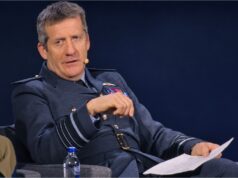
The same message came from Ukraine’s digital transformation minister, Oksana Ferchuk, who spoke from the same stage shortly afterwards. She said the private sector was underestimated and was in reality part of a country’s critical infrastructure, with banking, postal and online services sometimes less prepared for cyber attacks than the state. Her presentation said private operators of critical services needed the same level of protection as state systems. NATO’s Deputy Supreme Allied Commander Europe, Air Chief Marshal Sir Johnny Stringer, later told the conference that NATO needed suppliers “willing to take risks to their people, not just risks to the business”.
Partnerships with big tech
Shekerinska said NATO had made progress over the last few years in building long-term strategic relationships with critical technology providers. At the International Conference on Cyber Conflict in Tallinn in May, run by the NATO Cooperative Cyber Defence Centre of Excellence, NATO agreed closer partnerships with Microsoft, Palo Alto Networks and ESET to share information and coordinate activity to strengthen cyber resilience.
“We need to continue this, do more, and do it faster,” she said, especially at a time when frontier AI models were making massive advances every month and strategic competitors were racing to develop rival systems.
Run by the NATO Communications and Information Agency, this year’s event is the largest yet, with more than 280 companies exhibiting, over half of them for the first time. The agency’s General Manager, Dr Dylan Browne, used the opening session to tell industry he expects to bring €2.7 billion of business to market over the next two years.