NATO should give its senior leaders targeted digital education so that their ambition can catch up with, and get ahead of, the technology now on offer from industry, NATO’s Deputy Supreme Allied Commander Europe has said.
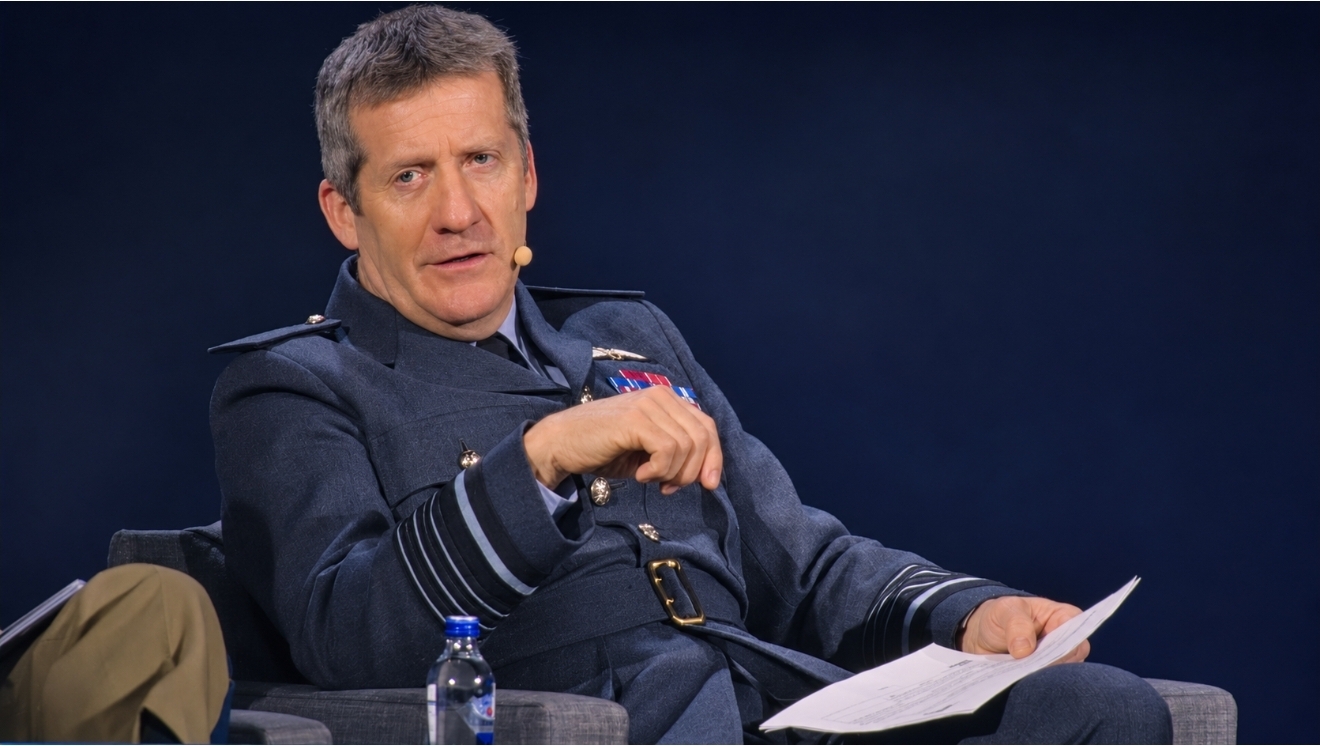
Air Chief Marshal Sir Johnny Stringer was speaking to the UK Defence Journal in a sit-down interview at NATO Edge 26 in İzmir, where hundreds of companies are showing allies what is already possible.
Earlier in the day, on the event’s leaders’ fireside panel on readiness, he had used the history of air power to make the case for ambition. Early military aviation, he said, was a story of ambition and imagination running ahead of the technology, until the technology overtook it, and in the digital space commanders needed to make sure their ambition stayed in front.
Asked whether NATO’s ambition was ahead yet, he said that in some areas the technology was currently ahead, but stressed that this was “not necessarily doom and gloom”. “It’s in the nature of things,” he said. “One gets ahead of the other, and the other catches up and maybe goes beyond it.”
His broader point was about experience, indeed, he said that a typical 50-year-old general, admiral, air marshal or senior civil servant in NATO has spent the last 30 years shaped first by the post-Cold War peace dividend and then by two decades of counter-insurgency in places like Iraq and Afghanistan, where the West faced little challenge outside the land domain. “Don’t get me wrong, the fighting was bloody. We lost lots of people. But we owned space. We owned cyber. We owned air. That’s not the case now,” he said. Much of what today’s senior leaders learned on the job, he added, was not learned in an era of collective defence, and NATO had to adjust for that.
Their exposure to digital technology also varies widely depending on their path through their services, and the pace of change over the last five years in particular means NATO can no longer assume people will pick it up on their own. “If you’re relying on people to be self-starters, autodidacts, they’ll get it themselves by osmosis, I don’t think that’s fit anymore,” he said.
His answer is targeted education, delivered by NATO itself rather than left to individual nations, not least because many smaller allies lack the professional military education structures of the larger ones. It echoed a point he made on stage, where he said not enough military personnel had sufficient education in the area and urged industry to keep challenging commanders rather than simply following what they are told.
Industry forward
On the panel, Stringer had also challenged industry and governments alike. Three decades of relative peace, he told the audience, had left a “just-in-time, just-enough mentality”, and NATO now needed suppliers willing to take risks to their people, not just to their business. Being genuinely scalable, he argued, meant having people forward in the domains and always-on capacity, which raised the question of whether nations were willing to pay the premium.
Asked in the interview whether companies were really prepared to put staff potentially in harm’s way, Stringer said this would be a matter for nations rather than NATO, and that those conversations were already happening. “NATO ordering anybody to do anything, that won’t happen,” he said. He also played down the idea that this was a radical step. Armed forces have long relied on contractors deployed with them, often as field service representatives maintaining equipment in theatre, and Ukraine has shown how closely technology firms can work with front-line units. “It’s been commonplace that industry has been forward supporting forces,” he said, adding that the digital realm was no different from the more traditional land, maritime and air domains.
Nurturing little industry
Speaking earlier in the day on NATO Edge’s leaders’ fireside panel on readiness, Stringer went further on what he wants from industry. He apologised for the way business language had seeped into military thinking during the years of peace, before adding: “Our fault, by the way, not yours.” He also asked the audience to hold people like him to account on buzzwords, with “the tactician and the technician” pressing on what terms like scalable actually mean in practice.
He returned several times to small companies, he said he had been struck by a figure presented earlier by Ukraine’s digital transformation minister, that more than 600 Ukrainian military technology firms had raised funding and were competing for defence contracts, and wondered what the equivalent number was across NATO’s 32 nations since February 2022. Drawing on a year he spent with a start-up, he said the process hurdles and barriers he had described were all still there. “I really worry that we’re going to make some poor choices here if we’re not careful,” he said, adding that big industry had a key role in “encouraging and nurturing little industry”.
He also wants industry brought into NATO’s exercises. Allied Command Operations’ largest command post exercise this year had shown that commanders needed a clear picture of the industrial capacity of the nations they must support, and whether it met the demand signal set beforehand. He said he could see future exercises testing directly whether networks stand up and whether suppliers can provide what commanders need, though in areas such as experimentation NATO was still “in the foothills”.
On the same panel, Lieutenant General Jari Mikkonen, Deputy Chief of Staff for Armament and Logistics in the Finnish Defence Forces, picked up the question of cost, saying governments must treat industrial readiness as a funded requirement rather than an expectation placed on suppliers, and pay for the extra readiness they specifically require.