A minister’s statement that wrecked ships must have been formally requisitioned and under military command to count as in military service was not meant to add legal tests, Lord Coaker has said in a letter deposited in the House of Lords Library.
Writing to Conservative peer Lord Parkinson of Whitley Bay on 12 November, after the report stage debate on the Armed Forces Bill on 20 October, Lord Coaker, Minister of State at the Ministry of Defence, said: “Thank you for your contribution during the reading in the House of Lords of the Armed Forces Bill 2026 and for agreeing to withdraw Clause 55a concerning the proposed amendments to section 230(1) of the Merchant Shipping Act (1995) (MSA).
“I should like to address any ambiguity that may have arisen during the debate regarding the meaning of “military service”, in particular in response to your question as to whether this relates solely to those vessels that have been formally commissioned or requisitioned, or whether the position is assessed by reference to the functions and activities being undertaken by the vessel at the relevant time.
“Baroness Antrobus stated (Hansard Volume 860) that: “To be classified as in military service, at the time of their loss, vessels must have been formally requisitioned, utilised for Armed Forces purposes and operating under military command.”
“I should like to clarify, for the avoidance of any doubt, that Baroness Antrobus’ statement was not intended to establish additional or cumulative statutory requirements for determining whether a vessel was in military service. Rather, it was merely illustrating the types of information or factual circumstances that may be relevant when considering whether the statutory test is met.
“The statutory test is contained in section 9(2)(a) of the Protection of Military Remains Act 1986 (PMRA). It provides that a vessel may fall within the statutory definition where it was either “in service with” or “being used for the purposes of” any of the armed forces of the UK or those of another country or territory. Nothing that was said during the Parliamentary debate alters the meaning or effect of those statutory provisions.
“Whether a particular vessel was “in service with” the armed forces is a question to be determined by reference to the facts and circumstances at the relevant time. Relevant considerations may include, as part of the assessment of overall circumstances, the nature and extent of military control exercised over the vessel.
“I appreciate that further clarification of the response given in parliament may be helpful, and a copy of this letter will therefore be placed in the Library of the House.
“I hope that this clarifies the MOD’s position.”
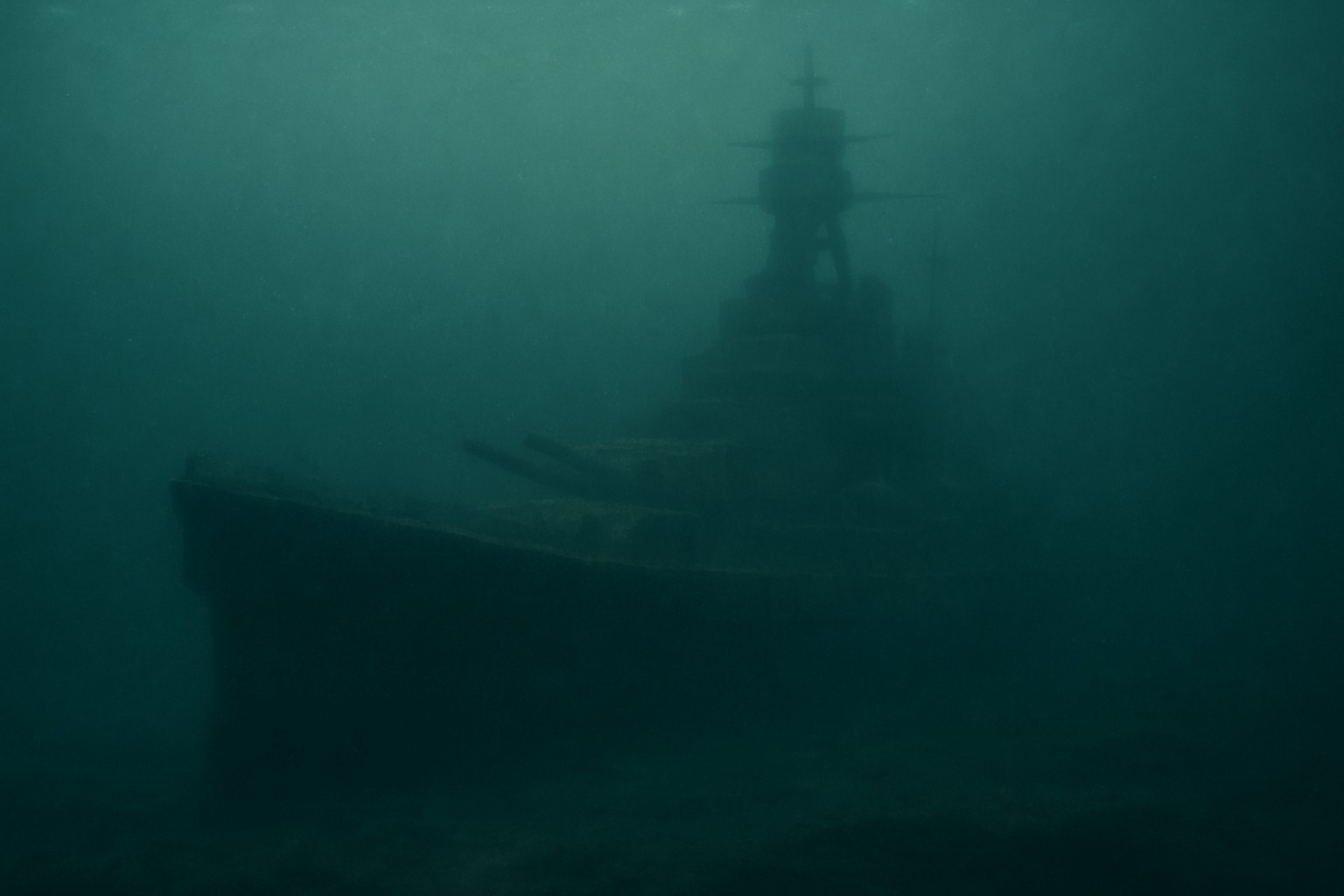
The Armed Forces Bill would give wrecks of vessels lost in military service automatic protected place status without ministerial designation, remove the 4 August 1914 cut-off for older wrecks, and allow divers to view protected wrecks but not touch or enter them, Forces News reported after the Bill cleared the Lords at third reading in October. The existing Armed Forces Act expires on 14 December.
The meaning of military service was tested in the Court of Appeal in 2006 over the SS Storaa, a merchant ship sunk in 1943 while sailing in a naval-controlled convoy with an armed gun detachment aboard. The court rejected the Defence Secretary’s narrow reading that a merchant ship was not in service with the armed forces and found the refusal to designate the wreck unlawful, according to law firm HFW.
Earlier this month, an opinion piece in Baird Maritime argued that Baroness Antrobus’s description of the test risked reintroducing the narrow reading rejected in the Storaa case, citing the merchant ship Tilawa, torpedoed by a Japanese submarine in 1942 with the loss of about 280 lives, Baird Maritime reported.