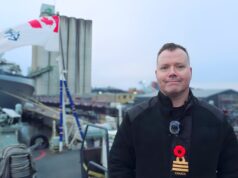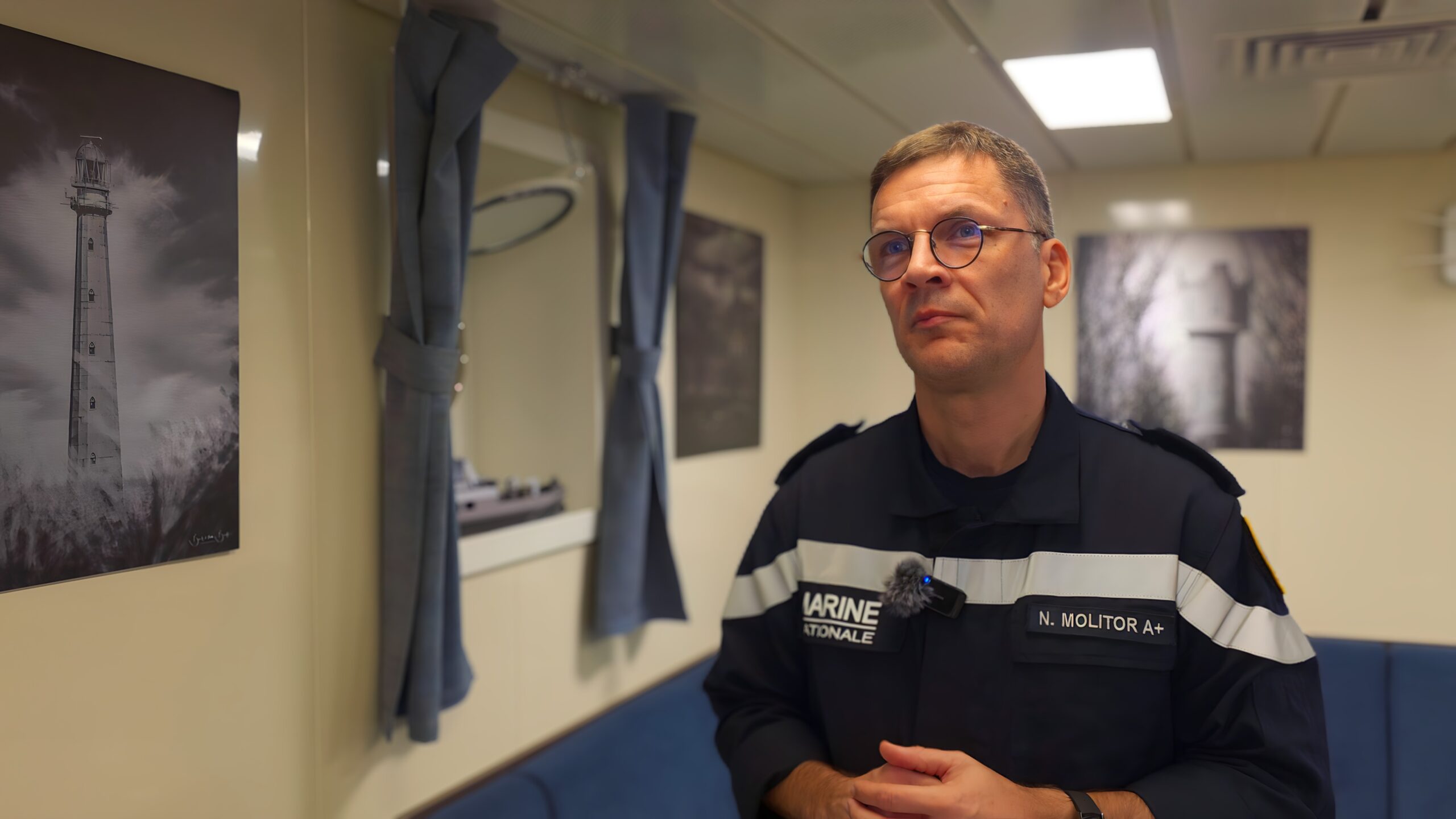
Rear Admiral Nicolas Molitor of the French Navy commands Standing NATO Maritime Group One, one of the Alliance’s permanent naval task groups and the force at the centre of Exercise Dynamic Merlin, NATO’s anti-submarine warfare exercise in the Baltic.
Speaking to the UK Defence Journal on board the group’s Dutch flagship, HNLMS Den Helder, he said command of the group was a chance to bring navies together around a common purpose, noting that it was the second time in two years that France had taken it on.
“Commanding SNMG1 is a very good opportunity. It’s the second time in two years that France commits to commanding SNMG1. It is about understanding the maritime environment. It is about being ready, being stronger together with the nations that are joining, and it’s very rich in these different dimensions, working with everybody together,” he said.
His aims for the group were straightforward. “The main objective is also, of course, working on interoperability. So it’s about tactics, it’s about techniques, and to see how we can best integrate with allies,” he said, adding that the second goal was to sharpen the ships’ tactical skills, all in service of a wider message. “This all in the overarching aim is to show NATO’s unity and its ability to deter and act and operate whenever necessary.” The group brings together ships from the Netherlands, Germany, Canada, Denmark and Finland, and Molitor said NATO’s shared procedures mean integration is usually quick, though he was candid that it is not always seamless.
“Sometimes, of course, some nations are acting differently. So the challenge is maybe sometimes to understand each other and make sure that in the end the effects are really achieved as we are imagining them, but in general it’s very easy to aggregate and work together,” he said.
Drones without warning
At a press conference on board Den Helder, where he appeared alongside NATO’s submarine commander, Rear Admiral John Craddock, and the Chief of the Royal Swedish Navy, Rear Admiral Johan Norlén, Molitor said that while the exercise was focused on anti-submarine warfare, it also tested the ships against missile and drone threats.
Asked by the UK Defence Journal whether enough was being done on counter-drone defence given what has been seen in Ukraine, he said crews knew the threat existed during the exercise but would not be told when it was coming.
“It will be live, so they will be challenged like it would happen in real life. And so that’s also the mindset. We have to practice. We have to practice and train as we fight, and so the ships will be faced [with] real life situations, and they will then just have to react, and we will see if they are able to detect, to react properly, and to destroy these targets,” he said. Answering another journalist on whether ships carried the right equipment, he described counter-drone technology as “a domain that is in continuous evolution”, adding that the value of the exercise was in finding out how reliable that kit really is when confronted with a real threat.
He also described the meeting of two very different kinds of navy. “We have the blue water navies, which are used to working in the Atlantic Ocean with deep waters, and we are here in an environment where the waters are very, very shallow, and this is very specific,” he said, explaining that this was why the group trains alongside the experts of the area. NATO’s presence in the Baltic, he said, had grown to give allies better awareness of what is happening at sea and to protect the sea lines of communication on which the region depends.
“The Baltic Sea is surrounded by NATO allies, and we have to make sure that all these allies, their interests, their territory, their population is protected,” he said.