

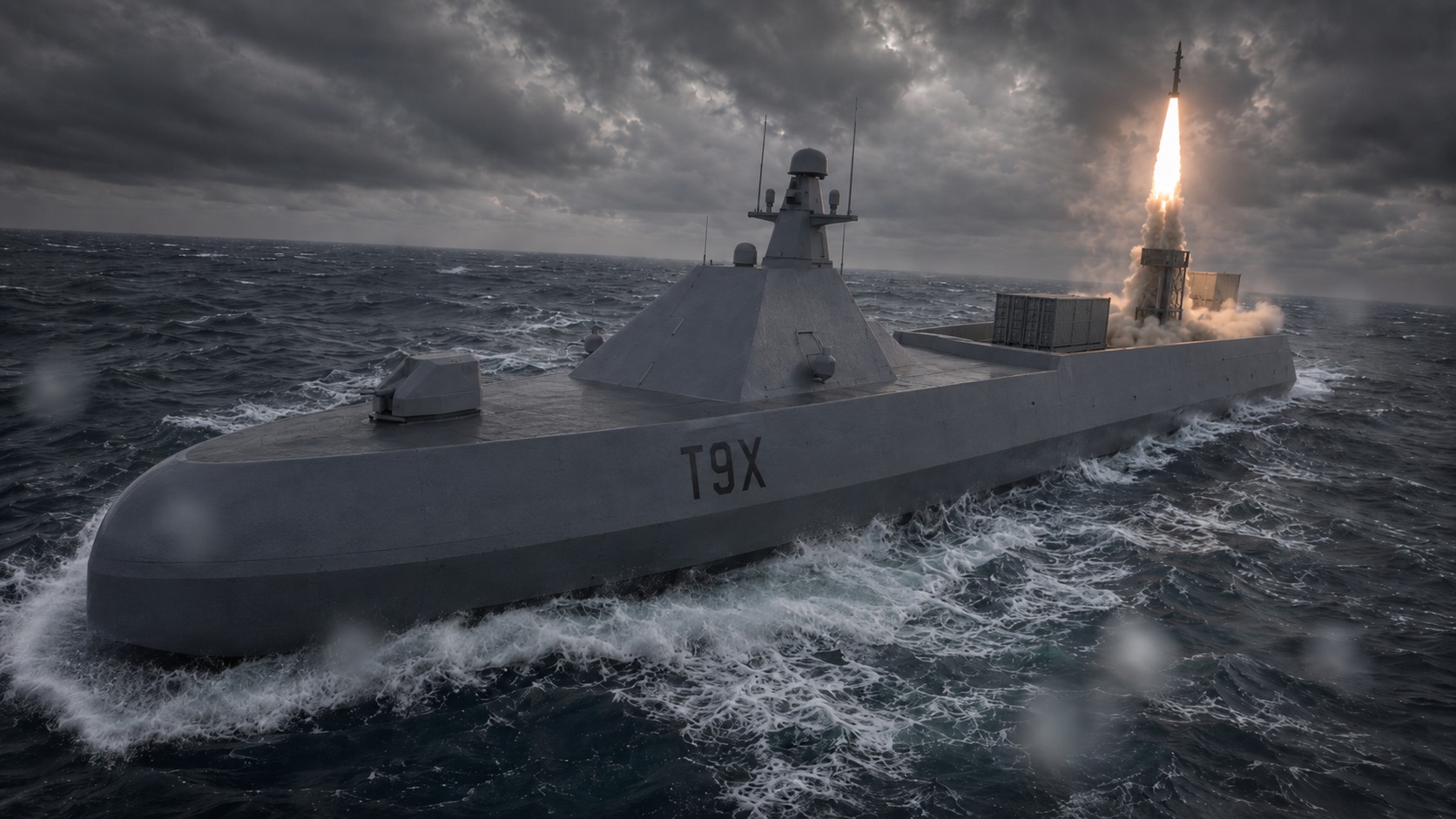
The Royal Navy is developing a Hybrid Navy Concept of Operations to combine autonomous and crewed air, surface and sub-surface vessels as it works to make the fleet more lethal, according to an answer given in Parliament.
Conservative MP Ben Obese-Jecty asked, pursuant to an answer of 6 November, for the name, scope and delivery timeline of the navy-wide lethality programme. Luke Pollard, Minister for Defence Readiness and Industry, replied: “The Royal Navy is developing the Hybrid Navy Concept of Operations to combine autonomous and crewed air, surface and sub-surface vessels to remain at the cutting edge of technological advancement and lethality. Both platforms and weapon systems are being enhanced and evolved to counter the modern threats we face as a nation. In-service timelines will vary dependant on system and platform and responses to defence investment plans.”
Pollard told MPs last year that the Royal Navy was “undertaking a significant programme to modernise and increase the lethality of the Fleet”, as reported by the UK Defence Journal. That work included bringing Sea Venom into service and fitting the Naval Strike Missile across the Type 23 and Type 45 fleets. In October 2025, then minister Al Carns told Obese-Jecty the Navy had made “significant early progress in delivering an integrated frigate force comprising crewed, uncrewed, and autonomous platforms”, the UK Defence Journal reported.
First Sea Lord General Sir Gwyn Jenkins set out the concept in a speech at RUSI in April, describing “a vision for a fleet transformed: a mix of crewed, uncrewed and autonomous platforms.” He said: “It is about increasing the mass, survivability and lethality of our force.” Jenkins also said a Navy-wide wargame had found that “Our missile capacity increased three-fold – at the level necessary to win a contest in the North Atlantic.”
The Defence Investment Plan, published in June, committed £1.5bn to a Hybrid Navy fleet of uncrewed missile, sensor and undersea platforms, designated Type 91 to Type 94, with a further £1.5bn for the Atlantic Bastion anti-submarine effort, according to analysis by the Foreign Policy Research Institute. The plan dropped the Type 83 destroyer and Type 32 frigate in favour of a Common Combat Vessel, and at least six are planned in the 2030 to 2035 tranche.
In July, sailors launched a Nyan One Way Effector strike drone from the experimentation ship XV Patrick Blackett while under way off the south coast, according to the Royal Navy. Pollard said at the time: “Britain is serious about the transition to a Hybrid Navy with new, powerful drones at the heart of the Royal Navy.”
Earlier this month the Royal Navy commissioned its first autonomous squadron in Portsmouth. Around 180 personnel will operate Kraken K3 Scout and Rattler uncrewed surface vessels, USNI News reported. Fleet Commander Vice Admiral Steve Moorhouse said: “The seas are becoming more contested, more dangerous and harder to operate in.”







Unfortunately the window on large ship purchases to enhance the royal navy closed ten years ago. If we want anything in the 2030’s then it’s more type 31 derivatives and drones. Babcock’s ARMOR force looked particularly good on the recent presentation, they seem to have dropped the ridiculous idea of working with HII Romulus. We also need to get away from this fantasy that Birkenhead will be knocking out warships and drones if only we give some foreign company a boat load of money to do it.
Navantia and Appledore is the only other conceivable option and while I don’t doubt Navantia’s ship building prowess, I have zero faith in their ability to build any autonomous platforms and having a software dependency on a Spanish state owned company is worse than being stuck with a US defence prime under ITAR.
I could live with more Type 31 derivatives, assuming the sailors that crew them could say likewise.
At least the UK are World leaders In concepts.
Have we also caught up to Russia when it comes to physical models? I haven’t seen any aircraft carrier concept models from Russia in a few years, but the local defence shows are replete with new ship models for the UK. It’s a sign that the RN/MOD are changing their minds about what the Navy needs as often as the Army used to change its future ORBAT.