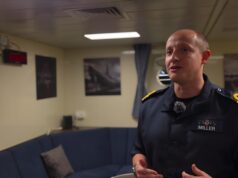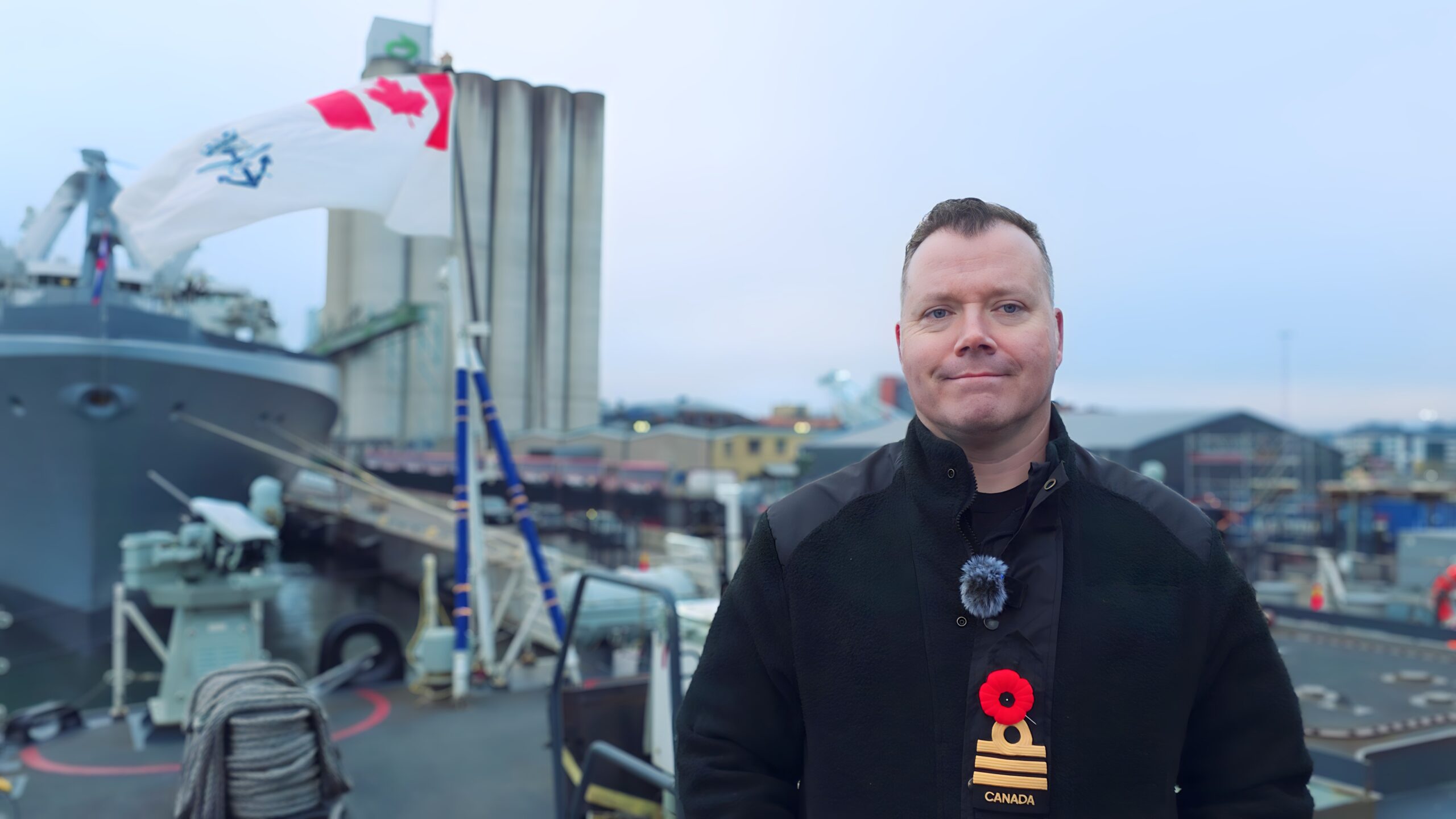
Commander Jason Knowles has spent around 30 years at sea and commands HMCS Ville de Québec, one of Canada’s Halifax-class frigates and among the Royal Canadian Navy’s most capable submarine hunters.
The ship was built for the deep waters of the North Atlantic, and Knowles told the UK Defence Journal that taking part in Exercise Dynamic Merlin, NATO’s anti-submarine warfare exercise in the Baltic, was a chance to learn very different conditions.
“Ville de Québec is designed as an anti-submarine frigate, and thus this is really our bread and butter. However, we are designed to operate in the North Atlantic, so it’s important to come to a different part of the world, train, and understand the waters here, so that if we were called upon to assist with any type of deterrence in this area, we’re familiar with the different conditions,” he said.
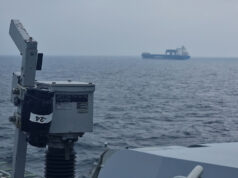
His operations officer described those differences on the bridge: heavier traffic, more warships, navigational hazards close at hand and water far shallower than a ship drawing around seven and a half metres was designed for. The ship’s helicopter crew said they had counted 50 to 60 ships in an hour in Baltic shipping lanes, compared with open ocean where they can search to the full range of their sensors.
For all the technology on board, Knowles said the basics of seamanship had not changed. “I think it’s very easy in modern warfare to picture that the cool tech and the radars and everything are how naval operations unfold. The reality is that you still need to look out the window, and you still need to understand the sea in the same way that they would have centuries ago,” he said on the bridge, pointing to the 17th-century Swedish warship Vasa, which capsized on her maiden voyage in Stockholm, as a reminder of what happens when risks are not managed. Looking out of the window, he said, can still mean being the first to spot an adversary “because your adversary has done such a good job of masking themselves until the last minute”.
The same thinking runs through the ship’s communications, indeed his operations officer said every system has a primary, alternate, contingency and emergency means across a wide range of the spectrum, and that switching quickly when one goes down, whether through interference, equipment faults or even solar weather, was a focus of the exercise for all the allies taking part. “Sometimes the old methods still work,” Knowles added, describing the signal lights still kept as a last resort.
Asked what he wanted his crew of around 240 to take from the exercise, his answer was simple. “I think the simple answer is being ready. So a crew, just like a team, needs to train and practise whenever they get a chance,” he said, adding that an organised exercise allows great training under controlled conditions “so that you’re ready for anything that might come”.
That readiness, he said, takes far more than equipment. Recalling a conversation with Sweden’s Secretary of State for Defence about the frigates Sweden is acquiring, he said the human side of operating such ships is often underestimated. “You can purchase the kit, you can have a console, and then the human element in the background does take quite a lot of effort, which is why we take about 12 months to prepare to be deployed only for six. So there really is a huge machine in the background.”
A thinking game
He said the underwater battle space had become far more visible to the public in recent years, and that new technology, especially autonomous vehicles, was changing it, which made it important to be seen to train. “Not only do you need to train and remain ready in those environments, you need to demonstrate to both your own populace as well as any potential adversaries that you are continuing to train, continuing to develop, continuing to improve your awareness and understanding of how to operate in that complicated battle space,” he said. Asked whether the thought of deterring Russia drives that training, he said it did not, arguing that change “can come from any vector” rather than from one particular adversary. “The complicated issue of the submarine is under the water and difficult to find hasn’t really changed,” he said, adding that the part of the job about outthinking an opponent was the part he had been doing for 30 years.
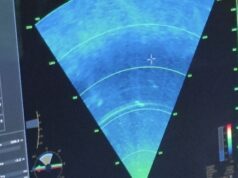
In the ship’s operations room, Knowles was frank about the odds. “Submarines are great tools. They are very elusive. They are built to be stealthy and they have the advantage. They are inside the environment and understand it so much better than we do. We’re only on top of it,” he said, pointing to Sweden’s navy as an example of a force that understands the Baltic better than anyone coming in from outside. “So, yes, sometimes the submarine wins.” Finding one, he said, depends on sailors with skills even he does not have, from the sonar operators listening for something as small as a door opening and closing to the crew of the ship’s helicopter, which he called one of its most important tools because it carries its own sonar and can search far ahead of the ship.
Even launching it, he said, turns the frigate into something like an airport, with radar operators clearing the area and the ship manoeuvring to create the right wind over the deck. “Is it possible to miss a submarine? Absolutely, they’re designed to be missed. But at the same time, sometimes we find them even when they don’t want to be found, based on those overlapping skills that we have on board,” he said, comparing the job to chess. “Your opponent isn’t just a rocket; it’s another vessel with people in it that are also trying to outsmart you. You really do have to have a little bit of an idea of how do I think that person is going to react to my presence or my actions, and try to outthink them in that regard. It kind of makes it kind of fun.”
The old and the new
Ville de Québec has served for more than 30 years, and Knowles said it remains relevant because of the effort put into keeping it modernised, describing it as “a good example of the blend of the old and the new”. Earlier in the year the ship hosted the staff of Standing NATO Maritime Group One, reconfiguring its operations room so the commander could run the whole task group from on board. It sailed with the UK Carrier Strike Group around the world last year, and Knowles said Canada has kept frigates or mine hunters with NATO’s standing naval groups since Russia’s annexation of Crimea in 2014, with its sister ship HMCS St. John’s taking part in Dynamic Merlin the year before.
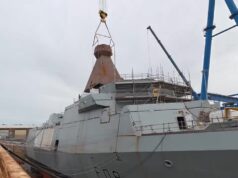
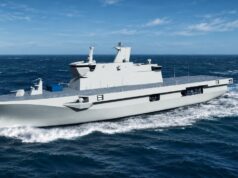
He described Canada as effectively a three-ocean navy, with one ship recently sailing from coast to coast through the Arctic, and said moving between the very different Atlantic, Pacific and Arctic environments only sharpens those skills. The Halifax class is due to be replaced by the River-class destroyers, based on the same Type 26 design as the Royal Navy’s new frigates, and Knowles said crews like his have had “a lot” of input into them, with Canadian sailors already training on the ships’ US Aegis combat system years before the first is delivered.