

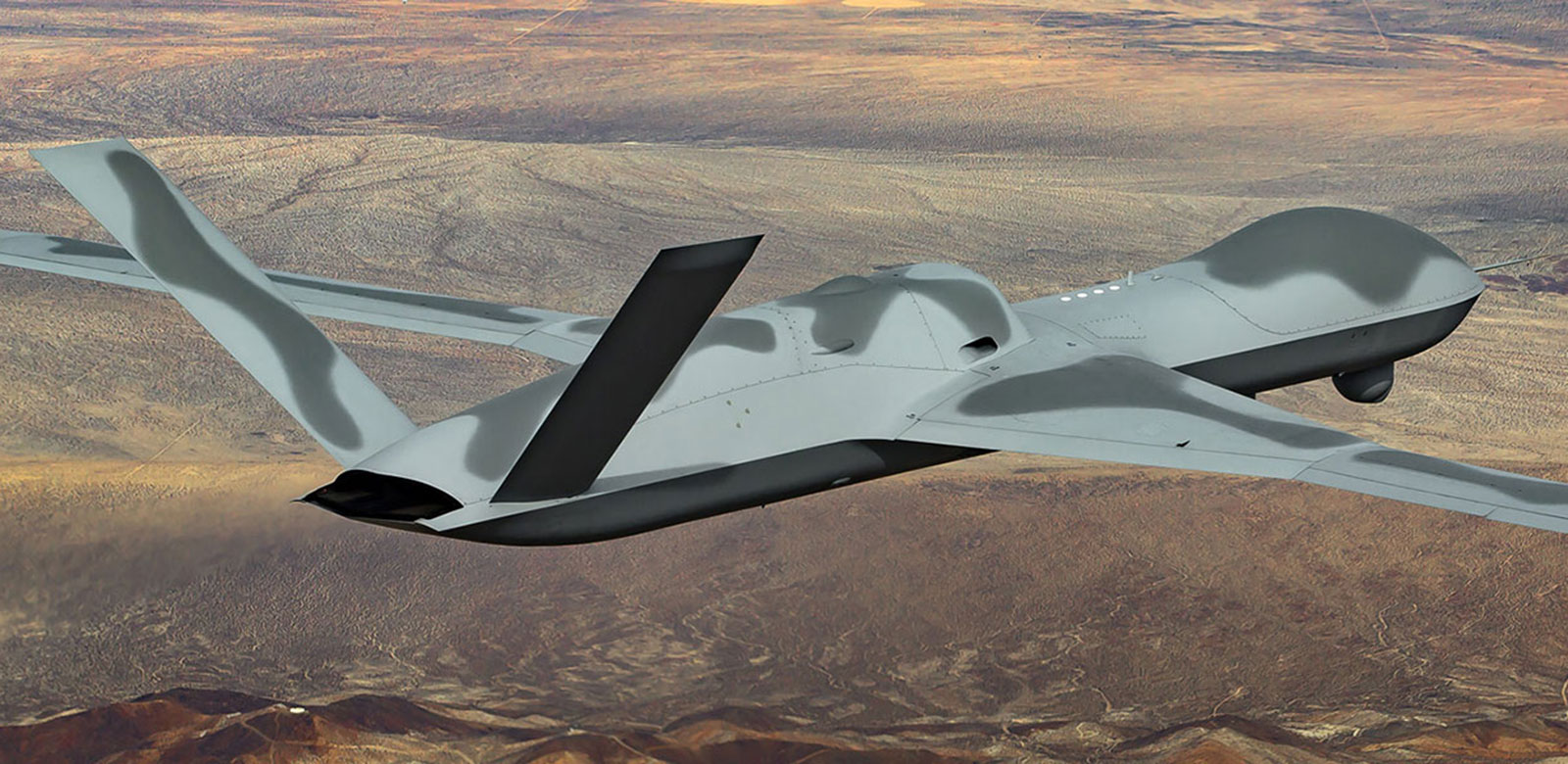
General Atomics Aeronautical Systems has completed another autonomous flight demonstration using its MQ-20 Avenger jet, including a simulated aerial intercept against a live, piloted aircraft, according to the company.
The company-funded test took place on 18 January and involved the MQ-20 operating with government reference mission autonomy software. GA-ASI said the demonstration was intended to assess the maturity of autonomous decision-making, sensor integration and mission execution without direct human control. During the flight, the MQ-20 engaged an aggressor aircraft flown by a human pilot. According to GA-ASI, the autonomous system used onboard sensors to independently detect, track and generate an intercept solution against the target aircraft.
GA-ASI said the Avenger has been used as a surrogate platform for Collaborative Combat Aircraft development for more than five years, alongside more recent purpose-built platforms including the XQ-67A and YFQ-42A. The demonstration began with mission planning through a human-machine interface, after which the mission profile was uploaded to the aircraft. Once airborne, GA-ASI said the system confirmed successful interaction between mission autonomy and flight autonomy functions, allowing the aircraft to adapt dynamically to mission requirements.
As part of the test, the MQ-20 was assigned keep-in and keep-out zones, which the autonomous system was required to respect throughout the flight. The company said the aircraft complied with these constraints during all phases of the mission. One element of the demonstration involved the use of a live infrared search and track sensor supplied by Anduril. According to GA-ASI, the sensor enabled the aircraft to passively range the target, establish a track and calculate an intercept profile. The autonomy system then simulated a weapon engagement against the live aircraft.
Additional mission events included flying pre-planned routes, entering and holding in a standard instrument orbit, and executing headings, speeds and altitudes assigned during the mission, all while maintaining adherence to airspace restrictions, the company said. GA-ASI said the demonstration supports its ongoing work in human-machine teaming and reflects continued investment in autonomous mission systems for future operational use.



See MOD, this is a technical demonstrator. The company pays for it to try to acquire sales in their tech that they’ve showcased they know how to do. It should not be countries paying for a demonstrator.