

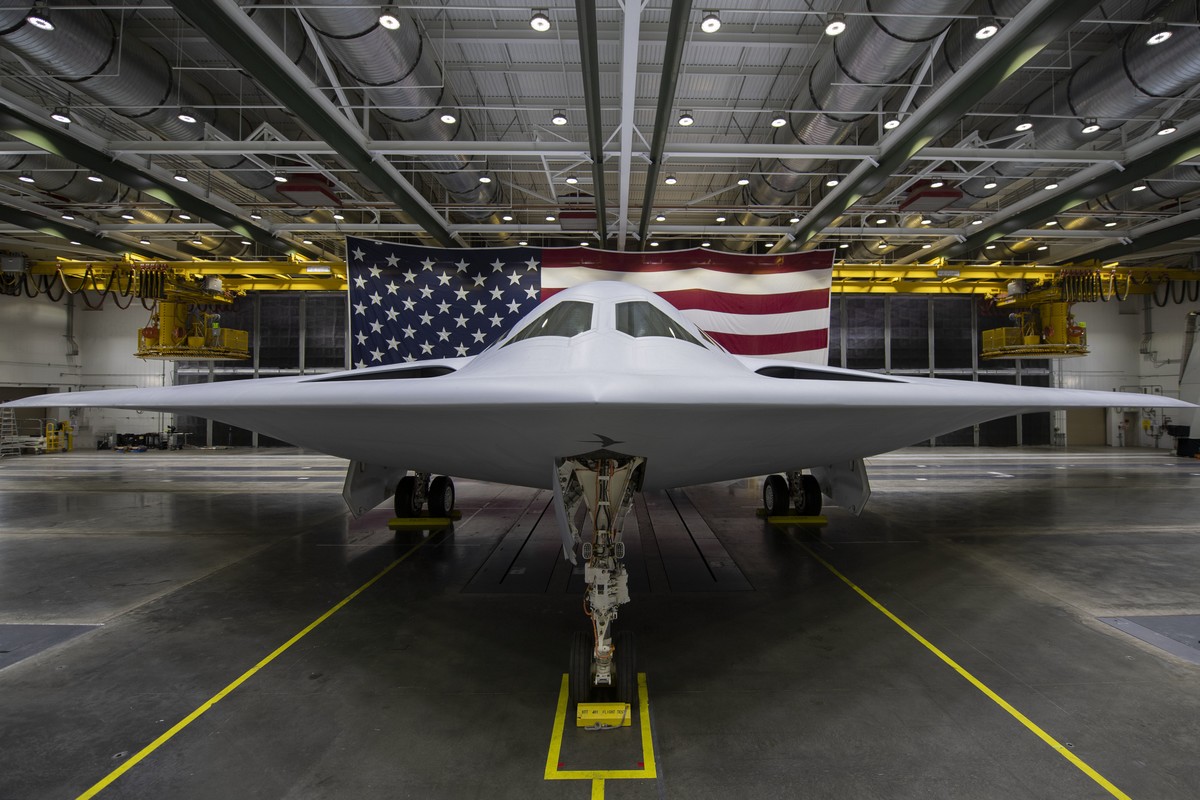
Northrop Grumman and the U.S. Air Force are accelerating production capacity for the B-21 Raider stealth bomber as the programme progresses through testing, according to the company.
The aircraft is currently in production with final assembly taking place at Northrop Grumman’s facility in Palmdale, California, alongside manufacturing work carried out across the United States. The first operational B-21 is expected to arrive at Ellsworth Air Force Base in 2027, according to the company.
Northrop Grumman said it has invested more than $5 billion in digital engineering and manufacturing infrastructure to support production of the aircraft. “The strong performance of the B-21 program has our Northrop Grumman and Air Force team ready to accelerate production of this game-changing capability for our nation,” said Kathy Warden, chair, chief executive officer and president of Northrop Grumman.
Multiple aircraft are currently undergoing ground and flight testing, with the company stating that the aircraft’s performance is exceeding expectations from digital modelling. The test fleet expanded during 2025, enabling a faster tempo of flight testing and data analysis.
Northrop Grumman said the programme benefits from a digital engineering environment that allows engineers to analyse flight test data in real time and support rapid planning for future test flights. The company said maintainers within the Combined Test Force can prepare the aircraft for additional flights quickly, allowing for a higher testing cadence.
“Getting the B-21 Raider into the hands of our Air Force operators and maintainers is the mission of thousands of dedicated Northrop Grumman team members,” said Tom Jones, corporate vice president and president of Northrop Grumman Aeronautics Systems. “We have delivered continued outstanding performance on B-21 in ground and flight test, in partnership with the Air Force.”
The B-21 Raider is designed as a long-range stealth bomber capable of delivering both conventional and nuclear payloads and operating in heavily defended environments. According to the company, the aircraft uses next-generation low-observable technologies and an open architecture design intended to allow future upgrades and integration of new weapons and systems.







Hopefully the success of digital engineering on the B21 can be replicated in new programs like Tempest and F47. Programs like F35 and Astute all suffered in the past from immature computer design systems however it does seem now the technology if finally matured and producing real world benefits.
Agreed. Although it said performance outperformed the digital modelling, which is good, but shows the digital modelling still has a relatively decent margins of error.
Exactly my thoughts.
🤞🤞
Hmmm … notice the words “price decrease” to share in the cost efficiency derived from this process, ever cross the lips of NG executives. A bridge too far … 🤔😉