

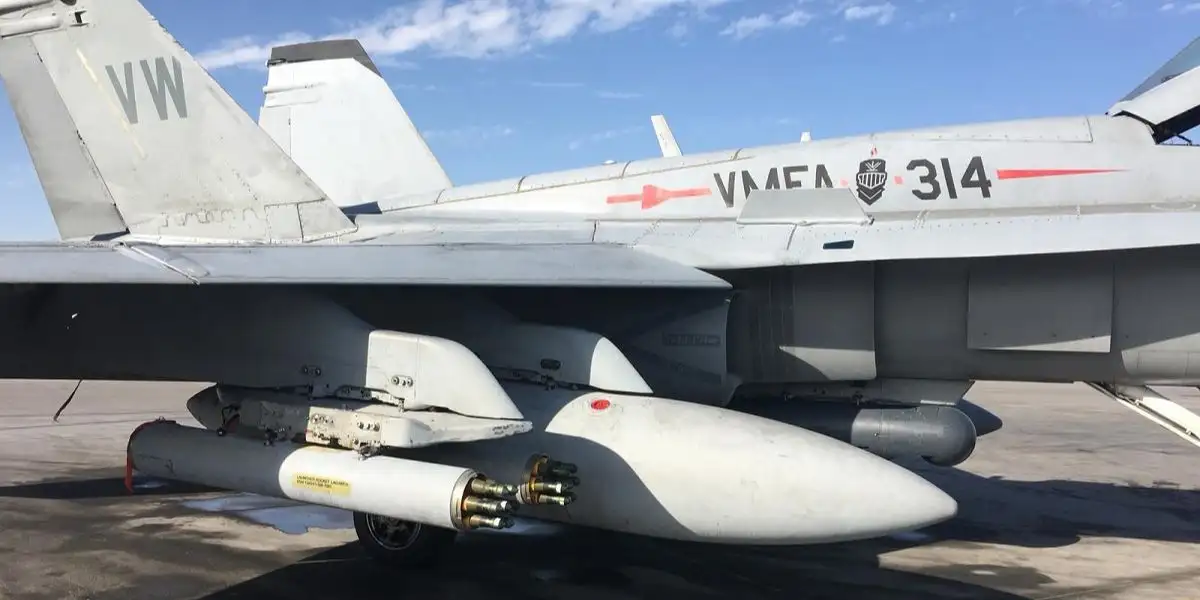
BAE Systems has been awarded a five year contract by the United States Navy for the continued production of APKWS laser guidance kits, according to the company.
The indefinite delivery, indefinite quantity contract has a maximum value of $1.7 billion, with an initial order worth $322 million, and is intended to support the supply of tens of thousands of guidance kits for US forces and allied customers.
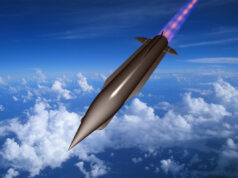
The Advanced Precision Kill Weapon System, known as APKWS, converts standard 2.75 inch unguided rockets into laser guided munitions. According to the company, the contract reflects growing domestic and international demand for lower cost precision strike options across multiple mission sets.
BAE Systems said the guidance kits are available to all branches of the US armed forces and to partner nations through foreign military sales, and have been used in air to surface, surface to surface, surface to air and air to air roles.
Neeta Jayaraman, director of Precision Guidance and Sensing Solutions at BAE Systems, said the award highlighted the continued relevance of the system. “This award reinforces the value of proven and cost efficient precision munitions, which have consistently demonstrated their effectiveness and versatility across multiple platforms and missions,” she said. “High volume production ensures rapid and efficient delivery to the warfighter.”
According to the company, APKWS guidance kits allow operators to engage stationary and moving targets while reducing the risk of collateral damage. The system can be launched from a range of platforms including fixed wing and rotary aircraft, unmanned aerial vehicles, ground vehicles and maritime vessels.
BAE Systems said the guidance kits are compatible with existing rocket motors, warheads and fuzes, and require limited additional training and maintenance compared with traditional guided munitions.
The company has been producing APKWS kits at full rate for more than 12 years, and said the system offers a lower cost alternative to larger precision weapons. Production takes place at BAE Systems facilities in Hudson, New Hampshire and Austin, Texas, according to the company.
The US Navy contract runs for five years and allows orders to be placed as required during that period, with final quantities dependent on future tasking and funding decisions.






“Mega” eh ? well It’ll help but It’ll not “Make England Great Again” !
Sadly it’s got sod all to do with the UK.. this is BAE Inc, although BAE Inc is owned by BAE PLC the way the U.S. MIC works is that essentially all tax revenues stay in the US, almost all profit has to stay in the US ( it cannot be transferred to BAE PLC) and all the US IP or IP that included any U.S. involvement has to stay firewalled within BAE Inc and is essentially controlled by the U.S. government… so all it can ever do is make American great again…
To be fair that’s how most multinationals work, keep profits and cash in low tax jurisdiction and not send back to the parent. It’s how apple ended up having huge stockpiles of cash abroad before trump in his first term did a tax deal with them that allowed them to bring it back to the parent with only a marginal tax bill.
Hi Steve it’s slightly different with that send your profits to low tax countries it’s a business choice and the company can still move the profits back home as well as developed IP.. with MIC firewalling it’s very different.. it’s why you see separate companies created because essentially the nation state must control its own MIC.. so essentially BAE inc has nothing to do with the Uk at all.
True, just meant even without that there wouldn’t be any money flowing into the UK or the UK tax man.
I’m kinda surprised that the US hasn’t required BAe to either move it’s head office to the US or sell it’s US operation.
They are fine with the firewall because essentially it’s a US company with with a UK share holder.. it works because their laws are so very tight and protectionist.. the UK does it differently we don’t have the level of protection in law but the UK government holds a golden share I’m BAE plc ( essentially the UK government can veto anything anytime in regards to bae board decisions).. it also then if it invests in specific projects locks in IP via mou.. in the US if it’s a US company it’s US ip no matter who invested the money.. it’s why working with them is so risky..
The UK shareholder is normally an issue for the US. They love the free market as long as it’s the rest of the world being open to US companies, they are very protective of US companies and don’t want any foreign interests /competition in their domestic markets if it can be avoided.
That is true the US is and always has been profoundly protectionist.. the UK always profoundly Neo liberal.. it’s why we have almost no industrial capacity left.. bizarrely though the one area US protectionism really failed was shipbuilding..
Not really bizarrely. They didn’t see a navy threat and they focused purely on aircraft carriers and the intimedation they brought (see venezuela and parking one off it’s shores and expecting regime change). It wasn’t until recently that they suddenly saw the naval threat that China was bringing and by the time they noticed china ship building capacity was huge. China was smart they built up their capacity by building domestic coast guard cutters.
That combined with the US and frankly the west failing to see the change in warfare. Their approach was big expensive single platforms that dominated and far out powered anything else in the world and they failed to spot that a single platform was too vulnerable and if they lost a couple they would be out of options.
Yes the China policy of hide your strength has totally worked.. I still have arguments on this website with people who insist on telling me China does not have a blue water navy.. makes me wet my pants every time.. this is one of the things that is so bizarre about trumps destruction of NATO.. China is coming for the US and by 2035 really all the USN will be able to do is stand and die against a navy with 2-3 times its major surface combatants. The USN needed to be able to bank on Europes 5 carriers and 115 frigates and destroyers to close the odds.. now it’s got to hope none traditional allies will fight with it in the western pacific.. which is not likely now with its record of abandoning allies to their fates..
Realistically the world isn’t coming to taiwan help, they are in it alone. The US will only help if there is something in it for them, they have made what clear many times over. The US is squaring off against china but that is purely for a domestic audience of heart land nut cases that feel the US dominated the world.
Does china have a blue ocean navy, who knows, it’s debatable as they haven’t tried to deploy international but equally their current focus is on taking taiwan, and making sure the US feels it would be too painful to get involved. The US public wouldn’t take major US ships getting sunk for long before they voted out the government, they aren’t in the mood for another Vietnam.
This is the funny thing about China and the PLAN everyone has this belief that they don’t deploy globally and yet they have far more global deployments than the RN.. every 3 months or so l like clockwork a surface action group is dispatched to the gulf of Aden, Middle East and Africa.. it spends 3 months on station and a bit of time messing around in the eastern Indian Ocean as it’s coming and going.. this means every year the PLAN dispatch’s a minimum of 12 ships to across the Indian Ocean to Africa.. it now also seems to have a pretty permanent deployed eastern Indian Ocean squadron.. so it generally has around 8 combatants spread from Africa to Cambodia. It at the same time will launch about 2 task groups a year to the South Pacific and 1-2 task groups to the mid pacific( remember that is a 10,00km round trip). It once a year sends a freedom of navigation deployment up through Europe to Russia.. In the last decade it’s sent 3-4 large amphibious deployments to Africa.. last year it sent a carrier battle group around Japan and then east of Guam.. that’s a well of 10,000km CBG ( in the same year it sent major surface a action groups down to Australia as well as its 4 surface action groups to Africa)…in the last decade or so it has deployed over 50 surface action groups to Africa and the Middle East ( these are all three warship groups as they alway send the same ASW frigate, AAW destroyer and fast fleet auxiliary)
Comes back to china being smart with messaging. Because they are not a democracy they don’t have to pander to the media or their electorate with positive stories, they can just do stuff in secret.
Is that bit about the profits from BAE Inc not going into the whole group correct ? because I have just read a though things that suggest that isn’t the case
Hi Simon essentially the way it works is all the gross profit must be managed within the US.. essentially all the tax and potential investment must remain in the US as does the vast majority of the manufacturing and supply chain.. and it’s financial reserves, essentially the only bit that can come to BAE PLC is agreed is the net profit paid to BAE PLC as the shareholders.. which is very small
Are these APKWS deployable on F35Bs? Are the UK looking at getting these or even the 25mm gun pods just for a bit of extra punch?