

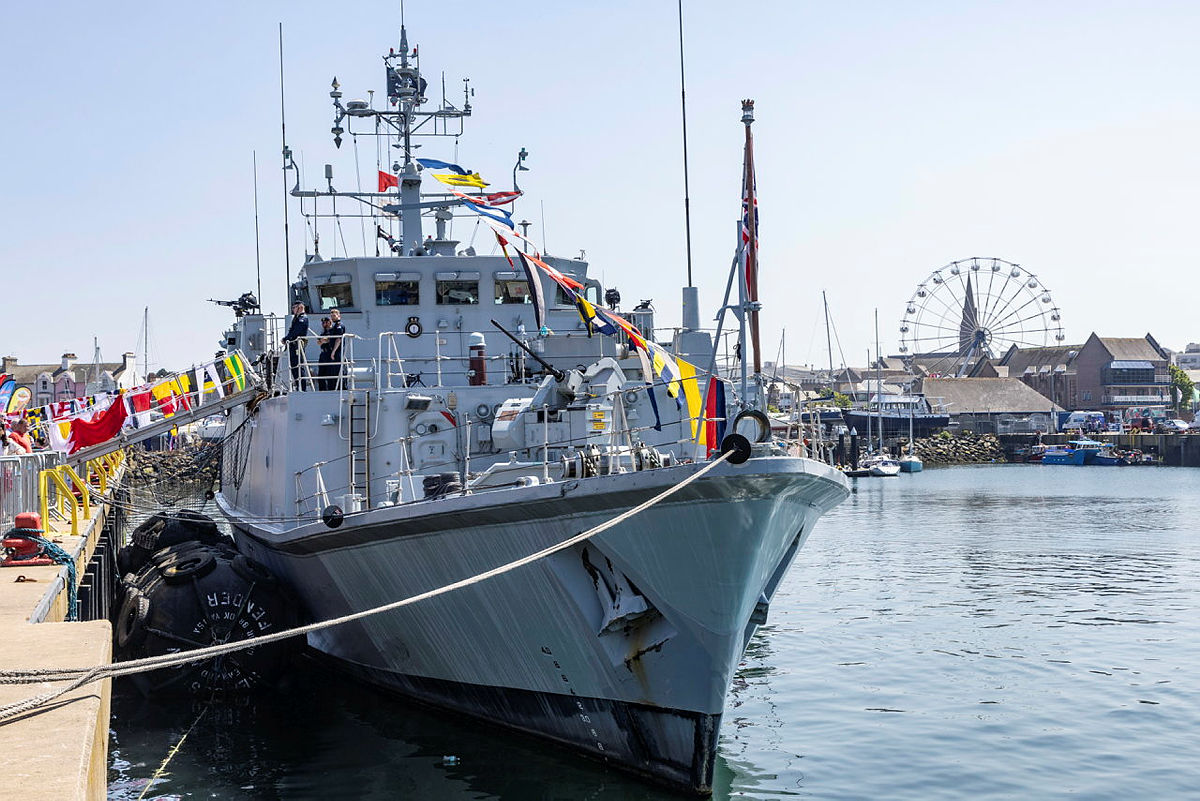
The heavy lift contract that carried the minehunter HMS Bangor back to Britain from Bahrain cost £4.13million, and the ship arrived on 29 November last year, according to an answer given in Parliament.
Ben Obese-Jecty, the Conservative member for Huntingdon, asked for the date of the return and the cost of the replacement heavy lift contract, following an answer of 8 September.
Luke Pollard, the Minister for Defence Readiness and Industry, said: “HMS Bangor returned to the UK on 29 November 2025 via heavy lift. The cost of the heavy lift contract to bring her back to the UK was £4.13 million.”
Heavy lift means the ship was carried home aboard a semi-submersible transport vessel instead of sailing under her own power, an arrangement the Royal Navy uses for its mine countermeasures vessels on long passages.
Obese-Jecty had asked about a replacement heavy lift contract, and the £4.13 million figure covers the contract used; no explanation was given for why the original arrangement fell away.
HMS Bangor is a Sandown class single role minehunter, one of a class built with glass reinforced plastic hulls to keep their magnetic signature low enough to work safely in a minefield. The ships displace around 600 tonnes, carry a crew of roughly forty, and hunt mines with sonar, remotely operated vehicles and clearance divers. Several of the class spent years forward deployed to Bahrain as part of the Royal Navy mine countermeasures force in the Gulf, and the class is being paid off as the role moves to uncrewed systems operated from motherships.






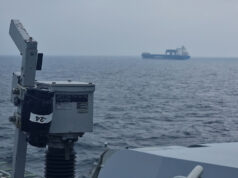


HMS Bangor was repaired in a Bahrein yard following her collision with HMS Chiddingfold in Bahrein on 19/1/24. She was also struck by USS Gladiator also some time in 2024 and received more repairs. Towed to the UK at a cost of £4.13m and returned to HNNB Clyde for structural repairs in late November 2025 – April 2026.
Did anyone consider scrapping this 24 year-old vessel in Bahrein in 2024 and bringing forward its replacement? Might have been cheaper.
“bringing forward its replacement”
Oh that’s funny that one. Replacement? ha ha ha
HM Bangor may still have useful life left! The new tech methods are still not yet 100% proven!
She returned to Rosyth for repairs not Faslane
Four million quid to ship it back to UK?!! Details of disposal on its return are not mentioned but if it’s heading for the scrap yard after it’s been paid off then it should have been done in Bahrain. Anyone know what the “original arrangement” was?
I would love to know why their mine detection equipment can not be used to detect submarines!
Several times, people have given me the IYKYK – well I don’t and furthermore, don’t understand – it detects acoustic anomalies and a sub is a pretty big acoustic anomaly, could someone explain, pretty please?
There are 2 types of sonars methods: active and passive
Active: it send a sound that like in a radar that sends a radio signal have to return, the return sound then due to processing, range gates, direction etc needs to identify that it returned from a submarine, not a submerged mountain, whale, sunk ship, surface ship etc.
Minesweeper have active sonars, but they are very high frequency so very low range detect mines whish are very small objects but also potentially identify them. A bit like X ray of sea bed but with emitted sound not radio(radiation) signals. They would certainly detect a submarine in their mere around 1km range.
~1km range sonar is useless for ASW unless you are fighting infiltration in the harbours, small choke points.
Passive: Listen for sounds, bigger the better. Useless for mine warfare.
And then there’s what would a minehunter do if it did find a submarine…..
Pray?
Thank you AlexS
My pleasure
Utter disgrace and who go sacked? This is why there is no money in defence because there is no consequence when there is incompetence!! A commercial maritime company would have ensure blame was apportioned correctly!!