

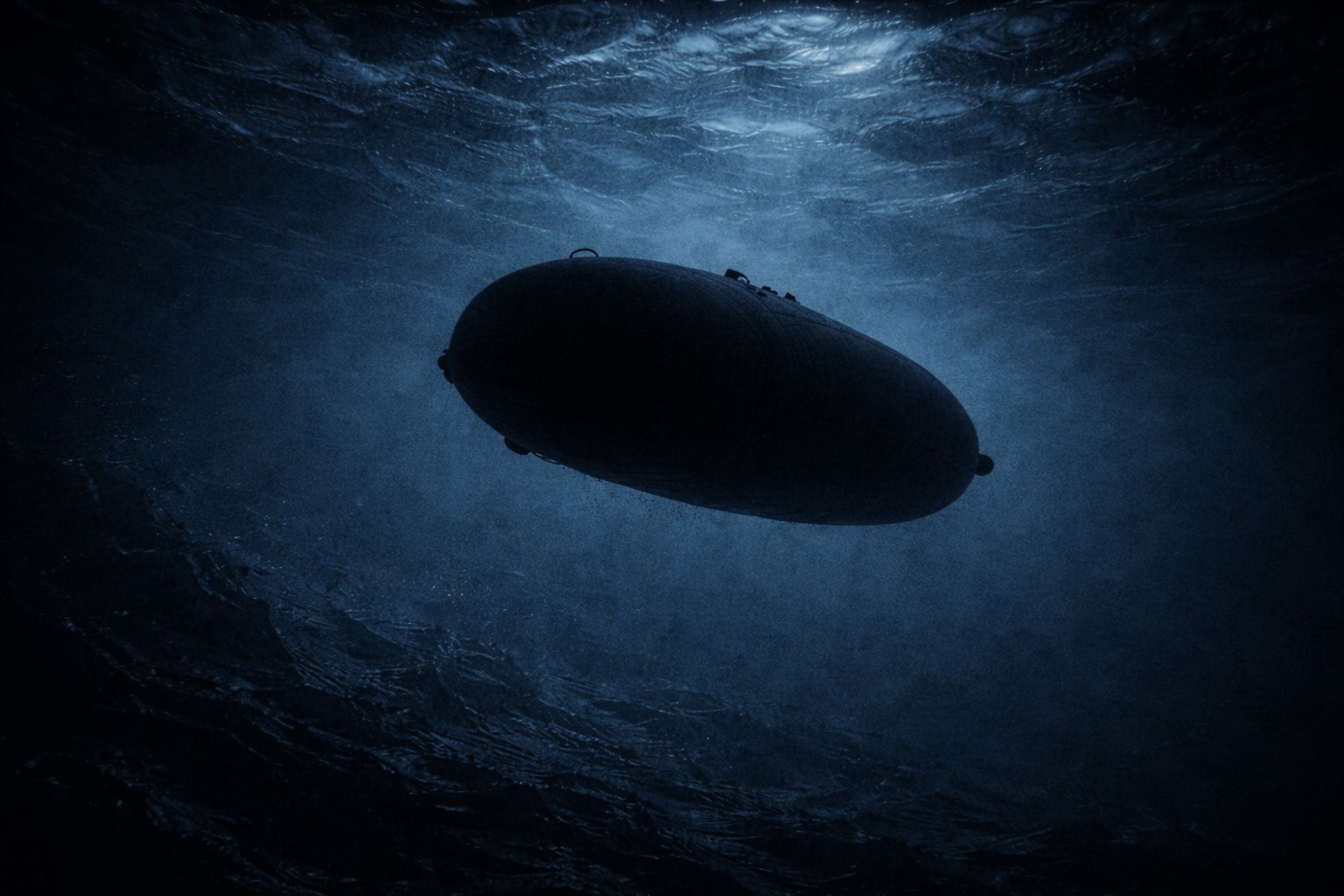
The United Kingdom and United States are jointly seeking industry solutions to counter a growing class of underwater threats, launching a bilateral programme focused on detecting and defeating uncrewed subsea systems targeting critical infrastructure.
The Robotic Exclusion & Engagement Framework (REEF) is described as “a bilateral solicitation involving collaboration between the U.S. and UK,” with submissions assessed by both governments to identify technologies suitable for defence use.
The programme is driven by increasing concern over subsea threats. The notice states that “adversaries and non-state actors are increasingly utilizing autonomous underwater vehicles… posing a growing threat to… critical infrastructure, waterways, ports, harbors, and expeditionary forces.”
It adds that “current solutions are fragmented, expensive, and limited in number,” highlighting capability gaps across both US and UK defence communities.
The initiative seeks a system-wide approach, noting that it “seeks a suite of systems approach to address the REEF challenge,” combining sensors, processing, software and interdiction methods into a single operational framework.
At its core, the requirement is for systems that “must cover the entire Detect-Track-Classify-Defeat kill chain” and be “robust and flexible enough to protect diverse environments requiring subsurface maritime protection.”
The notice specifies that solutions should provide “sufficient detection-to-response time for human in-the-loop decision-making such that underwater threats can be safely interdicted or neutralized.”
A wide range of technologies are being considered, with “all sensor types… of interest,” alongside both kinetic and non-kinetic defeat methods, including systems designed to “disrupt/destroy detected threats” or prevent access to protected areas.
The programme also stresses integration, stating that “a cohesive suite of scalable, rapidly deployable passive and active sensing systems… [is required] to enable interdiction methods to address this evolving threat.”
Selected technologies could transition rapidly beyond prototype stage. The notice confirms that awards may lead directly to production, with solutions expected to integrate quickly and be ready for testing within tight timelines.




Fine as long as the research doesn’t lead to American having total control – UK vessels produced as a result of any joint research need to be manufactured and controlled by the UK!
“Current solutions, limited in number.”
Which are, in the RN?
Am I assuming this is going to be a small anti-drone drone/torpedo?