

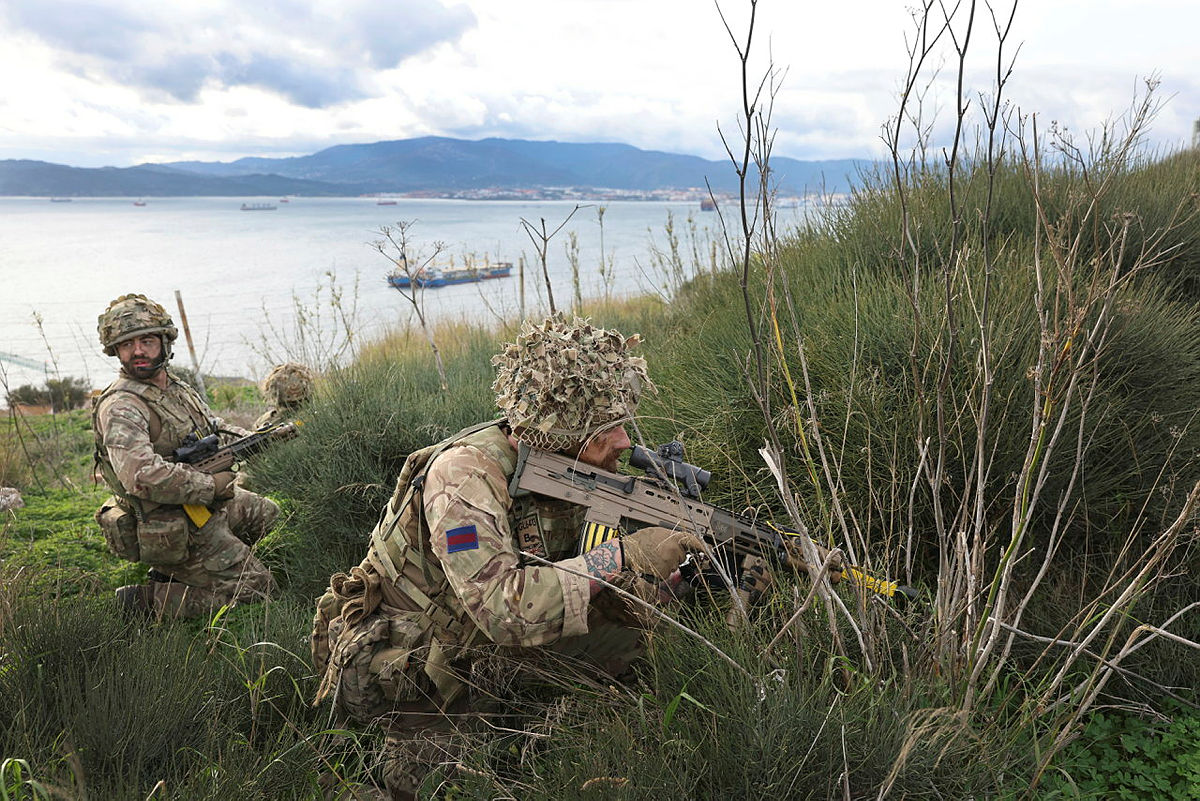
The Defence Investment Plan must not overlook one of the best value options available – it’s time to double Britain’s reserve forces.
Geopolitical risk and uncertainty continue to grow. The biggest conflict in Europe since World War II, the War in Ukraine, has recently entered its fifth year. Countries like the UAE which would have been seen as a safe haven, have come under fire, and the British base in Cyprus has been attacked for the first time in forty years. These are just some examples showing that the peace dividend, on which higher spending on domestic public services has rested, will be under increasing strain. So as we look at how we boost defence capabilities it is going to be vital that we get the best value for every pound spent.
While major equipment programmes dominate the headlines on defence spending, we are missing an opportunity to materially boost capacity for a fraction of the cost. Credible deterrence requires the trained personnel who undertake and sustain operations, and adversaries need to know that we have the ability to quickly scale our force size if needed. The most effective way of doing this, both in terms of cost and access to specialist skills, is to boost reserve capacity.
Last October, the cross-party Public Accounts Committee found that one of the major issues with Britain’s F-35 fighter jet programme was “a severe shortage of several types of personnel including engineers, cyber specialists, pilots and qualified flying instructors, which will not be resolved for several years”. Fast jets have typically not been seen as suitable for reservists, not least because of the cost and complexity of training. However, we need to look at innovative ways of getting them into the most highly skilled roles to fill gaps, as our NATO allies already do. The USA has members of the US Air National Guard flying fast jets and just last year an agreement was reached between Dutch airline KLM and the Dutch Ministry of Defence to allow its commercial pilots to fly the F-35 in a reserve role.
This type of collaboration, where highly sought after private sector skills are made available to boost national security, is one we should be looking at very closely. The same is true in areas like cyber, engineering or drone operators, where a full time military role will struggle to be competitive with the private sector when it comes to pay, but people still want to play their part in bolstering our national security. This is in no way about reducing standards, but about ensuring we can access all available skills and talents to provide real depth and sustainability to our forces.
Yet such an ambition seems far from reality. Despite a headline commitment in the Strategic Defence Review to increase the UK’s Active Reserve by 20 per cent, the picture on reserve forces at the moment is one of stagnation at best. Indeed the latest available figures actually show a small fall in the number of reservists, and a fall in the number of reserve service days. And this concerning news appears to be met with indifference by Labour ministers. A recent report found that the Government “does not currently have funding or a detailed plan” on how it will deliver the commitments it has made on reserves, as modest as they may be. And in response to a recent parliamentary question I asked, it was admitted that the MoD does not even manage or track total spending on reserve forces.
This position will come as no surprise if you follow the money. MoD departmental spending was over £60 billion last year, yet less than one quarter of one percent went on paying reserves, with reserve pay amounting to £135.3 million, and a further £32.9 million allocated for bounty payments. Of course, the MoD budget is under pressure, not least from rising defence inflation and the costs of major projects like the nuclear programme – which I strongly support – leading to delays in the promised Defence Investment Plan. Yet when we are talking about such a small proportion, I believe that ministers could take a different path and substantially boost reserve numbers if they saw it as a priority.
That’s why I’m now arguing for a step change with a new commitment to double the size of our volunteer Active Reserve within this parliament. This is no pie in the sky idea. It would only bring us into line with the expansion plans of other NATO countries like France, and still be behind the position of many in Scandinavia and the Baltic where reserves outnumber regulars. As Ministers are hopefully putting the final touches to the much delayed Defence Investment Plan, they need to make sure they don’t overlook one of the best value options open to them – a major expansion of Britain’s reserves.
This article is the opinion of the author and not necessarily that of the UK Defence Journal. If you would like to submit your own article on this topic or any other, please see our submission guidelines








“The DIP must not overlook….” If he thinks reopening the DIP is a good move for any reason, he’s out of his skull. The same argument can be made for the RFA and with more urgency. The entirety of Britain’s armed forces seems to be stagnating and too much is waiting on the DIP.
It has always seemed very suspicious to me that the same generals who claim we are on the cusp of war and that they desperately need more of everything seem to have no desire to increase the reserves. The British army is almost unique in having a near complete “professional” ethos. The US army which is far from more capable than ours could ever dream of being has an active reserve force equal in size to the regular full time force.
In Ukraine the professional army lasted five minutes and its reservists and conscripts that held the line.
Britain has never fought a major war since 1815 without mobilisation of civilians.
We have one single reserve infantry brigade. We should have five.
If the USA can do it there is no reason we can’t do it. We did it with the TA for over 100 years which got us through WW1,WW2 and the Cold War.
Reserve forces are five times cheaper than regular forces.
Britain will never be prepared to fight a major war because the people in charge of our army are generally picked from a single light infantry regiment that considers itself a global elite and it’s a capability which is nearly completely useless in a modern battlefield.
In many ways it’s like the issue that we had with the cavalry in the interwar period and the British armies never ending desire to be a colonial police force instead of a modern mechanised fighting force.
Jim, I so agree with your comments. Reserves Forces could be doubled and if properly funded would attract recruits. You are so right re blinkered Generals. Same applies to Admirals and Air Marshals. I am ex RAF. Here we could cover the ground defence of airfields and protection with 5 more Reserve Regiment and Police units at the expenses of a few regulars.
Same could be applied to ac engineers and also aircrew. As well as suppliers and admin staffs.
Let’s give this reserves push more traction and publicity now.
Very good point and you don’t really need lots of young fit people to act as none deployable reserves for things like defending UK based military infrastructure against drones or sabotage.
You also don’t have to expand the reserves to provide security guards in the UK mainland…
That is very true you could create other groups.. I’m a firm believer we should have a civil defence organisation in this country to be honest..
Jim, you always have such a skewed view of the Army and make such spurious claims about random stuff. For example claiming that CGS is normally “from a single light infantry regiment considers itself an elite.” The last 10 CGS’s were from the following regiments: Grenadier Guards, Rifles, Irish Guards, Rifles, Royal Engineers, Royal Artillery, Green Howards, Paras, R Anglian, Royal Ulster Rifles.
Where did you work out that Reserve Forces are 5 times cheaper than regular?
You say there is only one reserve infantry Bde, but it has 8 Battalions in it. The other 8 reserve Bns are in Bdes in 3 Div.
And your claim about the inter-war period is bonkers on two fronts. First, the regular Army WAS a colonial police force, not that it simply wanted to be. And secondly, in 1940, it was the ONLY totally mechanised Army in Europe. The Wehrmacht was still heavily reliant on horses in Europe even into 1945…
US National guard is also part funded by the states in addition to the Federal government.
Adding into this:
The British Army in WW2 was the only totally Mechanised Army in Europe…. Because a lot of the Reserves where left in the UK. There where somewhere on the order of 17 Infantry Divisions that where left in the UK in 1940 because they couldn’t be mechanised and equipped for fighting in France.
It’s much the same with the modern Army Reserve. We have 16 Reserve Infantry Battalions (slight correction to BobA, only 5 Btns are in 3 Div; 1 is in 16AA, 1 is in LSOF, 1 is in the London District) , 4 Reserve RAC Regiments, and 7 Reserve Artillery Regiments… and they mostly are set up to provide individuals to existing units. Even 19 Light Brigade is not a deployable formation, it’s a holding bag for units that others can syphon personel from. And unlike Estonia, or Ukraine, or Finland, you can’t just give a British Soldier a Rifle and a Carl Gustav and say “sit in this hole and shoot anything that drives down the road, Grandpa will come and bring you stew in five hours.” We are too far away from the front for that (although on the bright side it also means that we have time to generate follow on forces from civilian status too).
Yes it would be great if we had a reserve division that was fully deployable and could follow up the two existing divisions. I’d even like to see a Reserve Armoured Brigade equipped with 432, Warrior and Challenger 2 when the Regular army disgardes them. But it’s simply not on the cards when the actual regular force, and the existing reserve needs recapitalising and equipment that means we can use what we already have to it’s fullest capability.
Double the size of the reserve? How about we instead increase the regular army’s headcount, enable 4th Brigade to deploy without reservists and use the released troops to split 19 Brigade in half, equip both of them with IMV’s, and provide both 3 and 1 Division with a Reserve Manuever Brigade.
I have read that the second Reserve Brigade that has been reported is to form will mean one per Division, as “rear area” formations.”
Assume they won’t have any CS CSS of their own and those elements will remain with 101,102,104,and the other enabling Groups and Bdes.
Agree 100% Jim
Looks like Steve Barclay has decided to carve out a new career in defence journalism. I wish him well; it’s a better option than joining Reform😂
On a serious note he is obviously correct and Healey would no doubt agree. The truth is we have been in denial- we are already at war with Russia and the Islamists and need to mobilise. That realisation is the real reason that the govt is still struggling with the DIP.
Is it really impossible to crew fast jets by reservists? What if they are recently ‘retired’ regular RAF pilots completing their reserve liability? How does the US train National Guard pilots to fly fast jets?
If it is so difficult why not have RAF reservists crew helicopters and transport aircraft?
There are RAF Reserve aircrew for the Transport force.
The short answer is by expecting applicants to take a year (or more) out of their civilian jobs to do their initial training and then expecting you spend at least a day flying every weekend, with a 10 year commitment. It’s not impossible, but also not easy, and I’m not sure how much money you really save.
Hi Dern. Agree with what you say although I have often wondered how the American Air National Guard manages to get enough qualified pilots to run squadrons of F 15s! On the other hand they have a population of over 300 million with the biggest Air Force in the world and lots of wealthy ex commercial and Military pilots who can afford the commitment required! Different situation in the UK !Cheers from Durban
This is one of the most important and relevant pages I’ve seen posted 😯🤔
We are talking about the grass roots of the Armed Forces, and completely agree that we must modernize our Reserves
The LATE Defence Investment Plan must deliver big changes
It’s all very well expanding the Reserves.
But….how about ensuring the Regulars are equipped first???
And even the Reserves we do have, i understood that their kit allocation is minimal beyond Individual kit and weapon.
One for serving like Dern to comment, but, look at the Army.
Many units are not meant to self deploy as complete formations, but as Individual augmentees, using the assets of the regular formation they are paired with, I suspect key kit is lacking.
RAC Yeomanry. Has Jackal in all units AFAIK.
RAC RWY. Has no tanks, crews are allocated.
RA. Beyond the 3 Light Gun Regiments, which I understand do have their own guns, does the GBAD Regiment have Sabre, LMM, or Stormer Starstreak? Does 101 RA have full Batteries of MLRS? AS90, when we had a SPG in number, was never issued to the RA Reserve AFAIK.
RE. Do the Reserve Regiments have Titan, Trojan, Terrier, 432 Mastiff, and all the plant?
Ditto all other arms and services. The AAC Reserve is reduced to ground crews supporting Wildcat Force and Apache Force, it has no helicopters of its own! Are we surprised? We cannot buy more than a handful of them, look at the 34 Wildcat and the recent 23 AW149.
Once, 7 AAC had 3 Squadrons of Gazelle, proper real assets useful in a UKHD war role. Now? It’s a training Regiment with people.
RAuxAF and RAuxAF Regiment the same, they have no assets beyond bodies in uniform with weapon, same with the RN Reserve, they no longer have a MCMV or Patrol vessel complement, barely do the RN!!!
HMG spend so much of the “Defence” budget on non military assets where is the money coming from to establish reserves that are actually usable?
We’ve suggested here before a GBAD Regiment or two purely of local reserves for CAUS and missile defence of local KPs and CNI.
Already did above.
Ok, thanks.
What we need is less greedy politician’s i.e. put them on national minimum wage.. Less Dei less illegal migrants preferably zero and spend the money where it should be on our defence i.e. more Manpower with more and better equipment..
I’m completely with you on this, Andy, it’s not the money we spend, it’s “where” we spend it. For too many years successive governments have thrown money at stupid projects, like supporting immigration, like supporting overseas development projects; how about spending some money at home on defence for a change? Then we can look at putting together an excellent regular force supported by a good and well equipped reserve.
Also ban lawyers from holding political office. Because there lies one of the major problems.
Every town used to have Drill Hall, the TA ( in which I served ) was made up of ex regulars and some top notch civvy lads. We had the HSF too. Lionheart mobilised 100,000 men and kit. We could actually rock and roll.
Politicians are responsible for cut, cut and cut. We used to field the AFS and a fleet of GG’s, we had the ROC for nuclear monitoring….all bloody binned by? Politicians and the reason? Money, and welfarism plus a thriving import business from France.
Now when we are banjaxed? Politicians start mouthing off.
End of mini rant.
Spot on, though.
Hi Daniele 54! I’m a big fan of Reservist Units. As you have heard before our Unit in the old Natal Parks board which was run on low key quasi military/police lines had many retired military, game ranger, police and other environmental specialists all there because we loved what we did. I am sure it is the same for many military reservists in the UK where you have an all professional Regular Army but with many relatively young ex Armed Forces personnel who wanted to pass on their expertise and continue to enjoy the camaraderie of these bodies.
..and not to mention offer themselves in the Defence of their country.
Thank you my friend.
I’m all in favour of a sizeable increase in the voluntary reserves. Our regular army numbers are so small now that we will need to augment them in any serious warfighting with formed, battalion-sized reserve units. There are some fairly large obstacles to doing so.
The major one is money. The army is strapped for cash and has a lot of equipment gaps and ageing vehicles and weapons that need replacing a while ago. The reality is that the funding for the reserves has been cut to the minimum.
Second problem is an attitude among many regulars that volunteer reserves are weekend soldiers, of limited value. The ‘one army’ concept exacerbates this, turning formed reserve units into individual reinforcements to make up regular strength and provide barrle casualty replacements. This does nothing to build unit esprit, company-level training or reserve recruitment. Ditto the RN reserves, who do their training in stone frigates, have no sea-going training tenders and are expected to fill individual CSS roles if mobilised.
Third, the former TA has been deliberately run down by the beancounters at the MOD, in line with 1 and 2 above, but with a vengeance. Under-recruited units, which needed a professional regular recruiting team to go in and get numbers up, were instead criticised for being under-strength and closed down. This greatly assisted the MOD’s drive to sell off umpty drill halls and rifle ranges, especially since 2010, to provide defence ‘economies’ insisted on by the politicos and Treasury. There are whole swathes of the country, particularly in rural counties, where there is no longer a reserve unit presence. If we were to increase the voluntary reserves by any useful figure, we would need to embark on an expensive, long-running programme of building new drill halls and opening more ranges and training areas.
The rule of thumb seems to be that you need about 100,000 population to form a company-sized unit of 100 or so. With 650 parliamentary constituencies, averaging a bit over 100,00, we should be looking at about 650 company-size units. I can’t remember the figures now, but I think we have barely half that number now. The politicos, MOD and services have reduced reserve numbers to the barest minimum. They have the bare minimum of equipment and there is no money for adventure training days, field exercises etc.
If we were to endeavour to bring about a significant increase in volunteer reservists, it would need a complete new broom to start to build and fund it. A good starting point would be to put a good 3-star in command of army reserves, instead of them being just a minor outlier of Army command.
Of course it should be done. At minimum, we need 4 reserve manoeuvre bde grps, one (light mechanised) as reinforcement for 1 Division, one (armoured infantry) as reinforcement for 3 Division, and two for UK Field Corps – one mechanised infantry as Corps reserve bde, one light mechanised for RCZ/LOC.
Plus a build up of divisional and Corps troops. (And some sea-going training ships for the RNR and some actual air defence equipment and armoured patrol vehicles for the RAUXAF).
Getting to a mini force like this would need something like a 50% increase in reserve numbers, so about 15,000 additional part-timers. Not impossible, but the array of obstacles noted above would need to be tackled firmly and resolved resolutely.
But can anyone see the Chiefs of Staff eagerly grasping the nettle? No chance, they want every penny for shiny new equipment. It would have to be imposed by the SoS.l and they would see him off toute suite.
.
Not just 15,000 part timers though, they’d also need the equipment, vehicles, CUAS etc for them, and the existing 30,000… which is a stretch.
Also there is the strategic reserve. Which realistically should have a TO&E for a Brigade of some description.
Agree absolutely. The idea used to be that serviceable equipment retired early from the regulars would be issued to the reserves. Problem now is that a lot of our current stuff is pretty long in the tooth or has already been disposed off.
Still the Stormers are good to go when they get replaced, plus, when Boxer enters full service, some of the Bulldogs and all the Mastiffs, Ridgebacks and Wolfhounds. But initially, the reserve bde grps would be largely lorry-borne, until equipment orders could be increased to allow for the reserve component.
I’m not sure where the regular reserves fit in. There should be about 28,000 plus the best part.of the 30,000 ‘released’ from the army since 2015 or was it 2020? As I understand it, a certain cadre of recent leavers will be called back to their regiment to bring it up to strength, a second cadre.of about 60 will strengthen a reserve unit, a third cadre will be BCRs and another cadre of older senior and junior NCOs will be needed for recruit training and the remainder of older reservists will be allocated to local defence of key installations, command centres etc.
If that’s still the general layout, not sure there would be enough personnel left over to form a reg reserve combat brigade. It would be great if we could though!
AFAIK most reserve units don’t even have TCV’s for a Battalion lift. These units have not had to generate more than a Coy Group for decades and are not specced for anything more. As for equipment orders being increased, when the Regular Army is needing equipment orders desperately, there’s sod all chance of the reserves getting anything.
IIRC the liability for the Strategic/Regular Reserves is 4 years before being downgraded to a lower level. The idea that people would be called back to make up numbers in their old Battalions is, um, lets be polite and say “not happening.” The SR/RR hasn’t been exercised in decades and even a notional call up is questionable. At present they’d almost certainly all just be put into a BCR pot.
Hilariously ignorant suggestion.
1) Regular Army officers hate reservists unless they are specialists (so about 5% of reservists). The reason (from 20+ years of experience on both sides) is partly an arrogance that part timers could never be as good as they are (and if they were, they’d threaten regular numbers), but mostly that people who can “not turn up if they don’t want to” are too difficult to lead, i.e. the Army’s leadership and working model/culture can only function if people have no choice.
2) (1) speaks as to why CGS talks about conscription etc., because it is beyond their comprehension that you could lead/organise/renumerate the organisation in such a way that people do want to join in the numbers you want*, and do turn up to do what is wanted*. Hence rather than change what the Army does or how it does it (becuase that would be very hard and from their perspective, it works fine becuase they dont mind it personally), the only solution they can envisage is to use more coercion to force people to do things the way they’ve always done them.
*note: most of the time what the Army leadership (at all levels) “wants” is not remotely “needed”. Hence why it only happens because people have no choice – until eventually they can leave but then you get a fresh crop of people with no other choice who you can mess around instead. That’s been the practice for centuries so good luck changing it.
2) There isn’t enough basic equipment for Regular units to “drive out the gate” let alone reservist units to have any. We’re talking tools, power supplies, radios, trucks – let alone the really high end stuff like armoured vehicles, artillery, air systems etc.
3) The RAF and Navy are pretty similar although (slghtly) less inherantly dismissive of reservists – their problem is that keeping a part timer current is near impossible owing to the complexity* of much of what they do. There also isnt enough training capacity (schools, training equipment, instructors, infraststructure, training areas) to support this for any of the services.
* As with the Army, some of that complexity is not “needed” but it is manufactured as vital for people to spend time doing. A risk averse leadership across the board (risk to career that is if someone hasn’t ticked all the right boxes that is) isn’t going to backtrack on the multitude of things that people must do simply to be considered safe enough to put a uniform on.
4) We don’t have the stocks of particularly ammunition and spare parts to support any more than part (say 1/3rd) of the Army/RAF/Navy doing anything intensive for very long. There also isn’t the infrastructure to store/distribute more even if magically we could get it.
5) There isn’t the industrial capacity to generate more equipment and consumables even if you did somehow have the infrastructure and people to take it and use it.
Its a money issue for someone like me who would love to join the reservists but the money they offer just doesn’t supplement the money I’d lose from overtime and enhancements. I’m the only working parent in my household and I just cant justify the lost in money. I think a good start to get more professionals is to at least match your wage from thier job. Even on training weekend and deployments. I understand maybe not on evening weekday meetings.