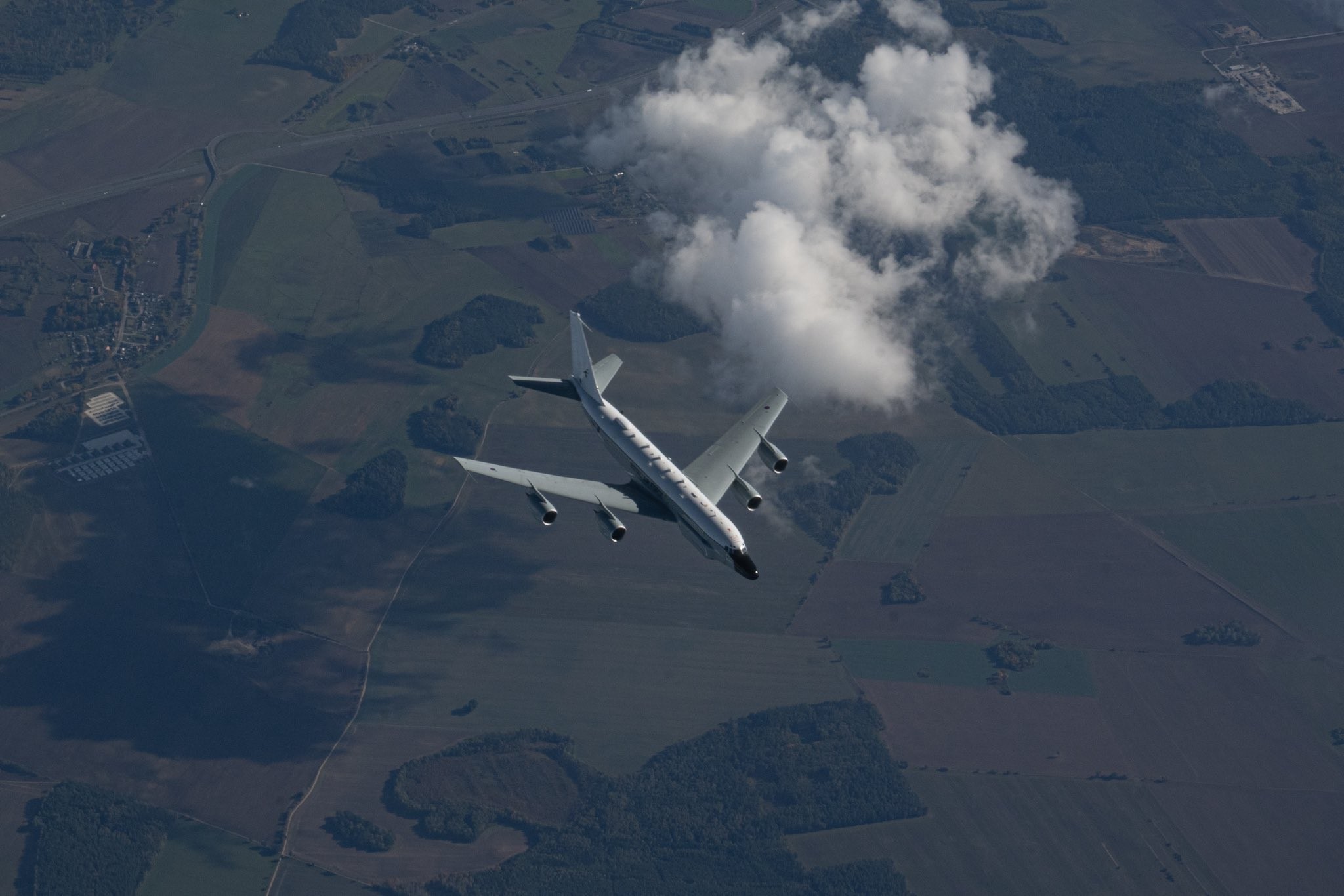
A Royal Air Force RC-135W Rivet Joint has carried out an intelligence-gathering orbit around Kaliningrad.
Flight-tracking data showed the electronic surveillance aircraft conducting a wide racetrack pattern around the Russian exclave, consistent with the UK’s long-running patrols across the Baltic region. These missions have been routine for years and pre-date Russia’s 2022 invasion of Ukraine, but the operational tempo has risen noticeably as the conflict continues.
The UK, United States and other NATO allies coordinate a near-persistent airborne presence over the Baltic Sea, blending intelligence collection with deterrence. Unlike covert ISR flights, Rivet Joint missions are meant to be openly visible on civilian tracking services, providing a measure of transparency and allowing observers to confirm activity in the area.
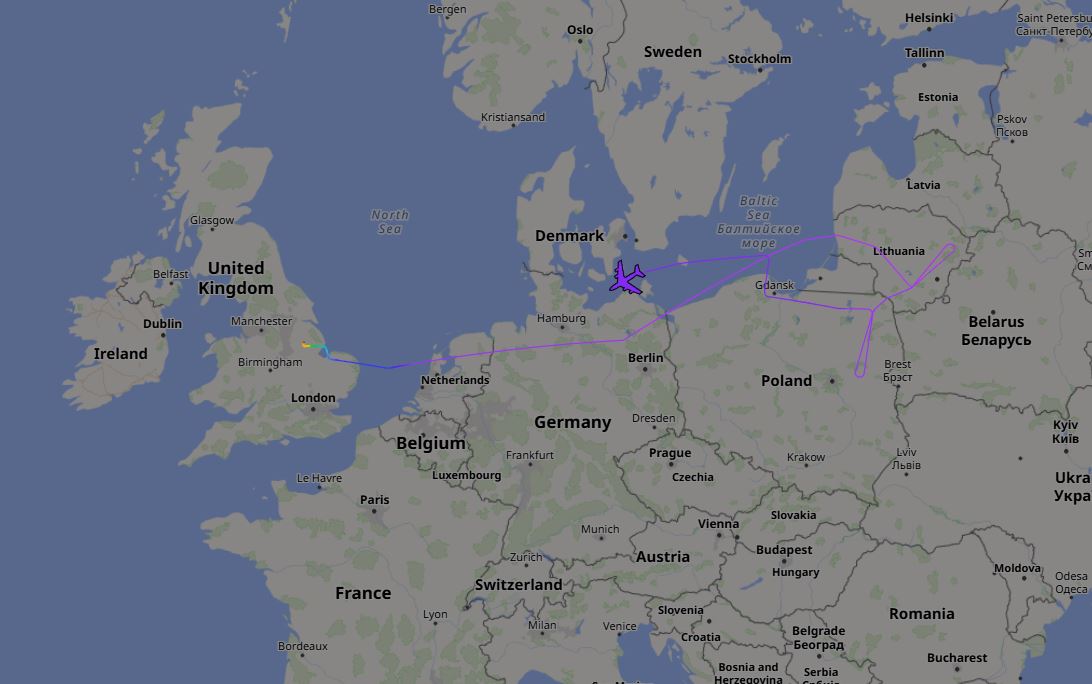
The RAF operates three RC-135Ws, aircraft that the service describes as capable of surveying “elements of the electromagnetic spectrum” using teams of specialist Weapons System Officers and Operators. Their role is to intercept, characterise and analyse communications, radar and other electronic emissions to provide commanders with actionable intelligence.
The aircraft has been heavily used for this and other operational taskings, and although formally designated Airseeker in UK service, it remains almost universally referred to by its Rivet Joint name.
Specifics of the aircraft
The RC-135 family is a long serving group of reconnaissance aircraft derived from the C-135 airframe and operated by the United States and the United Kingdom. Since the early 1960s the fleet has undergone repeated modifications that produced numerous variants and internal designations. Their role is to collect intelligence in near real time with crews that combine flight, electronic warfare, intelligence and systems specialists.
The RC-135V/W Rivet Joint variant carries a broad signals intelligence suite that detects, identifies and locates electromagnetic emissions. Early versions were easy to spot due to prominent external antennas, though later upgrades replaced many of these features with smaller equipment and reorganised the lower fuselage array. Maintenance and upgrades are handled by L3 in Texas. The United Kingdom adopted the RC-135W through Project Airseeker, converting three KC-135R airframes to replace the retired Nimrod R1 capability. These aircraft entered service between 2013 and 2017 with 51 Squadron at RAF Waddington.
The aircraft’s size and performance reflect its role as a large intelligence collection platform with a crew of roughly two dozen, a length of about 136 feet, a wingspan of 130 feet and four F108 turbofan engines. It can reach roughly 504 knots, operate up to 50,000 feet and cover nearly 3,000 nautical miles without refuelling.