

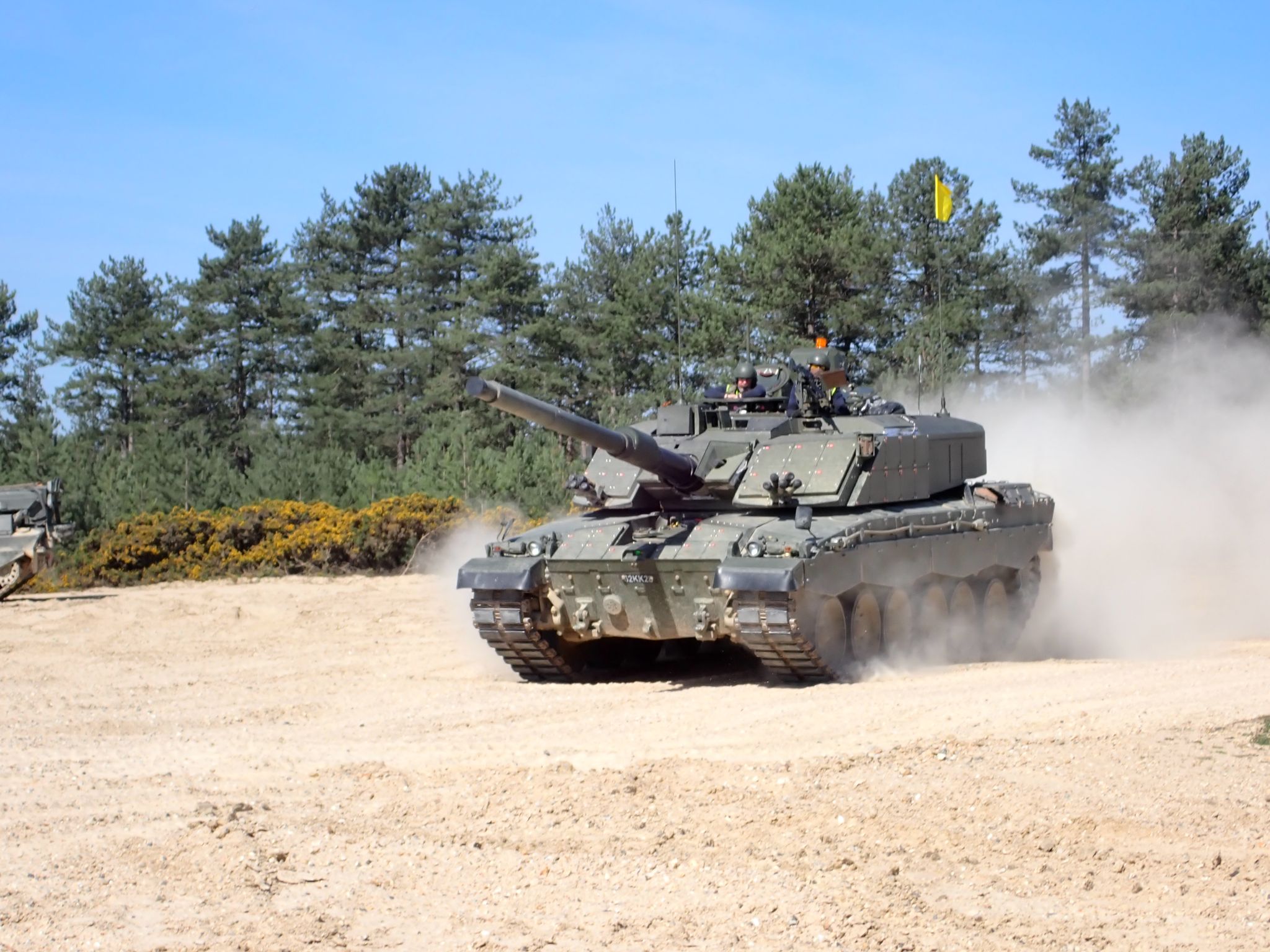
The Challenger 3 main battle tank programme is undergoing a performance review and reapproval process, with Defence yet to quantify potential delays to Initial and Full Operating Capability or decide whether the tank should remain in service beyond 2040.
Defence Minister Luke Pollard provided a response to two written parliamentary questions from Conservative MP Ben Obese-Jecty, who sought further detail following the National Infrastructure and Service Transformation Authority’s Major Projects Annual Report 2025 to 2026.
One question asked for the length of the forecast delay and risk to Challenger 3’s Initial Operating Capability and Full Operating Capability arising from delivery by the prime contractor. The other asked when Defence expected to decide whether the planned out-of-service date should be extended beyond 2040.
Pollard said: “The Armour Main Battle Tank Programme is currently subject to an ongoing review of programme performance and a related reapproval process. Under current plans, reapproval is expected during Financial Year 2026-27.”
The answer though does not provide a revised date for either Initial Operating Capability or Full Operating Capability, meaning the scale of any forecast schedule movement remains undisclosed while the review continues.
Defence is considering the wider consequences of programme performance as part of the reapproval work, including the effect of the timetable on preparing Army personnel to operate the new tank.
Pollard said: “As part of this work, the Department is considering a range of factors, including programme timelines and impacts on associated activities such as training and familiarisation.”
Challenger 3 is being produced by Rheinmetall BAE Systems Land through the upgrade of Challenger 2 vehicles, providing the British Army with a new turret, 120mm smoothbore gun and other changes intended to modernise the UK’s main battle tank capability.
The questions follow the identification of schedule risks within the Armour Main Battle Tank Programme in the latest major projects reporting. Obese-Jecty specifically sought to establish how those risks could affect the two principal milestones used to measure the introduction of the new capability.
The future service life of Challenger 3 is also unresolved. The current planning assumption cited in the question places its out-of-service date in 2040, but Defence is considering the issue as part of wider decisions about future capability and investment rather than through the present programme review alone.
Pollard said: “Decisions relating to the future Out of Service Date for Challenger 3 will be considered through wider capability and investment planning. It would be premature to comment further until these processes have concluded.”
The position means a decision on extending Challenger 3 beyond 2040 is not necessarily tied directly to the programme reapproval expected during the 2026-27 financial year, of course.
For the nearer-term programme, however, reapproval is now the key milestone. Until that process is completed, Defence has declined to state how far Initial or Full Operating Capability may be affected by the delivery risks identified in the major projects report.








Has there been any previous indicators that this programme had potential delays. I had thought, certainly from the manufacturers pr was that it was going quite smoothly and generally on schedule. Wonder what these potential delays might be, anyone have more focused information that I have apparently missed?
Money money money!
Yes there does seem to be a pattern of politicians promising more defence cash in the future, while still quietly cutting today.
And yet the Labour Government has increased military spending by £15 billion over the next four years. This is not enough in my opinion, but thank goodness we now have politicians who are taking the changing global threats seriously.
Inflation, from Labours out of control spending elsewhere, will eat that £15 billion & more.
The only physical/mechanical hurdle or hiccup I’ve heard of is the turret has proved to be too heavy for the current gearing system to cope with, and that’s leading to premature wear and issues. But it seems it’s just a case of changing components and a small increase in costs. The other issues as always seem more political. It all ends up sounding like a catch 22 on that side.
MoD and RBSL have been in general pretty vague about CR3 timelines tbf, I think they’ve taken a “better do it slow but right” attitude to the whole thing.
I think the cost of the CR3 program is the same as the abandoned WCSP. Co-incidence?
‘Preparing the crew to operate the tank’ if there isn’t course’s going on at Bovington for Comds and gunners on the new systems as we we speak then something is very seriously wrong! Experienced tank crew shouldn’t take too long to train up at all.
It was ‘supply issues’ last week what’s next on the list?
More “good news” 😏 We’re really getting a morning of it. No great surprise I suppose. I wonder whether the government has considered disbanding the army? Save a lot of their time nad effort! 🤔
I think they’d love to. Burnham has already stated his governments priority.Just think of the increased benefits spending that would accommodate!
You’ve probably seen all the great news in UKDJ today, but I’ve just read that Reserve Army trainiing is to be cut by up to 30 per cent The plan is underway! 😒
After the success of the original approval process the MOD have decided to carry out a full reappraisal process.
This is very timely as with the advent of drones tanks may be obsolete and the German bundeswehr are currently selling their surplus stock of tried and tested broom sticks.
They love discussing “out of service” of things but how about getting more and necessary things actually “into service”. And looking at the actual quantity, if they want to increase and sustain lethality maybe more are needed if they can be afforded. And what about any exports potential?
AFAIK only 8 pre-production prototype tanks have been delivered so far
Upgrades on the remaining 140 is yet to start.
I assume the trials of these 8 tanks are ongoing, and maybe problems have been identified that need addressing?
But yeah, I expect the usual “supply chain” and other stock excuses to be used to justify delays.
The usual mumbo jumbo and gobbledegook. There couldn’t be a simpler upgrade out there. Still, no rush necessary to get this program over the line eh?
Is this code for the MoD wanting to slow the project down ? I also thought this was one procurement project running fairly smoothly…
Just imagine if we were building 400 of these. This is proof that we threw away a manufacturing empire that built possibly the best MBT’s in the World. What is amusing,’ talk of exporting CH3! Yes, it’s for sale just don’t ask for a delivery date or price, apart from that we welcome your order.
More incompetence and/or cost cutting from Labour.
The destruction of the British military continues unabated.
Next cut incoming…
Here we go 😒
Open source reports of serious issues related to the Turret traverse gearbox. The extra weight of the enhanced armour, digital systems and targeting tech being too heavy for the power gearbox.
No obvious provenance available for these reports.
Yes everyone its a pre- cursor to cuts. 148 was woefully inadequate anyway and nowt done really to have the protection from drones. Plus is Israel going to sell us Trophy now sillybrain has stuck his oar in ? If Labour gets reelected at the next General Election Lisa Nandy will get her way – the disbandment of the army
The tanks will last until they stop working and are unfixable or become a greater liability than asset.
The whole notion of “out of service date” for land vehicles is flawed in some cases inc. Challenger.
If you are asking when will we need to buy new tanks to replace them, then it’s a different question alltogether.
.
Need to get the CH3 into service and see how it performs. The obsession with out of service dates when the equipment is still not in service is crazy. If the MoD is considering 2040 then in technology terms that’s a long way off and things will look technically considerably different by then. Just get the MBT into service and worry about what’s next when we need to.
Start bringing back the 600 chally.ones from Jordan and modernize them
Russia shows us up when they rebuild t72 to t90 standards across the board because they built them to be upgraded cheaply.
Everything we touch ends up costing more than buying off the shelf.
SA80 wasted a billion on its upgrades because it was never fit for service.
Tornado capability was sheer mythos as is most of the legend of the chalky.
We messed up typhoon procurement and f35 should never have been touched.
Now we are destroying the land rover fleet because we are not doing things how we used to, stuff that worked.
Oh dear seems like everyone is here just to have a winge.