

Construction of the British site for the Deep Space Advanced Radar Capability will begin in April 2027 under a contract the United States Space Force signed with Northrop Grumman in August 2024, with planning permission sought in March this year and initial authority to operate already issued, according to a written answer published this week.
Luke Pollard, Minister of State for Defence Readiness and Industry, was responding to Ben Obese-Jecty, the Conservative MP for Huntingdon, who had asked what progress had been made on establishing the capability, referring to paragraph 81 of the Defence Investment Plan.
Mr Pollard said: “The Deep Space Advanced Radar Capability (DARC) is a ground-based radar system that will provide 24/7, all-weather capabilities to detect, track, identify and characterise objects up to Geostationary Earth Orbit. DARC will require three permanent radar sites and a radar operations centre to provide 360-degree coverage: in Australia, the UK and the US. Construction of sites in Australia (Exmouth) and the US (IROC, Eglin) have been completed.”
He said: “The USSF signed a contract with Northrop Grumman on 23 August 2024 for construction of the UK site starting April 2027.”
On the regulatory position, he said the department has completed an environmental impact assessment including a landscape and visual impact assessment, to ensure the project has minimal impact on the local skyline, and that this formed part of a town planning application submitted to the local planning authority in March 2026.
He added: “The Defence Electromagnetic Authority, working with the Office of Communications, has issued an initial Authority to Operate. MOD and the Civil Aviation Authority is completing the necessary safety of flight procedures for local airspace.”
What DARC does
Most existing radars are optimised for low Earth orbit, where the majority of satellites and debris sit a few hundred kilometres up, and objects in geostationary orbit at around 36,000 kilometres have been tracked largely by optical telescopes, which depend on clear skies and darkness. A radar capable of reaching that altitude works regardless of weather or time of day, which is what the reference to 24/7 all-weather capability in the answer describes. The three sites, spread across Australia, Britain and the United States, provide continuous coverage of the geostationary belt as the Earth turns.
Geostationary orbit holds communications satellites, missile warning satellites and a substantial share of the space infrastructure military operations depend on, and both Russia and China have demonstrated satellites capable of manoeuvring close to others, which is a behaviour that cannot be characterised without being able to see it happening.
The United Kingdom site is at Cawdor Barracks in Pembrokeshire, west Wales, an existing defence site the Army had been due to vacate. The answer’s references to the local skyline and to safety of flight procedures for local airspace reflect the physical scale of the installation, which involves large parabolic dish antennas across a substantial footprint.
The programme is a trilateral effort under the AUKUS partnership, jointly funded by the three nations, with the American site at Eglin Air Force Base in Florida and the Australian site at Exmouth in Western Australia, which the answer confirms are both complete.
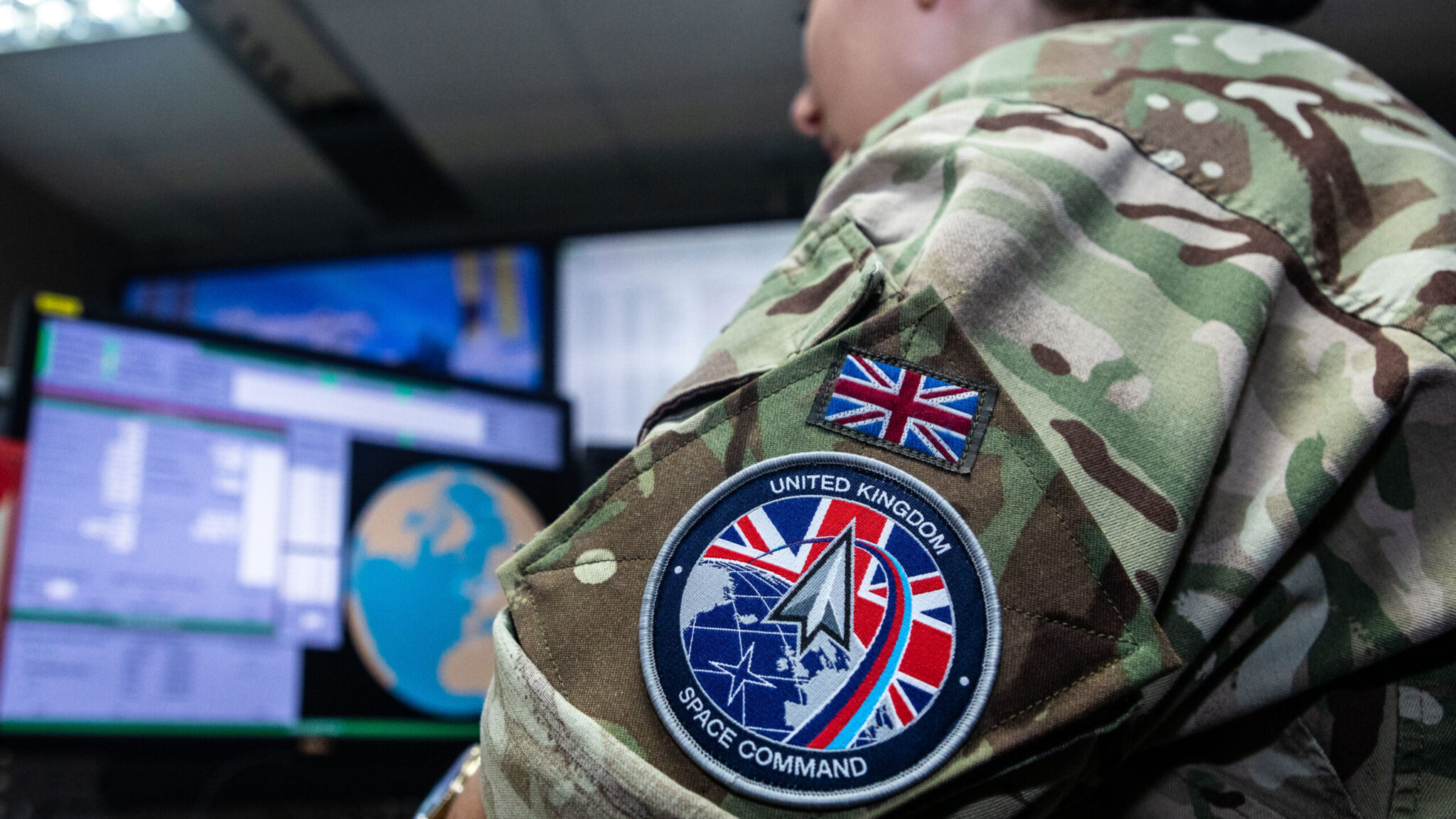
Britain’s wider space programme sits under UK Space Command, established at RAF High Wycombe in 2021, which brings together military space operations alongside the existing space domain awareness assets including the Fylingdales radar in North Yorkshire, itself part of the American ballistic missile early warning system.











So the USSF still owns the radar and site, but it’s on UK soil, which is where our “claiming of capability” comes from… Hmmm,
Let’s hope Planning Permission isn’t denied. 🙂 Honestly, its the sort of construction that the Gov just needs to tell the council that it’s been approved by them, don’t even try getting in the way.
The NIMBYs have been up in arms for some time, but they can be safely ignored.
The protesters are more concerned about the number of dishes over a large area of coastline in an are of outstanding natural beauty. Of course there are the usual suspects shouting about it being a target for Russian attacks, these idiots are not local th the area.
I live a stones throw from the intended sight.
Yes, I’d had a read of the local press online reporting their comments.
Though from memory, I don’t think the airfield site is even actually on the coast?
Whatever, National security just cannot be held hostage to such things, there must be reasons why Brawdy is the favoured site and not another locaion.
Assume the agreement will be similar to BMEWS.
The capability is provided by the US, who will keep it updated, while the day to day running and operating is done by the UK.
Can see the biggest issue is its power requirements going against Wales net zero plans….
On site SMR?
Indeed. It is absurd that a local planning committee would even be given the opportunity to interfere with national security infrastructure, and illustrates that the government is still far from adopting the basic prerequisites for ‘transition to war’
The Deep Space Advanced Radar programme you’ve mentioned sits under a separate UK/US/Australia MOU, distinct from AUKUS itself.
As a nation we do seem to be good at being able to see exactly what’s going on. It’s just a shame that we’re not so good at doing anything about it (e.g. land-based balistic missile defence)
So no actual UK involvement (IP, or industrial base)?
I’m also worried about the direction USA is going, and can the UK really trust them if the whatsit hits the fan. e.g. Would they leak UK repositioning of satellites to others?
Obviously the UK still then has no capability to do anything about any hostile space objects it can see …. (sighs!)
Presidents and administratives come and go. But our militaries and our intelligence services have very deep connections and working relationships. We will be fine
The Secretary of Defence was recently making comments about classified anti satellite capability the UK has access to. Hard to say what he was referring to, the UK is believed to have cyber and electronic warfare capabilities for anti satellite work. The UK space agency was also developing an inspector satellite capability although nothing has been launched.
It’s worth noting that the USA also does not have any kinetic anti satellite capability as such a weapon is seen as abhorrent. SM3 did intercept a satellite for “safety” reason but the US claimed to have destroyed all the software developed for the mission.
Arrow 3 might also be able to intercept satellites.
The US engagement ‘to protect human life’ would have needed changes to the seeker, radar and C2 system which I think they declared as removed, so the shooting ship could return back to its BMD role.
Not sure how you destroy it!
That engagement was in VLEO, not sure it would have the legs (or ability) to get higher to where the China hit occurred. Or maybe the altitude was just selected to reduced the debris it produced. Think a few bits were recorded going higher but soon de-orbited.
Sorry I should say the software was apparently deleted.
As a possible example whenever Dragonfire was being used, a NOTAMS was issued. The NOTAMS also included warning to satellite operators. However, it does raise the possibility that with the right amount of oomph behind it, satellites could be very vulnerable to surface based lasers.
By the last information I had, 14 Signals Regiment was due to vacate Cawdor Barracks by 2028, moving to Innsworth. This tallies with the obsession of all eggs in one basket or one area approach of late, as 21 Signals Regiment ( which also changed role from AS to EW ) is also due to move to Innsworth from Colerne.
And with the proximity of Cheltenham, Corsham, and the forthcoming Cyber hub being built for 13 Signals Regiment at South Cerney by 28, British Army Cyber and EW is concentrated in the region.
A good use of the MoD Brawdy site, rather than a Regiments worth of niche EW/SIGINT troops garrisoned so remotely.
Ironic that behind the Trump bullshit the finer parts of UKUSA continue unabated, perhaps he should tone it down a bit as if we asked the US to vacate its bases they’d be screwed in the short term, as would we.
Look at the state of your RN or Army. UK violated the agreements. Stop complaining when the other side points it out.
Yes, they’re all far too small.
Violated what agreements?
And when is Trump, in walking all over longstanding allies, threatening tariffs, threateningto occupy Greenland, hinting at lack of support for the UK position on the Falklands, throwing toys out of hos pram when Europe didn’t join him attacking Iran, and belittling our war dead in Afghanistan “pointing it out”?
What are you talking about? I’m not talking about the demand for 3% then 3.5% I’m talking of long standing alliances he’s walking over.
Oh, and leaving Ukraine in the shit, while selling and making money while Europe donates. While chatting to Putin.
Do tell me again in all that what the other side js pointing out?
👏
I think AlexS in the above comment might just be a bit of a troll, just a bit.
The protesters are more concerned about the number of dishes over a large area of coastline in an are of outstanding natural beauty. Of course there are the usual suspects shouting about it being a target for Russian attacks, these idiots are not local th the area.
I live a stones throw from the intended sight.
You can’t keep a special relationship down, no matter who’s in the White House or no 10.