

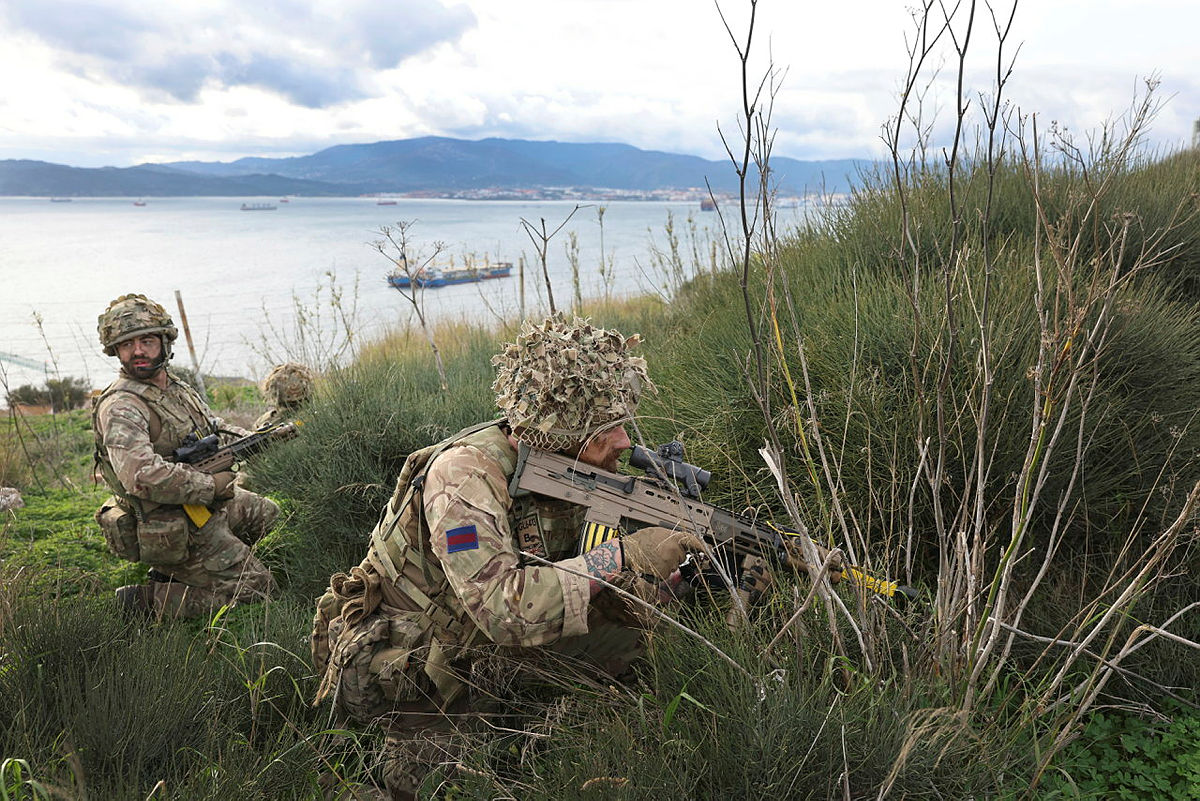
Just under three per cent of Britain’s reservists were mobilised for operations in the last financial year, with the proportion falling for a second year running as overall reserve strength declined, according to an answer given in Parliament.
Gordon McKee, the Labour member for Glasgow South, asked what proportion of reservists had been mobilised for operations in each of the last five years.
Calvin Bailey, Parliamentary Under-Secretary and Minister for Veterans and People, said: “Our Reservists make a vital contribution to the nation’s security, supporting operations at home and overseas.”
The figures he supplied cover Future Reserves 2020 personnel and serving ex-regular reserves. Strength stood at 39,400 at the end of the 2021/22 financial year, 37,460 a year later, 36,220 at the end of 2023/24, 35,940 at the end of 2024/25 and 36,280 at the end of 2025/26, the first rise in the series.
Deployments over the same period moved on a different curve. In 2021/22 a total of 920 reservists deployed, which was 2.3 per cent of the force. That rose to 1,730 in 2022/23, or 4.6 per cent, and peaked at 1,850 in 2023/24, or 5.1 per cent. The figure then dropped to 1,160 in 2024/25, which was 3.2 per cent, and to 1,060 in 2025/26, or 2.9 per cent.
The peak years coincide with the heaviest period of British support to Ukraine, including Operation Interflex, the training mission for Ukrainian recruits run from sites across the UK, which drew on reservists alongside regulars and allied instructors.
Reserve strength has been a persistent problem for the department for well over a decade. The Future Reserves 2020 programme set a target of 30,000 trained Army Reserve soldiers that proved difficult to hit, and the services have struggled with the recruitment and retention of part-time personnel for most of the past decade. The Strategic Defence Review last year committed to growing the reserves and gave them a larger role in homeland defence, including the protection of critical national infrastructure, and the department has since set out investment in equipment for reserve units.
Mobilisation of a reservist can be compulsory or voluntary, and employers have statutory obligations and rights around it.





Given the latest polling that claims 48% of the population would not fight for their country, it’s hardly surprising recruitment is difficult. I suspect that only some of that 48% really mean that and once they realise the Russki invaders would switch Facebook off then they would get very cross indeed.
No funds as ever. The social security emergency is the priority.
The TA was given a enhanced home defence role in the middle 2000s with the Civil Contingency Reaction Force stuff.
Then it came to nothing, just another headline to deflect while the cuts continue.
So let’s see if all this is anything more other than headlines for politicians to Grandstand without any meat behind it.
36,281 now as I’ve joined the RAuxAF!
The point of a Reserve is that it’s held in… what’s the word?
Reservists deploy, at most, one year in five outside wartime. So “3% a year” when there’s no major operations is a good number unless anyone can point to a problem. If you’re running your Reserve flat-out in the quiet times you don’t have more to call on…
A bigger problem is slashing budgets for the Reserves generally; tell volunteers there’s no funding, no work and they aren’t wanted, and you’ll struggle to find willing reservists whose qualifications are in date when you want to mobilise them. Which is this year’s problem…
To be honest, this comes as no great shock to me. I served in the TA from 1978 to 2010. For the vast majority of that units or individuals being deployed was seen as something that would only happen if the Soviets crossed the Inner German Border. Later in Gulf Was II and the Herrick and later operations individuals were invited, and accepted if their employer did not object. My employer objected. I don’t know how this 3% figure compares to previous years, but, with few live deployments or operations today this would seem reasonable. The TA I joined and the RA that now exists the idea seems to be to have ready trained soldiers to deploy, rather than soldiers to deploy routinely.
From what I have heard from my friends in various AR units in the country, things are ( huge surprise here) not great, very low numbers of deployable people, generally low morale and underfunded.
My Father in Law was in the TA in the 1960’s and the difference was stark, while the kit was old, they only gave up their No4’s and .303 Brens in the mid 60’s, the opportunities were considerable.
Once a month, the Co would end the parade by asking for a show of hands who wanted to do what, who wants to apply for parachute qualifications?, who wants to go to Portsmouth and spend the weekend mucking about on Frigates in the channel, who wants to go flying, Helicopter/ transport aircraft etc…
Many opportunities, lots of live fire training and despite the old generally WW2 equipment, great morale and a good laugh.
Had WW3 kicked off, the TA of the day would have mobilised in force.