

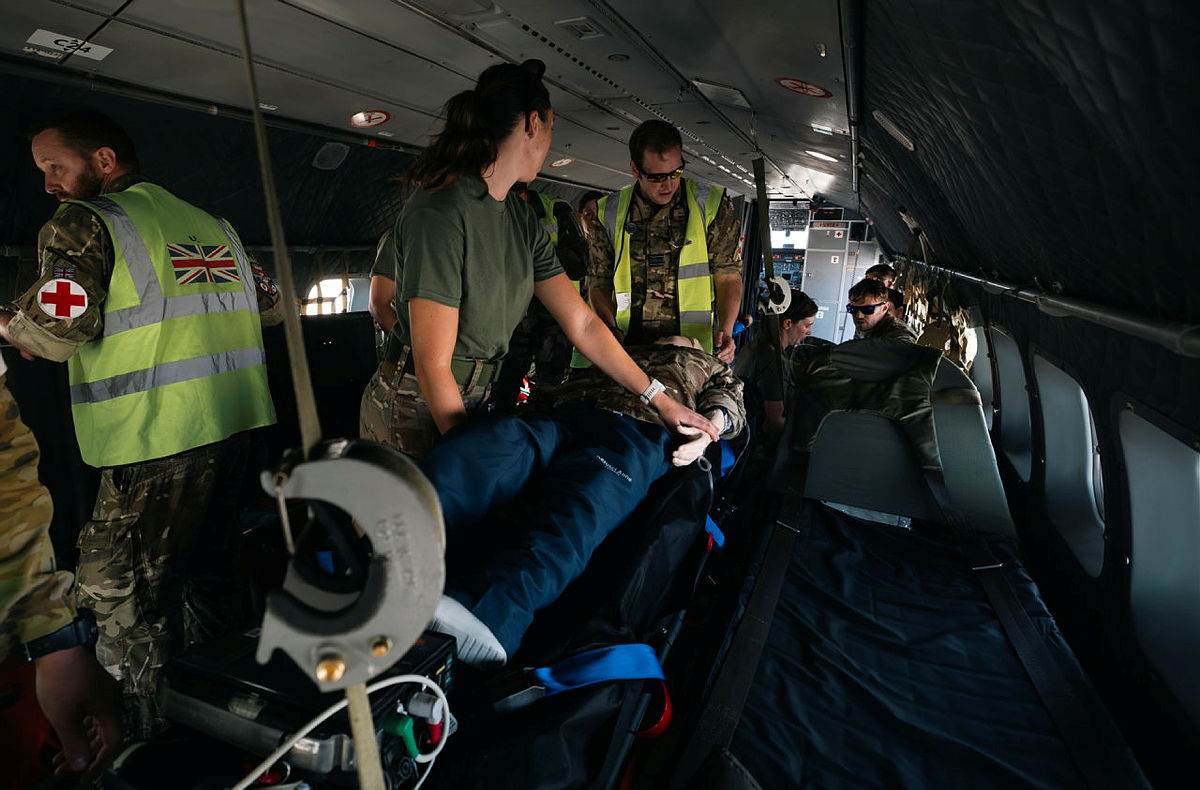
The Ministry of Defence has not yet decided whether to increase the number of military and civilian physiotherapists or other rehabilitation staff as it considers the medical workforce required for a large-scale conflict in Europe, Veterans and People Minister Calvin Bailey has said.
The position was set out in two written parliamentary answers to Labour MP Ruth Jones, who asked whether current rehabilitation staffing would be adequate to return injured service personnel to duty during a major European conflict and whether Defence planned to increase staffing across military and civilian rehabilitation roles.
Bailey said: “Defence is committed to ensuring our Armed Forces personnel receive the best possible treatment, care and rehabilitation so they are fit to fight and can fight back to fitness. Physiotherapy is a core component of Defence healthcare, directly supporting operational readiness, recovery from injury, and return to duty.”
The questions covered civilian physiotherapists, Regular military physiotherapists, Reserve military physiotherapists and rehabilitation support staff, as well as the ability of Defence, the Armed Forces and the NHS to cope with the rehabilitation demands that could follow a large-scale conflict.
Bailey said: “As outlined in the Strategic Defence Review (SDR), it is critical the national health ecosystem—Defence, the NHS, and the private sector—has the capacity and capability to meet the Nation’s needs in peacetime and during conflict.”
The MOD did not provide a numerical assessment of how many rehabilitation personnel would be required in such a scenario, nor did it state that existing staffing levels were sufficient. Instead, Bailey said Defence Medical Command was working with the NHS while future requirements were still being considered through wider workforce planning.
He stated: “Defence Medical Command is working closely with the NHS to strengthen medical capability, including rehabilitation and recovery services. Future workforce requirements will be informed by ongoing Defence workforce planning; no decisions have been taken on specific increases to the number of civilian physiotherapists, Regular military physiotherapists, Reserve military physiotherapists, or rehabilitation support staff.”





Another rebranding from a while ago!
Defence Medical Command.
Any extra people, or just cosmetics?
Extra power. HQ Defence Medical Services could set policy, but the single service medical branches had authority over people, process, technology etc. Defence Medical Command gives the Chief of Defence Medical the delegated power to enforce consistent standards and make rapid, binding decisions… in other words, tell the single service med branches what to do. Long overdue.
At the coal face it means common training, equipment and so on. But also that personnel can get primary health care from any of the services plus you might, for example, get Navy Medics supporting an Army exercise or an Army dentist supporting the RAF.
Well explained, thank you. Seems the same then as DI, certain intell and Cyber functions, DSF, and other purple orgs in CSOC.
Resilience eh? Ho ho ho Healey.🤔