

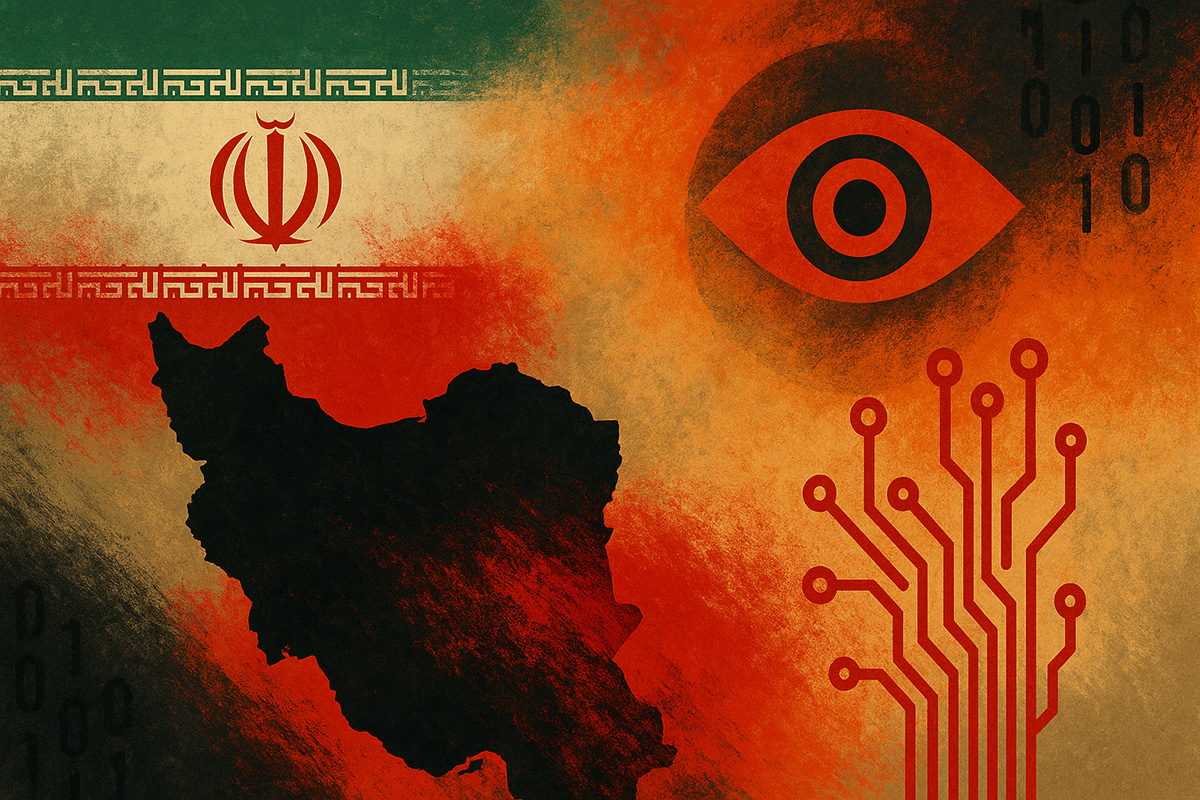
Since late December 2025, Iran has seen protests grow from relatively small-scale Bazaar unrest into a massive nationwide movement affecting almost all provinces of the country.
What began as unrest mainly attributed to the weight of the country’s economic decline now sees protestors turning their blame to the Iranian regime as a whole, enveloping Ayatollah Ali Khamenei and his unchecked power in blame over not only economic mismanagement, but now calling for wider political reform.
This article is the opinion of the author and not necessarily that of the UK Defence Journal. If you would like to submit your own article on this topic or any other, please see our submission guidelines.
The flames of this sentiment are being fanned by the emergence of viable political opposition. The son of Iran’s last Shah, Reza Pahlavi, has called for Iranians to prepare for his return and seize city centres.
Iran’s contemporary political history is slightly hard to follow, but it ties heavily into this period of turmoil. In 1953, the CIA, alongside British intelligence, carried out a coup overthrowing Iran’s democratically elected prime minister due to his nationalisation of the country’s oil reserves and fears of perceived Soviet influence during the Cold War. This intervention set the stage for later political strife as the Shah, while representing Western interests, built a reputation for human rights abuses and alienated traditional and religious Iranians through rapid Western-orientated modernisation. In 1979, a coalition of religious scholars, students, workers and others united in opposition to the Shah’s rule, culminating in the Islamic Revolution.
As a popular figure among those opposed to the Shah’s regime, the exiled Ayatollah Ruhollah Khomeini emerged as the leader of the movement, and the country became the Islamic Republic of Iran, a theocracy ruled by Islamic clerics. Now, after decades under a supreme leader with ultimate control of state functions, as well as being subject to global criticism and sanctions due to its alleged violation of the established JCPOA limited nuclear programme deal, the Iranian political sphere is again subject to change.
Sanctions imposed on Iran as a result of its nuclear activity and non-compliance have ravaged its economy. The rial, Iran’s currency, has reached a new low in terms of its international value, currently sitting at 1,530,456.08 Iranian rials to one pound sterling. More specifically, the US has imposed broad sanctions on Iran, seemingly in hopes of limiting the government’s revenue and ability to expand foreign influence, such as Trump’s new additional 25 percent tariff on countries simply doing business with Iran. This may dissuade major powers such as China from any lasting involvement in the region. America’s strong stance on the Iranian situation leads one to consider what the West has to gain from governmental and social stability in Iran, and that line of questioning is worthwhile. It is unlikely that Trump’s administration is intervening solely due to the humanitarian crisis underway, with thousands of protesters reportedly killed in recent weeks. America’s speculated motives may instead lie in protecting global trade routes and military bases in the Gulf, as well as shaping a future Iranian government more compatible with US interests, which is a definite possibility now that the emerging opposition appears to have consolidated around Reza Pahlavi, who has resided in the US since the age of seventeen.
Whatever the motivations of America’s focus on Iran, in accordance with international and humanitarian law, the standing government of Iran must be held accountable for its attacks on protesting citizens and be prevented from causing further harm. The Iranian regime’s internet and electricity blackouts, as well as its excessive use of force against protesters, should be punished, though the method remains uncertain. The US has begun this process economically with the introduction of additional tariffs. However, any further actions must be calculated and thorough, as backing Iran into a corner from which it lashes out militarily is likely only to worsen the situation.
Important regional proxy dynamics must also be considered, as Iran maintains strong links to militias across the Middle East, such as Hezbollah in Lebanon, which would almost certainly be utilised in the event of military escalation, causing instability and human suffering beyond Iran itself. Similarly, regime change that benefits the US may appear attractive and is theoretically possible through figures such as Reza Pahlavi, but it could create the conditions for a repeat of events similar to the 1979 revolution if pursued with the same imbalances and foreign interference. A repetition of past mistakes is best avoided, and breaking the cycle of toppling Middle Eastern regimes for Western benefit rather than through diplomatically agreed, joint outcomes is imperative if the human cost of the current crisis is to be reduced.
The UK has an obligation to uphold international law and should therefore become involved in this increasingly severe situation in some capacity. While Prime Minister Starmer has joined the German Chancellor and French President in condemning the violence, an escalation in rhetoric may be paving the way for more decisive action. The Foreign Secretary has addressed Parliament on the escalating situation in Iran, highlighting the threat the regime poses to the UK, including allegations that it has plotted more than twenty potentially lethal attacks on British soil over the past year.
The current government has imposed over 220 Iran-related sanctions since coming into office and, just last week, supported the US military’s seizure of the vessel Bella 1, which was accused of shadow fleet activities and sanctions breaches. In line with this, the UK must continue to stand firmly behind international and humanitarian law, aiming to halt the Iranian regime’s violence against its own civilians while also, critically on a global scale, mitigating the risk of serious military escalation and the broader regional violence that could follow across the Middle East. If possible, a legitimate diplomatic route to securing the safety of Iranian protesters, as well as those the regime may seek to harm within the UK and beyond, remains the preferred outcome. However, given the Iranian regime’s insistence that the protests are the result of foreign interference and the US’s increasingly interventionist rhetoric, there is a real risk of entering a precarious phase in which drastic measures, such as regime change or targeted military action, are pursued. Both options carry significant risks and offer no guarantee of lasting positive change.




It is about time the UK proscribed the revolutionary guard (IRGC) as a terrorist organization.
Starmer will likely welcome the regime members here after the fall of the country.
Ha, my compliment was censored/removed
Thanks !
As Iran or Persia was part of the Empire in all but name up to WW2 and after the conflict, the UK’s influence although to a lesser degree, was still apparent, 1953, was MI6 then CIA. Operation Ajax.
Implications for the UK are zero, as we will keep our noses out, after allowing the US to continue with their expansionism and empire agenda.
The UK should stay our of Zionist and US foreign policy and military interventions.
Nothing to do with us, move on