


The Ministry of Defence has confirmed that Project Brakestop, a new UK cruise missile programme designed for rapid production and scale, has entered live firing trials, as senior defence officials set out a shift toward faster, more flexible weapons procurement.
Giving evidence to the Defence Committee, Lieutenant General Anna-Lee Reilly revealed that the first firing of Brakestop had taken place this week, just 12 months after the programme was launched. She described the project as a deliberate move away from slow, bespoke acquisition cycles toward a model built around speed, simplicity and industrial scale.
Explaining the approach, Reilly told MPs that, “Brakestop is a cruise missile with five incredibly simple requirements: range, cost, payload, production quantity, can you ramp up, and being transportable in an ISO container.”
She contrasted the programme with long-established precision weapons such as Storm Shadow, noting that high-end capabilities inevitably take years to deliver. “If you take an exquisite capability like a Storm Shadow missile, you know it will take a long time to procure,” she said.
Brakestop, by contrast, is being delivered through the Ministry of Defence’s Kindred procurement framework, which Reilly described as enabling a rapid buy-test-scale cycle. “The idea is that you buy, you try and you scale. We have the ability to trial in the UK and then take it out to Ukraine. That has been within 12 months, with 27 companies,” she said, adding, “The first firing of Brakestop was yesterday.”
The programme is intended to complement, rather than replace, existing high-end weapons. Reilly told the committee that the Army’s future structure would rely on a mix of “the exquisite capabilities and then the more disposable capabilities off the back end of it,” with Brakestop sitting firmly in the latter category.
Pressed on concerns that the UK would struggle to sustain losses in a peer-on-peer conflict similar to Ukraine, Reilly framed Brakestop within a broader effort to harden defence supply chains. “From my perspective, sitting where I do, this is about supply chains,” she said, quoting a senior US defence official who warned that “our supply chains are at war. We just don’t know it yet.”
She said the lessons from Ukraine were already shaping procurement priorities. “That is what you see with the strategy on munitions, what you saw in the strategic defence review, and what you will see in the defence investment plan. It is about being ready as quickly as possible and being able to respond.”
National Armaments Director Rupert Pearce supported that assessment, telling MPs that the challenge was twofold. “We have to be readier, and we have to be undertaking a transformation over the top of that as well, in a very small number of years.”
In recent written parliamentary answers, Defence Minister Luke Pollard confirmed that no final decision has yet been taken on the number of Brakestop one-way effectors to be purchased. He said figures would depend on the outcome of ongoing flight trials, industrial capacity and final system costs. Pollard also confirmed that multiple prototype contracts have already been placed and that builds are at an advanced stage.




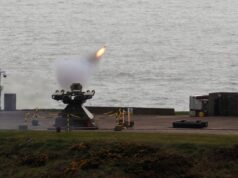



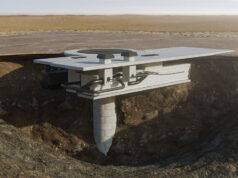



There were 27 entries into the competition…without a doubt a number of these were utterly impractical, or from companies with an office above a shop…
Been narrowed down to 3 potential options reportedly…we don’t know who these are..
There are 2 that we know of for sure that were entered;
MBDA Crossbow
MGI Tigershark
And there are 2 that seem to fit the bill, but have not had confirmation that they were entered;
Rotron Defendor
FlyBy Mayhem
I think its reasonable to assume the first 2 are the ones that reached the final round, based on their attendance and interviews at the recent DSEi event. And its likely that one of MBDA or MGI’s entry did the first test flight on Monday. As to the third it could be one of the 2 directly above…or something else. Its all very cagey…
love to know the names of the other proposals though…I suspect there were no credible ballistic missiles entered though, all were cruise missile types.
Thank for the informative post.
Don’t know if MBDA has given any flight timeline but MGI stated a while back they expect first flight by the end of the year, so if my money is on anyone it would be them, especially as they are from Motorsport where quick prototyping and quick development is the norm, not something traditional missile companies are familiar with for the most part, plus this is an upscaled version of a design they were already promoting. Sounds very impressive to me, especially the flexibility, light weight and 3D printing of some parts.
This is the second significant uk tech company I have recently come across springing from an F1 background and this is a World leading sector we really must exploit to the fullest I reckon.
MBDA gave the same timeline “if a customer backs the programme”.
Let’s hope the third one isn’t a spin off business from Baroness Mone… though I guess it might be quite stealthy by nature.
Their web site says the Rotron Defender has a range of 1000km; more than the requirement but handy perhaps.
The range is dependent on the payload for Rotron. Smaller payload goes farther. Think for Brakestop you’re looking at the lower range as it has to carry a Mk.82 sized payload.
Thanks that’s helpful additional info.
Interesting that they specifically mention Army; Cruise Missiles have previously been RAF/RN weapons as far as I’m aware. Ground launched cruise missiles are a new, much longer ranged capability than the Army has had in a very long time- possibly ever?
As you say, these aren’t going to be SRBMs- that’ll be Precision Strike Missile and/or this new German one I presume. I was asking the other day, and doubt there’s anything official on it yet. But I wonder if this Anglo-German project will replace our commitment to Precision Strike Missile?
It’s unlikely to. Army will still want PrSM from M270A2, and its range is likely to initially be 499km. Later increments have the possibility of increasing it to 800km+ though.
Nightfall is targeted at carrying a larger warhead and being simpler/cheaper. More Iskander than PrSM.
At least it sounds like the message about quantity being a quality in itself has hit home… or did it just bounce off when the real cost for the required numbers hits home.
Brilliant news. At last, a demonstration of urgency from the British MOD! Keep it up.
Great news, good to see, hope all goes well and its ordered soon. Hope enough are ordered to keep us in fight for more than a week or so.
This is great news especially if we are looking at systems like MBDA crossbow.
Design similarities between Ukraine’s Flamingo and MBDA Crossbow are purely circumstantial!
Hopefully we pass a batch to Ukraine to do some final testing against Russian supplied targets before full production ramps up.
Agree. A pre-production batch tested against real world defences. If they get through go to full production. If they hit a ‘brick wall’ so to speak have a rethink. Even if they are low cost full production still represent a lot of money we don’t have.
“Quick, load the one way effectors into the two way enablers”
ffs, you just know someone gets paid to rename these things !
You buy, you try, you scale. Bit like Ajax then…..
Ha, I blame the “Influencers” !
I do think there has been a lot of discussion with Ukraine and in particular Fire Point who designed and build the Flamingo cruise missile. As the Flamingo is a pretty basic yet effective cruise missile, that is having is manufacturing scaled up. Flamingo, meets the requirements stated above.
Isn’t Flamingo enormous? Like, 2500km enormous?
Yes but It can still stand on one leg.
We really need to up our missile naming game, I think the next anti ship missile should be called the goose.
You’re telling me Storm Shadow isn’t a cool name?
STRATUS is a bit disappointing tbh, I hope we come up with a better name once it enters service. Since Meteor and Storm Shadow recent performance has been lacking.
Mjolnir.
Cernunnos
Hunter
Pity they wasted Taranis, or sod it use it again.
HOOT Mk1 “Have One Of Them” Pretty succinct methinks.
Shooty McBoatsink
And is pink?
No but I have it on good authority from Paul Jones that it is pretty…
So we have Brakestop, Nightfall, and the UK–Germany Deep Precision Strike weapon.
Brakestop is a ground‑launched cruise or one‑way effector designed for scale rather than exquisite performance. It has a range of more than 500 km, a 200–300 kg class payload, a cruise speed of around 600 km/h, and a target unit cost of roughly £400,000 per effector.
Nightfall is a separate ground‑launched tactical ballistic missile programme. It is intended to have a range of more than 500km, carry a 200 kg payload, and achieve a target cost of around £500,000 per missile, excluding the launcher and warhead. The programme remains in early development.
The UK–Germany Deep Precision Strike weapon sits at the strategic end of the spectrum. It is expected to be ground‑launched and have a range in excess of 2,000 km, though other details have yet to be confirmed.
This is a massive shift in direction for the UK, and I’d argue it’s in the right direction for a change, albeit 90% talk for now. Maybe they’ll go too far and, in the 2030s, start parading all of these systems through London like the CRINK nations do!
Parading all of these systems through London? We couldn’t afford the congestion charge.
😄
Not a chance, they cancelled displaying basic kit at York Armed Forces Day last year, the usual suspects would have a pink fit.
Me, I’d love to see it, other nations do it, though they’d have to avoid Horse Guards as the tunnels beneath cannot take the weight.
Maybe a referendum like the Swiss have?!
With the number of vehicles we have, we’d probably be looking at a smaller city or even a town anyway…
Talking of “vehicles ” are these firing off the back of a truck, tracked vehicle or a container or all three? Will they fit into mk41 or cannister for ships like MRSS?
But great to hear the UK 🇬🇧 is getting some of its ” missile mojo” back!! 🚀. Next, same for GBAD!
Pure speculation here, but I’d imagine trucks for all three, dedicated trucks for the latter two, and any truck that can take an ISO container for Brakestop. Nothing official points to Mk41, MRSS, or permanent fixed launchers at this stage.
We really should be investing in longer‑range GBAD, but we also need to deter Russia by showing that we can hurt them. These three cover that; we just need to get on with it and get the cheque book out 👍
Surely, yes.
It needs to be mobile and survivable, not fixed!
I am truly astonished! ‘Rapid production and scale’. Live firing. What could possibly go wrong?
Penile disfunction ????
Storm Shadow was an “exquisite” solution mainly because in 1997, when it was contracted, it was seriously hard to make such an autonomous system with the technology of the day. Back then it was actually considered cheap for such work, with the unit price being well below what the MoD had expected when they launched the CASOM competition.
It is back in production, but producing such old electronic systems in particular must be a nightmare.
What was once a whole circuit board is probably a custom chip by now (there are companies that specialise in small run custom designed IC’s).
Probably based on an Arduino or Raspberry Pi system these days! Although I’m sure a defence contractor could put it in a nice hardened box and sell it to the MOD for £10k.
Storm Shadow recently went through its MLU, called Spear 4, the MLU removed any obsolete components and replaced with new…and added additional capability. So it won’t be as hard as you think…as we’ve been producing new components until recently.