

In defence, we talk a great deal about deterrence. We debate fleet numbers, aircraft procurement, troop strength, and spending targets. All of that matters. But in the 2020s, deterrence relies on something more fundamental: resilience.
A country that cannot secure its own supply chains, protect its industrial base, or sustain production under pressure is not strategically sovereign. However capable its armed forces may be, it is vulnerable.
China understands this better than most Western democracies.
Beijing’s strategy is not confined to military expansion. It is about controlling the foundations of future power: critical minerals, advanced manufacturing, energy technology, and digital and financial infrastructure. It is advancing in deep-seabed exploration, shaping cyber governance, consolidating dominance in battery production and electric vehicles, and using export controls to remind the world where leverage sits.
Power today is structural and not always visible
Meanwhile, Britain remains dangerously exposed. Our renewables rollout depends heavily on Chinese-made solar panels, wind turbines, and batteries. Our advanced manufacturing supply chains rely on Chinese inputs. In some critical mineral processing markets, China’s share exceeds 80% or 90%. That is not interdependence. It is a concentration of risk.
If Britain’s growth sectors rely on inputs controlled elsewhere, we can only grow at the rate others allow. This is not an argument for decoupling or retreat. Trade with China is unavoidable. No serious policymaker suggests otherwise. But without resilience, we are vulnerable. And at present, the imbalance is structural.
It is Britain that runs persistent trade deficits. It is Britain that needs foreign capital more urgently. It is Britain that has too often outsourced strategic capacity in pursuit of short-term efficiency. When Western democracies are seeking to reduce exposure to concentrated supply chain risk, the United Kingdom risks drifting in the opposite direction.
Direct implications for our defence
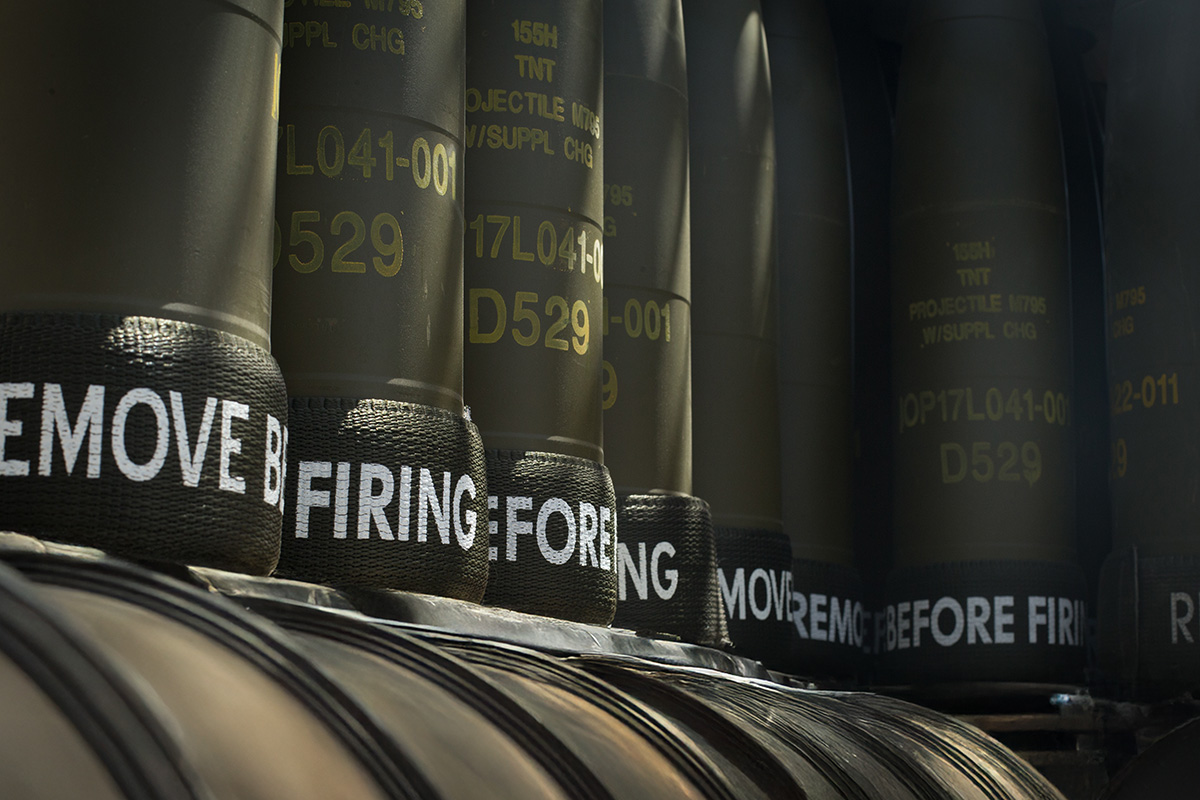
Putin’s illegal invasion of Ukraine has exposed a simple truth: industrial depth matters. Ammunition stocks, production lines, access to raw materials, and secure logistics chains determine staying power. Deterrence is not just about platforms; it is about whether you can sustain them. If key components, critical minerals, or energy technologies are vulnerable to political disruption, then our strategic autonomy is constrained. Diplomacy becomes more cautious. Sanctions become harder to impose. Alliance commitments become more complicated.
This is why resilience must be treated as a central pillar of national security policy, not an afterthought to economic strategy.
So what does that mean in practice?
First, Britain needs a genuinely strategic critical minerals policy. That means investing in domestic processing, not simply signing memoranda abroad. It means co-financing allied extraction and refining capacity. It means building stockpiles where appropriate.
Second, we need a defence industrial strategy that prioritises sovereign capability in strategically sensitive sectors. Not everything must be made at home. But we must know which capabilities cannot be outsourced without risk.
Third, investment screening must be robust and consistently enforced. If a sector is strategically important enough to protect in wartime, it is strategically important enough to scrutinise in peacetime.
Fourth, we must deepen industrial integration with trusted allies. Diversification is not protectionism; it is prudence. Supply chains anchored in like-minded democracies reduce leverage and increase resilience.
None of this is simply anti-China; it is pro-Britain
The question is not whether China will pursue its interests. It will. The question is whether we are prepared to pursue ours with equal clarity. Resilience is not an abstract concept. It is the capacity to absorb shocks, sustain production, and make sovereign decisions under pressure.
If our growth model depends on fragile supply chains, our foreign policy will be shaped by them. If our defence industrial base is hollowed out, deterrence will only be rhetorical. In an era of systemic competition, sovereignty is measured not only in battalions and frigates, but in processing plants, production lines, and technological leadership. If Britain wants to deter effectively, it must strengthen the economic and industrial pillars that make deterrence sustainable.
Resilience is deterrence. And it is time we started treating it as such.
This article is the opinion of the author and not necessarily that of the UK Defence Journal. If you would like to submit your own article on this topic or any other, please see our submission guidelines









I think last year’s DIS talks a fair bit about sovereign capabilities, warheads, energetics, AI, etc. However, it’s an interesting question as to whether we have the balance right. Should we be expanding it more than just preserving it? Sovereign is two separate concepts feeding into two policy areas. Can we do something without foreign interference, and do we gain the economic benefits that roll back through UK ownership?
If we have a UK based company/subsidiary that is foreign owned, like Thales or Leonardo, we only have partial sovereignty in both areas. Which is why we have to be much more cautious in allowing foreign sales of the few UK Defence companies we have left, even to allies.
Well, according to the front page of the DT, resilient supply chains does not include Reeves refusing approval of the Yeovil manufacture of AW149 contract with Leonardo. True DIP news leak or DT Reeves bashing scare?
We need tariffs on China and other potentially hostile nations. And that is not a joke. It’s the only way the West can reindustrialise.
It’s actually been working for America, and not causing as much inflation as feared (inflation in USA has been much lower in the US than UK recently). It just needs to be done in a sensible way, and targeting high defence value industries like steel production, chemicals, chip manufacturing etc.
We could do without Trump style dramatics, but we and the EU already does this in several areas, we just need to expand it. It might cost £ in the short term, but will probably save lives in the long term.
Ship building is the canary in the coal mine. It’s a lesson we’ve had to learn the hard way.
‘…deterrence relies on something more fundamental: resilience.’
This is, I’m afraid, a fundamental misconception. If it is not visible and verifiably credible, measurable, then it cannot deter.
‘..modem strategy includes preventing the outbreak of conflict, the psychological effect of military force during periods of nonactive conflict becomes all-important…As a bare minimum, it is the role of the Atlantic army to replace the strategic nuclear deterrent as the instrument with which the attack option is foreclosed to (Russia).’
Lt Gen DeWitt Smith
‘Resilience’ is, of course, vital, but it cannot deter because it is, for the most part, intangible:
‘As important and relevant as land forces and military forces generally may be, they represent only one element in the strength of the nation. National strength is not just military, nor even predominantly so. It is also political, economic, social, physical, and technological. Most important of all, national
strength grows from the moral strength of a people and the value they place upon their freedoms.’ (Ref. above)
The first fundamental problem that Britain must address, then, is the destruction of our verifiably credible conventional deterrent:
‘I can absolutely assure the Committee that we can provide a trained divisional headquarters and certified and assured brigades—16 Brigade, 7th Light Mech Brigade Combat Team, and an armoured brigade—but there will be capability gaps in our ability to get there and our ability to sustain it for time.’
General Sir Patrick Sanders 07 Nov 2023
Until our Land/Air Army, our conventional deterrent, is restored in Central Europe, ‘national strength’, resilience, impossible to measure or see, verify, is otiose, potentially cannot be remedied.