A Farnborough company has launched a system that networks multiple laser detection sensors into a single live picture of laser activity across an area, giving operators bearings they can cross to locate the source, according to Sentinel Photonics.
The product, LASARD MAX Connect, links the company’s MAX sensors to a central hub. The sensors scan passively and continuously for laser activity, and Connect brings their detections together so an operator anywhere on the network sees the same real-time picture.
Where two or more deployed devices pick up the same event, the intersection of their bearings produces targeting data. Sensors can be spread across forward operating bases, sensitive facilities or critical national infrastructure, connected either by mesh radio or fixed wired network.
Sharing detections across the network also builds a threat library out of activity in a unit’s own environment. New signatures are pushed from the central application to every connected sensor at once, so the whole network updates together.
Jackson White, chief operating officer at Sentinel Photonics, said: “Contested battlespaces produce events faster than most sensors can register them. MAX captures all laser events across the threat spectrum, military and civilian sources alike, out to 10km. If the threat discharge can see you, MAX will capture it.
“Connecting multiple sensors through a single hub lets teams monitor wider areas, retain the intelligence to review activity over time, and act on alerts rather than hunt for them.”
The system feeds into existing C4ISR architecture, alerting operators and cueing effectors without a separate workflow, and logs site-wide activity for later review.
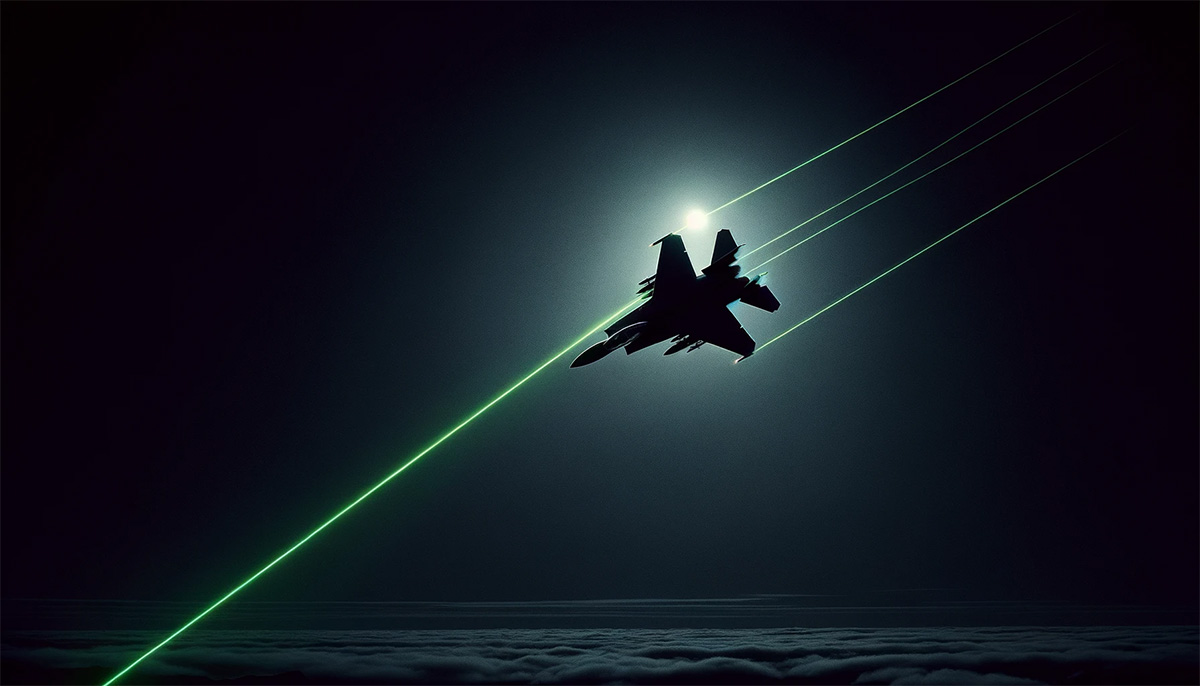
Laser threat warning has become more relevant as directed energy weapons move from development into fielded systems and as rangefinders and designators proliferate on cheap platforms. A laser trained on a position often precedes an attack, and locating its source gives a unit somewhere to aim.
Sentinel Photonics describes its systems as ITAR-free, so onward sale does not require the American export licensing that applies to equipment containing United States-controlled technology.