Siemens Mobility and Lufthansa Technik Defense have signed a memorandum to develop a train carrying more than 150 patients, including intensive care cases, for the German Armed Forces and NATO allies, according to Siemens.
The train would pair Vectouro passenger coaches with a Vectron X or Vectron X Dual Mode locomotive, the latter able to keep running on diesel on non-electrified lines or if overhead power fails. Lufthansa Technik Defense would fit systems ranging from basic stretcher racks to full intensive care beds, and there would be room for up to 90 medical and support staff. The medical equipment is the type already used on the Bundeswehr’s A400M, so patients would not need to change beds between aircraft and train. The coaches are built for cross-border running, could be converted to civilian passenger service and are designed for more than 30 years of use.
“Our Vectron X locomotives and Vectouro passenger coaches stand for the highest levels of reliability, availability, and cross-border interoperability in Europe. Together with Lufthansa Technik Defense, we are creating a high-performance MedEvac solution that combines state-of-the-art medical care with the advantages of rail transport. Based on proven technologies, we are developing a future-proof concept for flexible, fast, and reliable patient transport,” says Steffen Bobsien, Head of Locomotives and Coaches at Siemens Mobility.
“Especially in these challenging times of geopolitical uncertainty, the capability for medical evacuation is of high strategic importance, and this applies to both land and air transport,” explained Michael von Puttkamer, Vice President of Special Aircraft Services and Defense at Lufthansa Technik. “In Siemens Mobility, we have found a strong partner to also bring our proven aeromedical solutions to the rail sector, thereby creating an end-to-end medical supply chain. In this way, we aim to further strengthen the operational readiness of the German Armed Forces and their allies.”
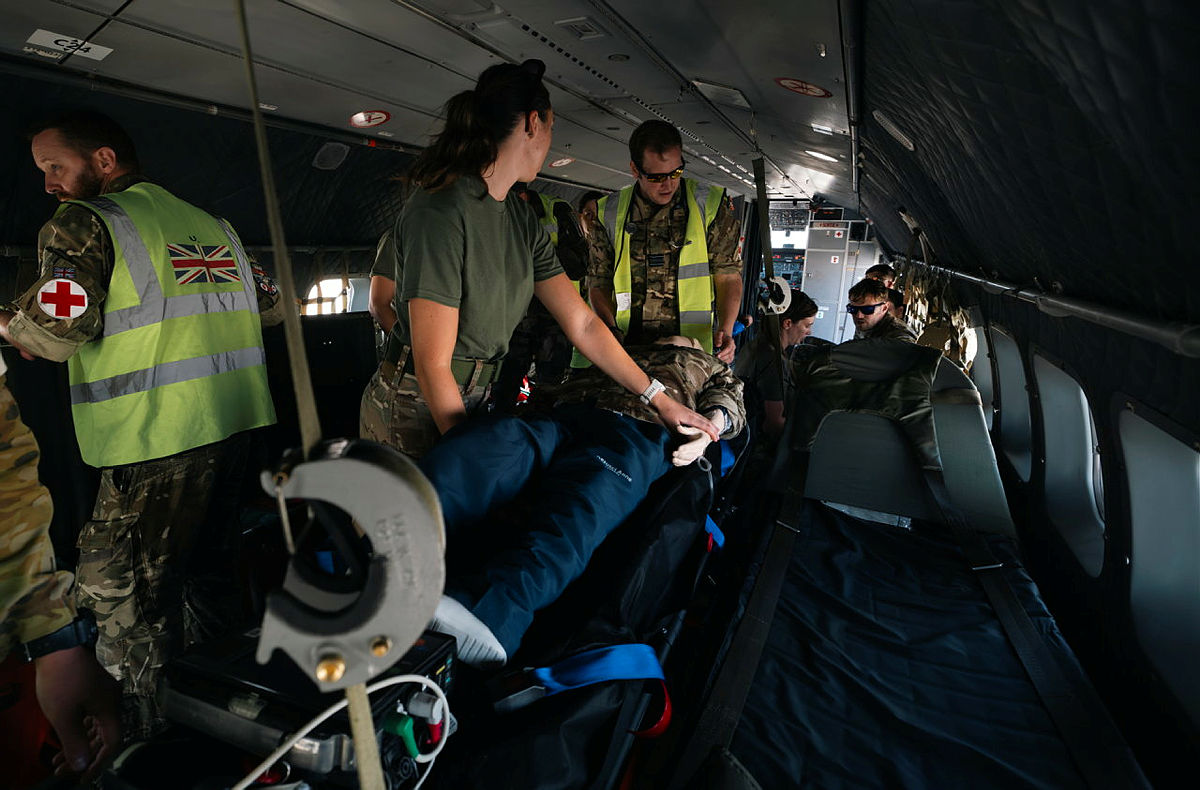
The RAF’s A400M Atlas gained its full aeromedical capability in 2018, able to carry up to 66 low-to-medium dependency stretcher patients or four high dependency patients, with Critical Care Air Support Teams from RAF Brize Norton providing intensive care in flight.