

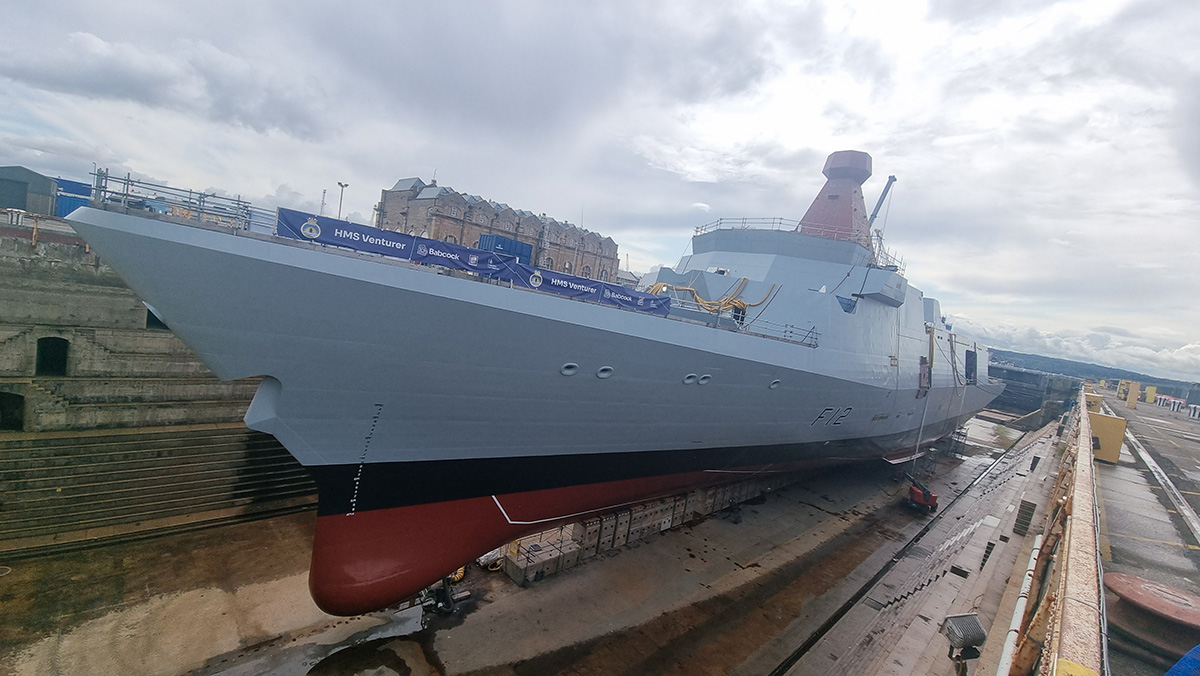
The Prime Minister has said the UK is actively working at a high level to secure a potential Danish order for Type 31 frigates.
Speaking to MPs, Keir Starmer confirmed efforts were ongoing at the highest levels, stating “we are working very hard on it, including at leader level,” and adding “I very much hope we can make progress.”
The proposed deal would centre on the Type 31 frigate, built by Babcock at Rosyth, and is understood to be worth around £1 billion. While the platform’s involvement has been widely reported, the Prime Minister’s comments, for the first time, confirm sustained political backing for the bid at high level.
Starmer placed the Danish discussions within a broader pattern of recent defence export activity, pointing to agreements with Indonesia and Norway. “We have obviously already done a deal with Indonesia, which is important for Babcock’s Rosyth shipyard,” he said, linking export success directly to workload and continuity in UK shipbuilding.
He also framed the effort in strategic terms, stressing that such agreements are “not just the orders but how we integrate and work strategically with our NATO partners.” He indicated that any Danish deal would follow a similar model to the Norway agreement, combining industrial output with closer military cooperation.
The Prime Minister highlighted interoperability as a central objective, arguing that aligning capabilities across allied fleets strengthens operational effectiveness. He said the Norway arrangement ensures that “our service personnel can work on their frigates and their service personnel can work on ours,” describing this as “a really big step forward.”
He added that the UK is encouraging European partners to go beyond increasing defence spending, calling for greater alignment in capability and planning. “That means not just more defence spend, but more co-operation and co-ordination,” he said.
Starmer pointed to lessons from Ukraine, noting that differing equipment and systems across allied nations had made cooperation more difficult than it should have been, reinforcing the case for more standardised platforms such as Type 31.
The Danish competition comes at a time when the Royal Navy is under pressure to balance export ambitions with domestic fleet requirements. Asked how that balance should be managed, Starmer said “we need both, and we need to get that right”.





Im of two minds of this great to see both frigate yards securing exports and staying open but it removes any chance we have of getting new frigates.
I agree Jim. It’s both a blessing and a potential headache for the RN. My worry is this government can cut Frigate numbers using the justification of sharing the task load with Norway and Denmark. I can’t see how Rosyth could deliver frigates for the RN, Norway and Denmark in good time and order so something has to give.
Babcock is building a second build hall in Rosyth meaning they will be able to build 4 vessels at once that’s very good capacity in the UK and Babcock have developed a shipbuilding program to streamline the build process and with every ship they build they should get faster, it would seem Babcock are actively preparing for export orders and a side note Rosyth isn’t building anything for Norway
Apologies, i meant Barrow not Rosyth, it’s early and my caffeine intake is low. I agree the capacity to build 4 vessels at once would be an excellent capability and with continued orders and investment perhaps more of our allies could look towards us for their frigate programs.
The ‘removes any chance of ( the RN) getting new frigates’ is something we need to fix. The French seem to manage it. Shipbuilders need faith in govt support – a trusted partner – to develop, build and sell their products and if necessary, to buy the minimum quantity for continuity of a profitable business.
I think this is pretty much standard behaviour for this Govt, on the hoof obscuration. He (they) can go on about more Frigates being built while in reality it covers us having no more perhaps less for the RN or probably best case later to service. Meanwhile the ‘interoperation’ argument is important because it means we are to a degree leasing out our own security to like minded Countries conveniently located between us and the obvious enemy which will save them money, they see this as genius no doubt, our European allies are seeing through it mind, all talk minimum of action. All smoke and mirrors as demonstrated by the ludicrous announcement about Iranian missiles not being capable of hitting Britain but if they were that no fear we are fully capable of defending against them. No one with any knowledge thinks that is true but technically it isn’t a lie because the T-45 probabaly can on paper defend against them. BUT in the real World we have one, maybe two active, the number of missiles available to them is obscure at best, they would need to be in the right place at the right time, be alert and ready and meanwhile one is now in the Med and took a week to arm up, even when it was here. Meanwhile no authentic interception has ever been carried out by them (just tests and over a decade ago determining they have some capability).
So in reality we have as good as nothing to protect us from such an attack unless France, Germany, Italy (or some US ship ready and willing conveniently in the vicinity) were to be able to cut them out before they got here, which conveniently ties in with my first point about British ships in foreign service being seen as effectively our frontline defence capability. Yep seems to be a thread evident here. All that seems important to Starmer and co is to give the public the mythical sense of protection while talking about new capabilities with all those glorious project names, in the actual reality of never having to be tested while they are in Government, the threat over stated (hopefully true in this particular case, it’s the Israeli threat textbook) or others will protect us as they are in the line of fire too. Pretty much a theme that goes wider through all this Govt’s policy making it seems trying to make all the slices fit a far too small cake while trying to fool everyone all of the time.
They would be built in Denmark, just design purchase and some components I suspect.
It’s unlikely the Danish didn’t build the Iver Huitfeldt class themselves the first time around vessels were build in blocks in Lithuania and Estonia with final assembly in Denmark
Yes I think something similar would happen with these, think even the Poles have been mentioned as a part option as their spec has been a closer fit.
More pointless crap from Keith Starmtrooper.
Our navy needs ships.
The guy is a weapons grade (unt.
I’ve not heard that term “at leader level” before.
At Cabinet level, Ministerial level, or “I’ve had discussions myself.”
Anyway, all good, and where is Batch 2 of T31 please, Mr Starmer? “We need both” doesn’t mean “more.”