


Ministers have said there are still challenges to delivering the programme rebuilding the submarine berths at Devonport and that the delivery team is working with the assurance authority and the contractor to recover it, according to an answer given in Parliament.
James MacCleary, the Liberal Democrat member for Lewes, asked what progress has been made on the Submarine Waterfront Infrastructure Future programme in the context of the delivery confidence assessments for Government Major Project Portfolio defence projects.
Luke Pollard, Minister of State for Defence, said: “The delivery confidence assessment for the Submarine Waterfront Infrastructure Future (SWIF) programme reflects the likelihood of successful delivery at a specific point in time and the National Infrastructure and Service Transformation Authority (NISTA) Gate Review process is an integral part of the Assurance Framework that the Ministry of Defence has in place to support project delivery.
“Despite positive progress, there are still challenges to the delivery of the SWIF programme. The delivery team is working closely with NISTA and the contractor to recover the programme. The current focus is on the completion of design work, where we have increased the pace of design decisions and streamlined approvals, to enable the start of construction. We have used the principles set out in the Nuclear Regulatory Review as part of these reviews, to identify new opportunities to accelerate work.”
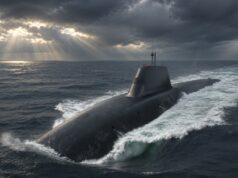
Devonport is the only dockyard in Britain licensed to refit nuclear submarines, and the waterfront infrastructure there handles the Astute class, the decommissioned boats still laid up in the basin, and the deep maintenance periods that keep the attack submarine flotilla available.
Availability in that flotilla has been the subject of repeated criticism, and the Defence Committee reported this month that availability among destroyers, frigates and attack submarines raises questions about whether Britain can meet its commitments in the High North, and the refit of HMS Vanguard at Devonport ran to seven and a half years against an original plan of three and a half.
The Nuclear Regulatory Review was commissioned to reduce the time regulatory approvals add to nuclear programmes, and its principles are now being applied to the design decisions on the waterfront. Defence has committed more than £2 billion to Devonport infrastructure over the coming decade.
Work at the dockyard runs alongside the Clyde Infrastructure programme at Faslane and Coulport, where ministers declined to give an updated assessment and said the next set of delivery confidence figures will come from information captured on 31 March 2027.








Anyone care to translate what this article just said?
It’s late, over cost, and no one knows how to even design it. So go whistle for it ever being finished, because someone will cancel it.
ie, situation MOD normal.
With three floating dry docks going in to HMNB Clyde and considerable expense is it worth asking the question of why we need more shore based dry docks at Devonport.
These facilities are insanely expensive and if all the boats are being based on the Clyde why not just keep the entire maintenance process on the Clyde.
£2billion is a chunk of change.