

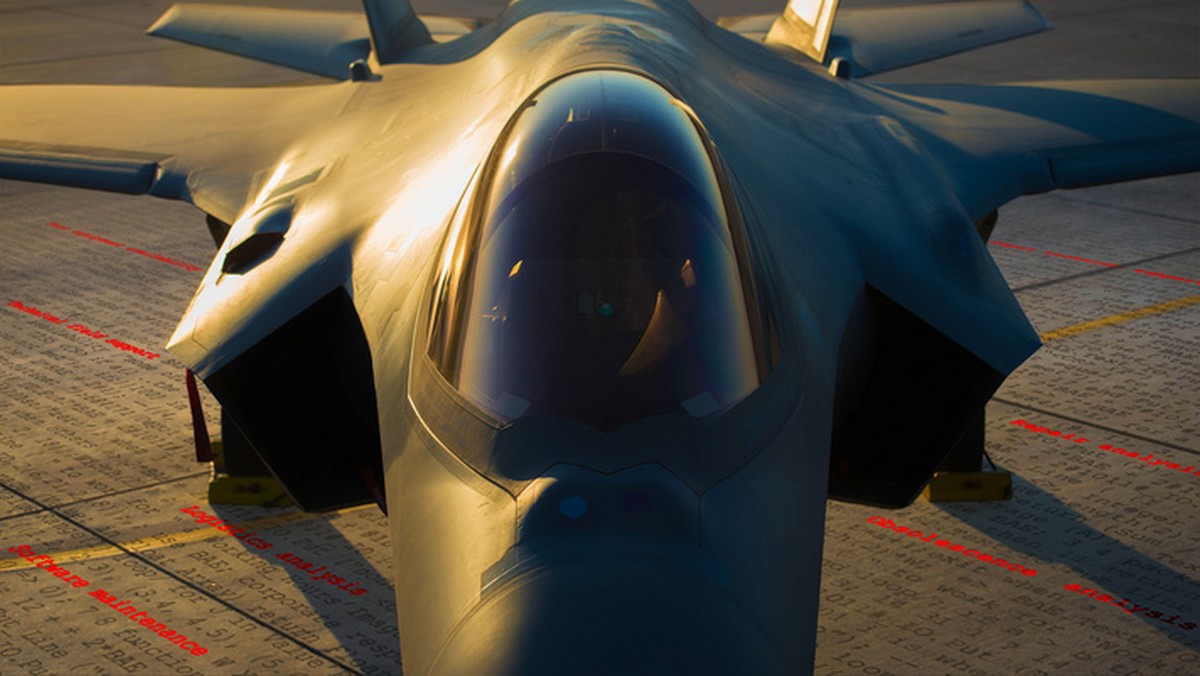
The United States Air Force has released an account of the June 22 strike on Iranian nuclear sites, describing the mission as a demonstration of American air power.
The operation involved F-35A aircraft from the 388th Fighter Wing, which the U.S. Air Force said supported B-2 bombers as they delivered GBU-57 penetrator weapons against facilities at Fordo, Natanz and Isfahan.
The service framed the strike as proof of what it views as the value of the F-35’s low observable design and sensor suite. Col. Charles Fallon was quoted saying the mission “validated all of the capabilities of the F-35 we’ve been talking about for years.”
The Air Force described the F-35 element as focused on suppressing Iranian air defenses. Lt. Col. Aaron Osborne said the wing’s weapons officer served as mission commander and that the formation “flew hundreds of miles into Iran, escorting the B-2s the entire way” while attacking surface to air missile sites. The service reported that intelligence and cyber support contributed to protecting the strike package. It cited Gen. Dan Caine as saying no Iranian shots were fired.
The narrative cast the F-35’s performance as central to the mission and highlighted the aircraft’s perceived attributes from the Air Force’s perspective. Osborne said it was “cool to see the jet do exactly what it was designed to do” and argued that the platform is “the world’s finest combat machine.” These claims reflect the Air Force’s position on the program.
The article also included personal reflections from pilots who participated. Osborne said completing the mission and returning safely created a feeling “you’ll chase… for the rest of your life.”





The F35 operations in Iran by both Israel and the USA shows just how capable it is and how over rated Russian/Chinese based or defence systems are.
The UK needs to get SPEAR onboard or purchase SDB II quickly to take maximum advantage of this especially if we are required to take on Russia without the USA.
Meteor is a nice to have but with AMRAAM D costing half the price it’s better to leave Meteor stocks for Typhoon.
I couldn’t agree more, the F35s stealth capability should compensate for the shorter range for the AIM120 vs meteor.
the priority for the UK should be for a standoff weapon. A F35b should be capable of carrying four GBU53s and two AIM120S internally.
Given that stealth will hurt the useful range of radar guided A2A missiles and the F-35 will be able to get much closer to a 4th gen jet than a Typhoon could, should we be prioritising ASRAAM over Meteor on F-35? It’s cheaper than Meteor or AMRAAM and outranges AIM-9X, and can be fired from ground launchers (as seen in Ukraine).
Missiles rely on guidance from the launching aircraft for the initial part of their flight, so if (for example) an F-35 couldn’t detect a J-20 until it’s within ASRAAM range, having a clever ramjet propulsion system is irrelevant. Obviously I can’t know how feasible any of this is without knowing some very classified info, so I’ll pop over to the War Thunder forums for a few minutes…
I also think there’s value in creating an ASRAAM based GBAD system, something that is fully self contained on one vehicle (instead of seperate launcher, radar and command vehicles like with land ceptor) but with more range than Starstreak.
What is interesting is that almost no coverage has been given to the fact that although the Iranians did not fire on the B-‘s escort package of F-35s, F-22s, and F-16s, the escort package fired “30 munitions” at Iranian surface to air missile sites.