

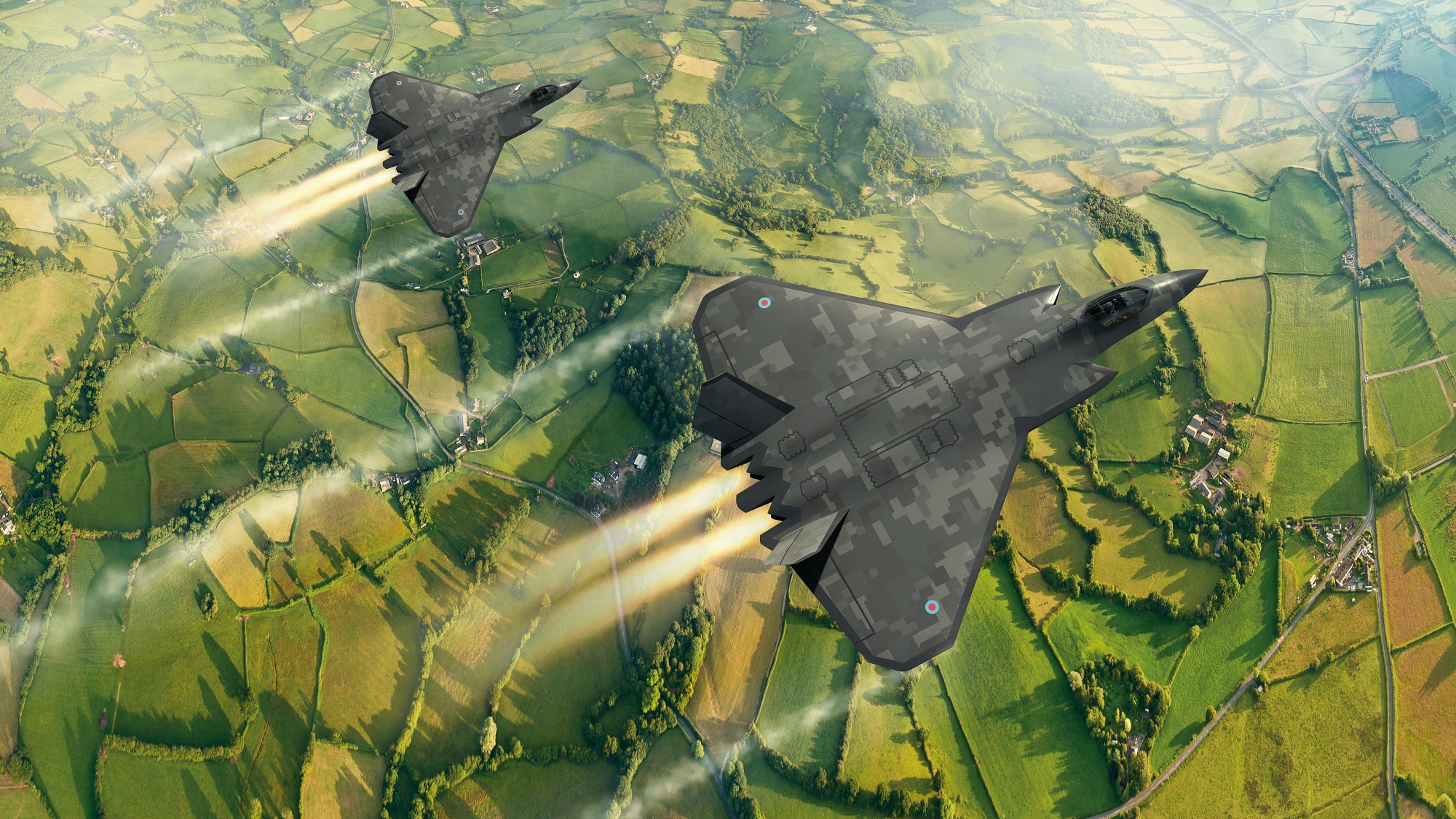
The United Kingdom is open in principle to expanding the Global Combat Air Programme (GCAP) to additional partner nations, Defence Secretary John Healey has indicated, as Poland signals interest in joining the effort.
Speaking to the UK Defence Journal in Edinburgh, Healey did not confirm any discussions with Warsaw but acknowledged that the programme is attracting wider international attention. “We’ve said, in principle, as three nations that we will talk to other nations that have an interest in the GCAP programme… potentially as future partners,” he said.
Polish officials have suggested engagement is already underway. Deputy Minister of State Assets Konrad Gołota told TVP.Info that “there is understanding for our proposal and a willingness to continue discussions” on joining GCAP, adding that he has been in contact with representatives from Italian and Japanese defence industries in recent months.
Healey, however, framed any such engagement as limited and exploratory, stressing that the programme remains firmly centred on its three core partners. “This is a programme with three countries at its core, Japan and Italy alongside the UK,” he said.
“There are already six and a half thousand engineers working on the GCAP programme. It has a real momentum and foundation, which understandably other nations are looking at.”
He said the three nations are willing, in principle, to engage with others, but only at an early stage. “We’ve said, in principle, as three nations that we will talk to other nations that have an interest in the GCAP programme, potentially finding out more, potentially as future partners,” he said.
GCAP, a joint initiative between the UK, Japan and Italy, aims to deliver a sixth-generation combat aircraft by 2035. It is built around a joint venture between the three core industrial partners and a single government programme office.
Healey made clear that his priority is maintaining progress within that existing structure, rather than expanding it. “As Defence Secretary, my first and foremost priority is making sure that the momentum that we’ve got in GCAP, the foundations we’ve already built… is maintained,” he said.
He pointed in particular to the way the programme has been set up across government and industry. “The foundations we’ve already built with a joint venture between the three major companies and a single government programme office…” he said.
That structure, he argued, sets GCAP apart from rival efforts. “That marks out our GCAP programme from other so-called similar sixth generation schemes that other nations may be involved with,” he added.
Poland’s interest comes as it continues to expand defence spending and deepen ties with major Western programmes, while reports suggest it is stepping back from the rival Franco-German-Spanish Future Combat Air System.
The focus from London remains on delivery with the existing three partners, rather than near-term expansion.
GCAP
The Global Combat Air Programme (GCAP) is a joint effort by the United Kingdom, Italy, and Japan to develop a sixth-generation stealth fighter, often referred to as Tempest. The aircraft is intended to replace the Eurofighter Typhoon in UK and Italian service and the Mitsubishi F-2 in Japan. The programme reflects a shared requirement for an advanced, multirole combat aircraft capable of operating in highly contested environments from the mid-2030s onward.
GCAP was formally launched in December 2022, when the three governments agreed to merge the UK-Italian Tempest project with Japan’s F-X programme. This was solidified through a treaty signed in Japan in December 2023. The effort brings together major industrial partners including BAE Systems, Leonardo, and Mitsubishi Heavy Industries, under a new international framework designed to coordinate development and delivery.
The programme already involves around 6,000 personnel and more than 1,000 suppliers across the three partner nations, with a significant industrial footprint in each. A central joint venture, named Edgewing, was established to manage design, development, and long-term delivery of the aircraft. Each national partner holds an equal stake, with workshare distributed across multiple sites, while certain core technology areas are led by designated nations.
Development started recently, with a flying demonstrator planned for 2027 and entry into service targeted for 2035. Alongside the core aircraft, multiple test platforms are being used to mature technologies, including the UK-led Tempest demonstrator and the Excalibur flying testbed. Italy and Japan are also pursuing their own test aircraft to support sensor, avionics, and systems integration work.






The Poles are also talking to FCAS though it seems April is the deadline for talks on workshare between France and Germany, after which the partnership may collapse.
There’s also talk of India being interested! I would hope that’s quickly killed off, they could not be trusted with such sensitive tech. This needs to kept in house with countries who share the same security concerns and diplomatic allegiances.
It’s positive that countries are interested, but surely it’s too late to join the programme? The design must be fairly mature by now and workshare agreed. Bringing in more partners now might just serve to delay the whole thing.
Tier 2 partners maybe. Same for Germany as well possibly. The ME countries will be interested certainly Saudi Arabia.
The UK MUST publish the DIP without delay as it is hampering progress on GCAP.
Exactly what i was going to post.
Uk, Japan, Italy = Tier 1 (Design/Build)
Anyone Else = Tier 2 (Preferred Customer/Access to Priority Build Slots)
Agreed regarding DIP. If tier 2 partners contribute financially and get some limited work-share but don’t mess about with the design & timetables then I would be on board, the programme needs as many customers as possible to bring costs down.
A lot of negatives to our economy and navy reputation from the Iran war. But internationally it could be a positive. Starrmer had again come out strong like he did for Ukraine, and many nations are now questioning their trust in the US being there for them. It could see a number of more European defence projects kicking off. Including more money for the GCAP program and hopefully some cost saving through economy of scale.
Off Topic: Rumours are circulating about a £10bn cut to MOD to be paid for by delays in shipbuilding. Because delays to shipbuilding programmes have always proven to be solid cash savers in the long run, right? I’m just hoping this is part of the treasury vs MOD spat, and will get knocked on the head when the grownups turn up. Er… Remind me again, who are the grownups?
Interested parties can state their case. Any late comers though should be asked to pony up a share of the already significant development costs.