

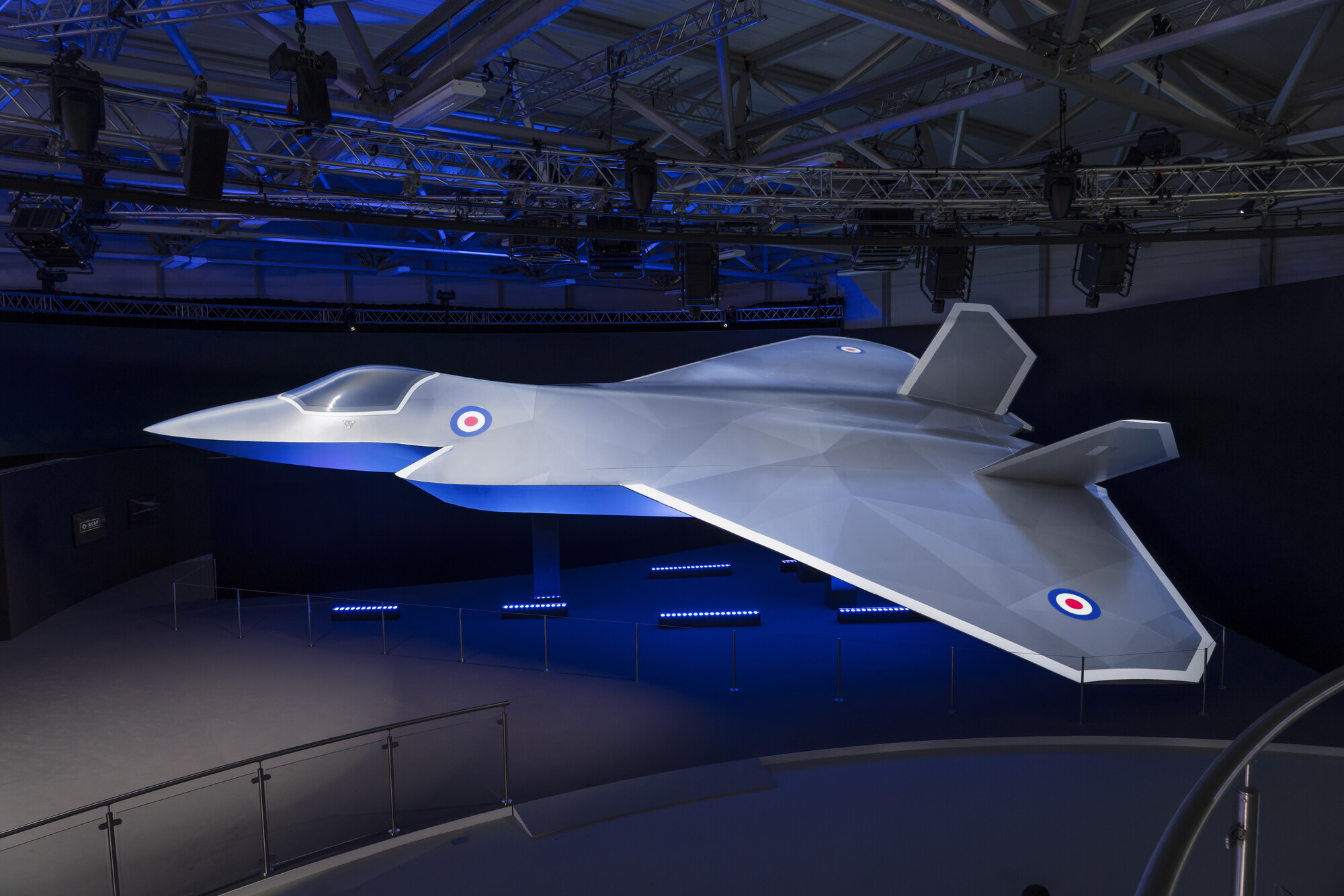
The UK has reiterated that it remains open to additional partners joining the Global Combat Air Programme (GCAP), as uncertainty deepens around Europe’s rival Future Combat Air System (FCAS) and Germany’s long-term position on next-generation combat aviation.
In a written parliamentary answer published on 18 December, Defence Minister Luke Pollard said the UK, Italy and Japan continue to prioritise delivery of GCAP, while maintaining openness to expansion.
“As partners we have maintained that we remain open to other partners joining,” Pollard said. “The UK and our GCAP partners, Italy and Japan, are focused on delivering this vital military capability at pace.”
The Global Combat Air Programme is a trilateral effort between the United Kingdom, Italy and Japan to jointly develop a sixth-generation stealth combat aircraft intended to enter service by around 2035. The programme formally merged the UK’s Tempest and Japan’s F-X initiatives and is backed by a joint industrial base including BAE Systems (UK), Leonardo (Italy) and Mitsubishi Heavy Industries (Japan), with the Edgewing joint venture established to lead design and delivery. GCAP is headquartered in the UK under an international treaty framework agreed by the three governments.
The response came after Liberal Democrat MP James MacCleary asked whether recent discussions had taken place with German, Italian and Japanese counterparts regarding Germany potentially joining GCAP. Recent reporting has described FCAS as being in serious difficulty, with officials now seeing the programme’s Next Generation Fighter as at risk of collapse. Ministerial talks in mid-December reportedly failed to unlock Phase 2 of the programme, leaving key industrial contracts unsigned and political declarations unconverted into binding agreements.
German political rhetoric around FCAS has also shifted. Lawmakers and officials in Berlin have begun speaking openly about the possibility of breaking with France on the fighter component, a marked change from earlier efforts to manage disagreements privately. This has been widely interpreted as frustration rather than routine negotiating pressure, particularly given Germany’s existing commitment to the F-35.
France and Spain have publicly reaffirmed their support for FCAS, framing it as central to European strategic autonomy. However, those statements have been undermined by persistent industrial deadlock, with Dassault’s chief executive openly questioning whether the fighter will ever be built without clear leadership and authority. The unresolved leadership dispute between Dassault and Airbus continues to be described by analysts as structural rather than temporary.
Against that backdrop, GCAP has increasingly been positioned as an alternative model with defined leadership and clearer industrial alignment. The UK-led programme aims to deliver a next-generation combat aircraft for service in the mid-2030s, with Italy and Japan as core partners.
Media coverage has also warned of wider consequences if FCAS fails, suggesting that collapse could damage cooperation on other flagship European defence programmes, including the Franco-German Main Ground Combat System. As such, FCAS is widely portrayed as a test case for whether large-scale European defence integration can survive competing national priorities and industrial sovereignty concerns.







Why not, Tornado worked our pretty well, no?
Both Tornado and Typhoon were fundamentally British designs.
Because Britain had most of the tech and spoon fed it to the others – the process was painfully slow.
There is a strong case that both aircraft and demonstrably Typhoon, could have been built quicker and cheaper by UK alone.
True, but essentially it secured the core market and derisked the entire programmes.. selling to others then becomes preferable not a requirement.
Not that I don’t think we could not have done so, but you’re always competing with the Americans and that is hard due to protectionist programs that have a large core build number.
Gripen.
😂
Rafale would support your argument on speed. But I think it came close to being cancelled due to its development cost. I think there’s some rule of thumb relating increasing cost to the number of partners….but your share is less. France would not fund FCAS development alone and the UK would not develop GCAP alone; its not the only weapon we need. Agree though that above 3 partners the project mgt bureaucracy might slow things down quite a bit.
I think the three partners we have for Tempest is perfect.
Germany were a nightmare in both previous projects and factually have killed a lot of Typhoon exports. So they cannot have any export control seat at the table.
Germany ordered over 350 Panavia Tornados.
And Germany has now ordered 200 Eurofighter Typhoons in total – that’s considerably more than the UK has!
Far from being a ‘nightmare’, it’s German orders that has been keeping BAE aerospace workers in the North West in employment.
Tornado was a very successful aircraft, but it had little export potential … it was designed for the NATO central-front.
Selling Typhoons to Turkey, and a second batch to Saudi Arabia, is hardly without controversy!
Order size is a major problem. Japan will probably make a large order but it’s unlikely that the UK or Italy will. Having Germany join would help bring down unit costs and that has to be good for the RAF as it means for the same price they can afford additional airframes.
I think the opportunity with Germany is that as is pretty much the case with FCAS Germany could have priority over loyal wingman design and development, while thus minimising new input into and thus any potential delays to Tempest itself. Clearly they would be able to build their own Tempests and add and change what they want within reason but that would be down to them and as such not effect the core design for the other three nations. Meanwhile they could concentrate on leading on the drone support platform which isn’t as yet core to the Tempest programme so it could benefit from their focus. Benefits both accordingly as long as this isn’t drawn out endlessly. Big decision for Germany here but they really can’t afford to drag their heels, as France will simply not transfer fighter tech in scale to them effectively further weakening their capacity to develop fast jets. That would be very dangerous for them, and something that Japan in joining the programme was intent on avoiding. Relying further on the US would be madness and worrying enough with F-35 already and the restrictive timeframe that already dictates.
I think so too, Steve.
The existing partners just need it be careful and make sure they agree stuff with Germany before letting them in and make sure there is a solid contract around it.
If Germany decides to pull out of their current project, they will be desperate and so shouldn’t be able to dominate terms of partnership. Equally it’s in existing partners interest for them to enter, so just have to balance risks.
That was the previous logic of the asylum.
Agreed. The facts are clear. The message should be ‘It is this or the usual European Option: Buy American’. I have connections to Germany, a country I like, but here I am very unsympathetic.
👍🏿
The “Thumbs Up” was directed to Supportive Bloke.
Could always introduce a tiering system for partner nations, with the 3 original partners being tier 1. Tier 2 gets less input into the design. Worked ok for F35.
Tier2 gets zero design input and zero control of exports.
They can assemble.
If you bring Germany in expect things to get radically slower and much, much more expensive.
The other thing is Germany doesn’t really have any 6th Gen stealth tech to offer. Most of that will have come from UK via Typhoon and the pre F35 project to develop a replacement Harrier.
If one courts Germany and bring her into the Edgewing consortium ….
You get a British industrial partner of over 50 years on our doorstep – not an unknown entity on the other side of the world.
You get brilliant German aerospace engineers who worked hand-in-glove with BAE Warton on the Typhoon. They are hardly novices!
You get a country that now has an appetite for high military spending – and one with hardly any debt.
(Unlike a debt-ridden British government that even today favours welfare spending over defence orders).
And you get the Luftwaffe – with a huge market of 150-200 Tempests.
Edgewing might be proceeding satisfactory in these early days; but if experience is anything to go by, it’s going to run into technical issues, long delays, huge cost overruns – and disappointing exports!
…and Replica of course which with further ongoing in house research no doubt over the years, has given us a serious head start over other non US competitors. France is probably the only other Country anywhere near comparable but are politically self harming.
If Britain had built Typhoon solely as a national project, it would have been cancelled after running into the inevitable technical delays and cost overruns – just like almost every other British military jet in the modern era.
Experienced has shown that British fighter programmes need to be immersed into international treaties that our hapless government cannot renege on!
. . . and all other non-British fighter projects had no technical issues, no delays and no cost increases . . .
Indeed, not – but the Americans and French don’t have a tendency to lose their nerve – and cancel.
But you can always rely on a hapless British Government to eventually cancel and buy American!
And to be fair, although I’m a big fan of the British aircraft industry – after the debacle of the Nimrod MRA4, I’ve lost all faith in BAE’s project management and cost-control abilities.
Strap in for a bumpy ride with the Edgewing Tempest – but at least an international treaty means the British government can’t cancel and buy more F-35s.
Agree about the Brits losing their nerve. We’re good at that. I’ve always admired the French who are able to take a longer term view. Could be construed as “France First”. We could learn from them.
THE MRA4 mess has very little to do with BAE.
BAE’s initial offer was *new build* airframes – anyone with cost risk understanding would know the contractual benefits of that.
MoD decided to rebuild existing frames
BAE wanted all digital controls from the off
MOD wanted to keep the existing flight controls
MOD wanted to lengthen the fuselage to fit something in
BAE warned this would make the plane unstable in certain flight regimes – test flights confirmed this – might redesigning of wing roots and tail ensued with fly by wire coming into play.
Everything was vaguely fixed and a good test flight was run to Canada and back which was positive.
Then came Haddon Cave’s gift – all of the frames MoD had supplied were magically different. So it looked like each of the nine frames would have to be individually certified.
BAE offered to laser scan them individually
The problem was still any modification required nine new type certificates. That was never solved.
The thing everyone misses in all of this is that the electronics worked very well and indeed the R&D went into P8.
You’ve missed bits out.
BAE wasn’t solely responsible, but a £3.5 Billion write-off had much to do with failures in BAE’s project management and planning – and cost control.
If you go into ‘Secret Projects’ – and search for Nimrod MRA4, you’ll find a narrative by one of the BAE team.
Crucially …
” In late 94, BAESYSTEMS preferred RMPA solution was lost with the do not proceed decision on A400m , but only after MOD had agreed to launch a Nimrod replacement program. The Nimrod re-engine proposal was hastily conceived and grew rapidly without an appropriate pre study.
The RAF/BAESYSTEMS couldn’t see beyond wanting a Nimrod to replace a Nimrod, they concluded that the air vehicle fundamentally had to be 100tons max take off weight and four engines…. there was nothing else adaptable and HMG wouldn’t approve an entirely new design.
The first optimistic assumptions to go bad was the required engineering ramp up, it would never have worked, so via the Force Majeure contract clause, a one year slip was agreed in the exchange for reducing the number of airframes delivered from 21 to 18, to cover 1year of extra incurred costs. The actual engineering ramp up, particularly at Farnborough took two years.
A poor engineering decision during wing structure optimisation adds a further 6 months. The original wing proposal, under estimated its weight because it was not based on the wing structure optimisation process assumed in the planned timescale, so the wing weight increased. An over estimated drag drove unnecessary additional design time to reduce its weight, perceived to be essential to achieve the performance spec. A result of (not so) Smart Procurement and lack of pre studies.
As a consequence of the above ie late issuing of drawings, the production lull prior to Typhoon ramp up, vital to securing early parts delivery to Woodford, was completely missed. At the same time it was realised many parts expected to be retained would require new fabrication thus further overload the production organisation.
The build of the first 3 prototypes experiences paralysing part shortages. This turns a planned 18 month build time into a 48 month actual.”
And yes, there is then a delay caused by using the old flight control system.
‘A flight test program originally scheduled at 24 months, takes nearly 60 months’.
To state that the MRA4 debacle had ‘very LITTLE to do with BAE’ is not consistent with the evidence.
Whilst most if what you state is true it puts the blames for a load of MoD decisions at BAE’s door.
The wing debacle was caused by a number of things not least a major change in the way the radar system worked which ultimately lead to the lengthening of the fuselage.
You can be the best Project Manager in the world but you can’t manage serial irrational decisions forced from above.
I’m not a fan of BAE but in this case saying “BAE bad – others good” is nutty. Fact was the project had got there and if there was some budget to build new frames with the electronics it would have been fine.
But I haven’t written “BAE bad – others good”.
Strangely, unlike you, I am a fan of BAE – but to try and argue that the MRA4 debacle had “very little” to do with the company is just not credible.
Let’s end on agreement – the final farce in a whole series of blunders was for the Government to cancel the programme in 2010 just as MRA4 was working and about to be brought into service.
A full new build version was perfectly possible on a fixed price contract.
However, the Camerloon government was looking for defence cuts wherever they could find them irrespective of any damage done.
That’s only partly true. Yes financing is probably correct but technically nothing about being in the Typhoon project with Germany made it less delayed or decreased technical problems. Geez we had to completely re design the tail due to their in out shake it all about approach. The aircraft would have been in active service a lot sooner had it been a British project with stable finance. The latter was the problem not the former, no high tech project especially aircraft doesn’t have obstacles and delays to overcome, just look at F-35.
‘Both Tornado and Typhoon were fundamentally British designs’.
One can perhaps make that argument for Tornado – with British experience during the Sixties in variable-geometry technology.
But not for Typhoon …..
You can see much of the Typhoon design in the drawings for the MBB TKF90.
In contrast, the BAe P.110 looks much more like the Dassault Rafale!
look at the BAE ACA>EAP
Look at the MBB TKF90 first!
Indeed, MBB had plans to build a second EAP (alongside BAe) – but the German government pulled the funding, so only the BAe one went ahead.
The 110 was a replacement for earlier Bae heavy fighter designs which the Mod were reluctant to finance so a lightweight design evolved into the 110 which yes was more akin to French wishes and the eventual Rafale but not on the direct road to EAP or Typhoon. However once France exited, designs reverted to former heavier design concepts and the ACA which apart from cranked delta looks very similar to the EAP and Typhoon was born, the twin tail disappeared as a cost cutting measure when German participation once again became conflicted. Fact is though yes both Countries contributed to the overall design be it formally or cooperation between the individual companies and there are lots of early variations to consider representing difficult to define contributions from the various partners.
Thankyou – i think that is a very considered reply.
Germany wanted to leave the Eurofighter programme at Reunification. Only threats and bribes kept them in: A german company and C.E.O.’s for both airframe and engine, little to nothing of which Germany was primarily responsible. They then prevented the use of an AESA radar because ‘reasons’. Leaves a bad taste.
As I understand the uk pushed for all tonka’s capabilities the Europeans just wanted plain vanilla. A lot of tech likely came from cancelled trs2. Cold War heavy metal.
No?
Are you sure?
Just constructing the sentence so as to invite opinion. My own is that Tornado worked out well.
I agree, Paul – Panavia Tornado worked out very well.
Since 1955, there haven’t been many British fighter projects that have gained orders for 990 aircraft!
If the ‘great white elephant’ TSR2 had gone ahead, it would have got about 150 orders from the RAF – the sole operator.
Plus the Australians.
The Australians had rejected the BAC TSR2 long before the British Government had cancelled the programme.
They hadn’t been interested in the Vulcan, either!
The only TSR2 operator would have been the RAF.
In the earlier days of the project Lord Mountbatten convinced the Australians that TSR-2 would not be built. Not only that, Vulcans were offered to Australia as an interim solution until TSR-2s were delivered provided operational control remained with the RAF. The Australians didn’t like that idea. The F-111s they eventually bought were very late and over budget.
In 1965, the BAC TSR2 was already very late and over budget. The Australians had already ruled it
out.
Most importantly, the Australians had seen the limitations of British power in February 1942 when Singapore fell. The British Empire was being wound-down in the Sixties – and Australia’s new strategic partner in the region was the United States – not Britain. She was now in the business of buying equipment and understandings from an American superpower.
The TSR2 had no market other than the RAF – and even it would have struggled to buy more than 150.
TSR2 may of been over budget but better than anything else around at the time and a little jealousy from our American friend’s . Who knows if it did make it into RAF service Orders from abroad may of followed .Look at the Canberra bomber , the yanks waisted no time getting that into the USAF .
There is no comparison between the Canberra bomber and TSR2, Andrew.
One was relatively inexpensive – and straightforward to operate.
The other was hugely expensively to buy, operate – and complex to maintain.
One could make the same comparison with the Mirage III/V family and the BAC Lightning. Dassault had about 1200 exports – and BAC had 54!
We don’t know how good TSR2 was – other than the early test flights suggested that it could fly very fast at low altitude in a straight line. But I attended a seminar at Cosford a few years ago – and it appears that one senior BAC engineer was convinced that the vertical stabilizer on TSR2 would soon have started falling off! And the metallurgy was apparently very suspect, too.
As long as we stay focused on time scale and budget so that Tempest is the success story it can be.
Absolutely Geoff, I’m sure the German contribution can only strengthen the Tempest programme.
I worked on previous projects with the Germans. Let’s just say that we made much better progress with Italian engineers.
Yep. I’ve worked with a Japanese company on a training opportunities scheme for apprentices. Very switched on outfit. As I said…”as long as we stay focused”.
Thinking Germany maybe reluctant on a long range bomber like tempest and perhaps uk should not be an easy scapegoat if the French German fighter fails.
Tempest is a pipe dream… And it would be decades away… If it ever actually happened which I am extremely doubtful.
This will end up a bit like Euro Fighter did, good bit of kit, super slow build rate and endless up grades that make the first batch out of date so you have buy more. Mind you at least we would have the ablity to fit weapons we want to it un like F35 which the USA controls and restricts.
Europe can build great kit if it tries, and it should. The great USA is not a reliable friend any more, and it just seems they are interested in getting money and sales but not a lot else. Trump is mental as a fish and he changes mind every week any agreement or defence pact is worthless under him as just denies he agreed to things he can not be trusted to come to any ones aid.
An aquarium has been researching how sharks react to plastic toys. It seems they react to toys in a way that suggest a need for cognitive enrichment.
The USA has never been a reliable friend.
True they abandoned Korea, that started the war, they abandoned Vietnam and Afghan. They can not be relied on. And they hold back on kit even to thier allies yeah your right.
Fleecing us of gold reserves 1940-41.
Shutting us out of the joint nuclear weapons program – McMahon Act.
Stabbing us during the Suez Crisis.
Ect. Etc. Etc.Etc.
It’s said that countries don’t have ‘friends’ – they have interests.
America didn’t ‘fleece’ us out of our gold reserves in 1940!
Although in about 1932, Britain did default on her considerable US loans from the First World War – and we’ve never paid them back. Even today!
And Britain’s own record has not always been unblemished! ‘Perfidious Albion’ anyone?
Munich 1938, Yalta 1945, Iran 1953, Suez 1956 – conspiring with France and Israel to overthrow the Egyptian government.
America has not been such a bad ‘friend’ to Britain since 1941.
Lend Lease.
Five Eyes.
US–UK Mutual Defense Agreement 1958. (We get a cut-price nuclear deterrent!)
Etcetera, etcetera, etcetera ….
Since the late Forties, America has largely paid for British defence against the Soviet Union/Russia – and allowed us to invest instead in the Welfare State and the National Health Service. Benefits that many Americans don’t have at home.
That default, was because the USA crashed the world economy.
Hmmm ….. President Hoover announced a one-year moratorium on war loans in 1931. It’s now lasted 94 years.
The outstanding British debt has been calculated today at £225 Billion.
They can’t even persuade France to let us into the EU SAFE programme on reasonable terms (as the EU have admitted Canada). So why should Germany be allowed into one of our programmes? Slowing up the programme to admit another partner country is hugely against our interests and that of eNATO. Germany should only work on collaborative aircraft in parallel with the rest of the project.
Jon,
Wonder whether it may not also be beneficial to solicit Australian and Canadian participation in some form for GCAP/Tempest programme? Not certain re respective design capabilities, but each nation could easily justify a requirement to acquire a 6th gen, w/ comparable performance characteristics. Unfortunately, probably cost prohibitive for Kiwi interest,/participation. Some/all of the Nordic countries might also eventually exhibit an interest in acquisition, and Norway has deep pockets by anyone’s reconning. F-47 may follow same pathway as F-22, and be unavailable for export. Or perhaps not, virtually imponderable currently. 🤔
Canada and Australia would bring nothing to the table beyond massive political complications. Both have manufacturing ambitions and both lack a manufacturing capacity. Canada in particular has messed around on multiple fighter programs since the 90’s and its latest on again off again approach to F35 and Grippen does it no favours.
Canada has a very large aerospace program and industrial complex bringing a lot to the table.
The question of completing the total purchase of F35s is very much because of the current US administration.
This is however is the second time Canada has ditched the F35. The first time can’t be blamed on the current administration.
It has not been ditched, the contract is under review which the Canadian government has a right to do.
Politics is very much involved in all of this.
I for one support the F35 for the RCAF. Gripens are a fine plane but not suited for Canada.
Smaller EU states and other friendly counties in the world should en Saabs focus .
I agree, Mickey.
It seems that fans of Gripen and ‘Swedish cool’ have lost all sense of perspective.
If Canada really wanted to buy the F-16, it could have done so in the 1970s!
Gripen doesn’t give Canada (with a serious air force – and NATO membership) a fighter that’s operationally viable in contested airspace well into the 21st C
I would argue that if Canada wishes to hedge her bets and operate a mixed fighter fleet, then the Eurofighter Typhoon (with ECRS2 radar) would be well suited in a force alongside a smaller order of F-35s.
And a Eurofighter Typhoon purchase opens the door into the Edgewing Tempest consortium.
I am sure the RCAF brass, DnD and the PM’s office have some kind of plan for 6th gen. I for one am in favour of Canada joining with the UK/EU for a fighter program.
Canada’s increase in focus and trade with the EU/UK would be the logical path towards a 6th gen Fighter based out of Europe.
Canada can bring a lot of aerospace infrastructure and expertise to a project like that.
I agree about Canadian aerospace infrastructure and expertise, Mickey.
Canada has a lot to offer – and the RCAF is a huge market for Eurofighter/Edgewing.
Check the TWZ site for an interview with a RCAF general regarding the F-35 issue. Guessing the F-35 order will be increased beyond 16 but probably the 88 total will be reduced. It is a shame Boeing’s tariff request of 300% on the C-Series came about resulting in the termination of the 18 SH order and Bombardier pretty much gifting their jet to Airbus which became the A220 and a success. A mixed SH and reduced F-35 fleet could have resulted in a Tempest buy (as opposed to production) to replace the SHs. A smaller F-35 could result in a faster Tempest acquisition sometime in the late 2040s early 2050s.
Yep, it’s all about the long game.
F35 is supposed to be around until 2060, 6th gen fighters will be replacing them in the decade leading up to that.
And I forgot to mention, a great article especially on the challenges of operating defence installations in Canadian weather.
That was down to Mountbatten who as a sailor deliberately sabotaged the prospect t of selling to the Australians because he wanted to force the Buccaneer (present or a supersonic upgrade he wanted) on the RAF. About as effective in pursuing British interests abroad as the younger relative Andrew Mountbatten Windsor.
The biggest issue with bringing anyone else in to build the main fighter is speed. It takes years just to get cooperation agreements properly sorted and the schedule is already super tight.
Canada seems to be sorting itself with the Gripen, which admittedly was a surprise. I wonder does that mean there’s an opportunity for Saab to use GCAP technologies to build their next generation fighter? Sweden and Saab have had a watching brief on GCAP since the off, and if 6th Gen is system of systems, perhaps there’s room for more than one (optionally) crewed fighter jet in the mix.
I am surprised that Sweden did not build a single engine derivative as pat of the GCAP.
Swede here. As I understand it there’s a committee looking at it now, they’ll hand over their report and eventually the government will make a decision. Remains to be seen what that decision is. We’ll have an election before then and the outcome of that might very well be a major factor for an eventual decision. As it stands the left would win, they’d be more likely to give Saab a bag of money. If the right wins I think it’s more likely we’ll get some sort of European collab. But in the meantime we are getting Gripen E for the air force, the first one was handed over to the earlier this week and delivery will continue over the foreseeable future. Gcap, if the schedule holds up, will probably be too early for us to be ready to retire Gripen E and therefore I doubt Sweden will play any part.
Well, it could be an additional extension of the programme using mature GCAP technology.
An in service date ten years behind.
Too late to usurp F35 I suppose.
I think they will have to look at what follows Gripen E come 2030 or so, be it a further development or a new aircraft to supplement and gradually replace. It’s just that the Nordics especially Sweden are tied to the idea of operating from rough strips and roads which I understand, that benefits Canada too. Tempest is going to be rather the opposite to that philosophy really, as much as anything due to size. That said I can see cooperation on GCAP technologies where possible, I find it difficult to see how Sweden can go 5th let alone 6th Gen alone. Probably right they take more time.
I’m loathed to have Germany in the program given their history of feet dragging in the Typhoon program however pulling out Germany from FCAS will collapse it and take out the only real competitor to GCAP on the world export markets.
Bringing in Germany will provide a massive cash and industrial infusion meaning we can better afford Tempest without having to gut other capabilities.
Most of all it will f**k up France and Dassault which in itself is a worth while outcome.
I think Dassault thinks if it digs its heels in the French government will eventually bite the bullet and pay for a French only aircraft. However given the absolute calamity that is French finances this will not happen.
It may even be that the French state wants out of FCAS because it knows it can’t afford a new fighter program even with Germany.
Tempest design is probably too far along for Germany to have much input beyond manufacturing which again suits us.
Good summary. Bringing Germany into GCAP would be the final piece of the jigsaw to rebalance the politics of Europe by leaving the EU, increasing the influence of the UK (+ Germany and Poland) and decreasing the post war influence of France.
I quite agree re French finances. They make ours look rosy. They have two really rather expensive and frankly pie-in-the-sky projects to attempt to turn both PANG and FCAS from rendering in a slide deck to reality. I don’t expect to ever see either
But today France can service her debt a lot cheaper than the British Government is able too! The British Government has lost the confidence of the Bond Markets – and who can blame them. Plus France gets more Bangs for her Bucks!
Today, Britain is spending more on debt interest than we are on defence – and historically that is the sign of a country beginning a spiral into long-term decline.
Liz Truss please take a bow…
Careful she will sue you, if you ever raise doubt about her genius.
Well that would be one way to bankrupt her…
I don’t agree that f** up Dassault and France military aviation build capability is good for anybody. They are an ally, have a track record of building great aircraft and provide an alternative approach to BAE and consortia and US manufacturers. Sure, we want GCAP to be a success, but why want the French to fail? eNATO needs both Britain and France to be strong and capable. National pride has to take second place to collective security. There is enough workshare for everybody across many programs. Perhaps the GCAP/FCAS situation can somehow be used as a bargaining chip?
They are our main competitor, an ally some times and adversary on others, they just sent us a £6 billion bill for participation on Europe defence fund.
Because every sale of a French 6th generation jet is one less Tempest sold by us.
That’s why we should f@ck the French.
Jim –
Don’t forget the Boeing F-47, is also a competitor to GCAP on the world export market, I’m sure an export version of the F-47 will be toned-down and sales limited to core partners such as Japan, Australia and the United Kingdom, allowing the US to enhance interoperability and shared defense capabilities in critical regions like the Indo-Pacific.
I imagine the unit costs will be extrodinarely high compared to the Tempest.
The maga export f47 version is going to 10% less good or something said the orange man.
Sell them the ac only. We do not need another partner……
it will be a world beater with massive export potential.
Bring them in as the only tier one partner.. with all the same abilities to control the programme as the UK had with the F35…
Essentially have the 3 core tier zero nations…that are joint partners.. tier one gets you work share and complete sovereign control of your own aircraft.. but not ownership of the IP and decision making around other future customers.
We don’t really want German peccadillos involved in who we can and cannot sell it to.. as their generational trauma/ moral compass will kill some export orders. Not saying morals are bad, but I don’t really think we can afford to many as we come into a time of serious geopolitical and geostrategic instability..
Japan has had similar issues to Germany for the same reasons, but I believe the agreement for GCAP has been undertaken in a way that makes it harder for any one of the three main countries to block.
[Who who have thought eighty years ago that we’d partnering with Italy and Japan and discussing whether to fold Germany into the mix?]
Japan had to slightly alter their constitution for it as it normally blocks most weapons exports
Hitler?
Japan was a British ally between 1902 – 1921.
The Imperial Japanese Navy escorted British convoys across the Mediterranean during the First World War.
There is a memorial on Malta to Japanese sailors who lost their lives in those duties.
A Japanese naval officer was even killed aboard HMS Queen Mary during the Battle of Jutland!
We’ve really come full circle in 100 years!
Anglo Japanese Alliance, which was ended by the Washington Naval Treaty
That’s a BIG NO from me.
By all means let them buy some but don’t Invite them to join this project at this stage.
The French don’t play well with others. They want their next jet to be Dassault. They might allow a few token German or Spanish bits, but they want FCAS to be 90% French. Getting the Germans (& Spanish?) into Tempest may add complexity, but it will stop Rachel cancelling it.
They typically demand say, 60% workshare for 30% financial contribution, and then wonder why that’s not deemed acceptable.
Europe certainly needs to move away from buying US equipment, not that America can no longer be trusted
I am not sure how tge French got the Germans to pay for a carrier capable plane when Germany does not need one. France tried this with Typhoon too but the other partners said no. No doubt tge French sold it as a EUROPEAN peoject forgetting tbat both Italy and the UK are European countries.
This is hilarious. Europeans are so confrontational, they don’t even want to work with each other.
Germany should be allowed into our project just to spite the French at this point
And, as so often seems to happen, we end up giving away our tech knowhow on a plate?
No thank you.
Inevitably, it will happen for cost reasons.
How about, we are buying your Boxer and your RCH155, you buy our plane?
Or is that too simple? What happened to industrial offsets?
If you have read accounts from Italy and Japan you will realise we are not giving away our tech and it’s certainly not being done for nothing. The tech is largely IP of BAE and RR both of whom are incredibly experienced and somewhat ruthless companies.
HMG will give away the tech in pursuit of their European dream. They have form.
Exactly.
Edgewing appears to be largely out of government hands now and under the control of BAE, Leonardo et al.
As long as governments keep writing cheques the UK companies will hold their own as far as IP goes.
They will do what the guy that writes the checks, tells them. And I’m not so sure that the companies do own the IP that the governments paid for. Not usually the case.
BAE do a lot of the expensive development off their own budgets, especially around the electronics and radar side.
In a way GCAP is an exercise in combining the various companies’ own developments, which is partly why the Japanese have got fractious.
You don’t really know, do you?
More than just Europe.
They gave the world’s best jet engines to the Soviets – for nothing I think.
Correct.
No we didn’t.
We SOLD them Nene and Derwent engines. They were already being made under licence on the USA, Canada and France. But the Nene was a centrifugal compressor design that was already recognised as a technological dead-end. Which is why RR were happy to license it to other countries, they were already working on more advanced designs.
Plus the U.K. was on the verge of bankruptcy after WW2 and needed the money.
It’s amazing how these old myths persist.
People must think everyone in post WW2 Britain was a complete idiot.
Many people assume everyone except themselves are complete idiots.
Yet if that were the case, why aren’t they billionaires?…
That said, it was probably still a bad decision to sell them to Soviets as witnessed by Korea. But if we hadn’t, they’d have probably got the design from one of the licensees anyway.
But an understandable decision at the time, we also sold technology to the USA at the time that they blatantly copied too.
We needed the money.
Probably?????
Srlsy mate, you live in the Kremlin??
I see that internet access is allowed in asylums.
Russia bought a few engines and quickly reverse engineered and improved the design to create the engine for the Mig 15’s over Korea.
The UK didn’t make any money worth having and the idiot Atlee was totally shocked that the engines would be used for military purpose which was against the terms of the contract.
The agreement was that the engines sold would not be used for military purposes. It didn’t occur to someone that they could be reverse engineered for use by the military.
The engines weren’t on the secret list at the time.
Given that it’s never been disclosed how much they were sold for you’re purely speculating based on your own political bias that the money was “not worth having”.
Given Britain was on the brink of bankruptcy, clearly the government felt differently.
It would be mad to bring Germany in as a partner in design or user spec. If they agree to buy 100 there could be some assembly work possibly but they will block exports and slow work. What would they offer? The prototype will be flying soon. Letting a 4th partner have a say would slow it down. The Japanese know what is needed to fight Chinese tech.
We’ve been building advanced combat jets successfully with Germany for over fifty years. They are our long-term aerospace partners.
You bring Germany into the consortium again – but as part of the conditions for membership, this time you prevent the German Government from being able to block exports. It can be done – not even the ‘Pro-Pal’ British Labour Party can block F-35 exports to Israel !
100 -150 Edgewing Tempests for the Luftwaffe would be a huge order – and the Germans would rightly demand a lot more than just assembly work!
So even more reason to exclude them.
NNNNNOOOOOOOOOO!
Partnering with France was always going to fail, they always have to be the lead and in control.
Much like never try to sell the Indians anything, they’ll tyre kick for decades.
Germany should be welcomed with caveats, any BS and you’re out.
If Italy and Japan can agree on a design with the UK, I don’t see what additional requirements the Germans would have to create stumbling blocks. Agree with the design or carry on with the French 🐸
Doesn’t quite work that way as Typhoon & Tornado showed. Germans have introduced uncertainty and delay in the past just like they are doing with the French on SCAF today. Best off without them.
It would be nice to take Germany away from France, just as we did with Australia through AUKUS.
But GCAP already seems to be progressing relatively well, so at what cost?
Bringing Germany in would inevitably complicate things and risk slowing the programme down.
My risk-to-reward scale looks something like this:
Over-complication / delays (RISK) ————————-———— Fucking France over (REWARD)
Shooting ourselves in the foot in the hope France will get caught in the crossfire is madness. Someone has to be the grown up at some point.
If the risks can be genuinely managed and Germany brought in without major disruption, it’s definitely worth considering.
We should also remember that GCAP and FCAS will be direct competitors in the export market.
So, for me, I’d like to see FCAS fail—just as the French government and industry would like GCAP to fail.
That will probably upset some people here, but I’m not too bothered about that.
I don’t want Germany in, but I can see the logic in it, disarming a competitor.
We’re all allies, until we’re not and we naively get shafted yet again.
So lets play that game as well.
I want all of our allies to be as strong as possible, but business is business. Ideally, they keep these talks and disagreements going for another couple of years, and then FCAS falls apart, so Germany ends up buying GCAP without too much involvement.
Best solution by far. After all that’s what the Germans do with the USA, they just buy the American kit off the shelf.
It’s very silly to want the French to fail. Healthy competition – tick, but wanting the only other European nation that competes with us across naval/aeronautical engineering is absurd in today’s geopolitical climate
Bonjour Julien. I’m not interested in ‘healthy competition’ — I want us to dominate the market for anyone who wants to avoid buying American.
👏🏻
Yes. We can’t afford this dissention in the face of imminant Russian aggresion, cheered on by Trump.
The Germans should be a junior partne and not allowed to treat it like Typhoon which resulted in alternative configurations looked at and I think a 6 month delay becausse of their actions
Wouldn’t be against them being on board… However would want to curb their ability prevent export the plane before letting them on board… Real opportunity to have a none American western fighter to export to who we want and Germany has cost us export opportunites before with the typhoon.
Could Germany be bought on board maybe. But they wouldn’t get much of a say. Assembly yes etc. But Japan requires its aircraft by around 2035 I gather so if that’s accurate then there’s no time to lose and I’m sure UK and Italy know this.
Germany can join if they fix Ajax for free.
Probably easier to supply Lynx instead.
good negotiation point – working to each other’s strengths
Given the shinanigans the Germans got up to with Typhoon initially trying to cancel it then dumb it down I do not welcome this news. The certainly significantly delayed the jet and increased the project cost.
The three partners seem to be working well together, on GCAP each bring equal tech and knowledge. The workshare is well defined, bringing the Germans in now would cause significant delays the project cannot afford.
Given that Tempest is being designed to take on anyone anywhere , I would have thought it was not a good fit for the Germans. Maybe throwing in with Saab would be a better fit for them.
The context of Germany in 1992 trying to cancel, change or simply delay Typhoon was the enormous cost of unification.
But to be fair to the Germans, in total – they have ordered considerably more Typhoons today than Britain.
The RAF was supposed to get 230 Typhoons – but it got only 160. So far, Germany has ordered 201 Typhoons!
In the new Europe, the Edgewing Tempest is an excellent fit for Germany. She now urgently needs a long-range strike fighter with the potential to hit targets in Russia – as a means of deterring a Russian invasion of Eastern Europe.
I disagree.
The Germans grabbed the end of the Cold War with both hands and frankly spent a ridiculously small amount on Defence. Their typhoon order was pretty much on a par with the U.K. until they decided to buy more when the retired their Tornados.
The U.K. went a different route and started a glacial purchase of F35s . My personal opinion is the F35B is a fine aircraft if it happens to be at the right place at the right time .
The U.K. should be buying more Typhoons to replace the T1 being retjred.
The Typhoon is not subtle or pretty but it gets the job done and imho there is no better fighter except maybe the F22 for Airdefence . Something I think we are going to need.
Michael,
it was Britain that grabbed “the end of the Cold War with both hands and frankly spent a ridiculously small amount on Defence”.
You can that make that statement about either Germany or Britain!
Britain had a similar crisis to German unification in the Nineties – the bank bailout in 2008.
But economically, we haven’t recovered.
Unlike Britain, Germany has hardly any debt – and has today discovered a huge appetite for defence spending.
But British rearmament is already being crippled by increasing Welfare expenditure – and the cost of servicing our debt.
Sadly, I really doubt Britain will be buying more Typhoons.
If Germany wants to jump onboard Edgewing, along with an investment of Billions of Euros – and an order for 150 Tempests, I say grab it ‘with both hands!’
UK has consistently spent considerably more than Germany did. Since the end of the cold war. The reason for the U.K. debt is numerous, mainly due to the incredible act of self harm called Brexi, totally unnecessary austerity hollowing out the U.K. economy and an utterly incompetant Covid response
It is easy to blame the welfare budget but that is extremely narrow minded
On more Typhoon being purchased I tend to agree, unfortunately.
As for Germany being involved in Tempest, only and I mean only if they are brought in on take it or leave it basis. They should never be in a position of influencing the project trajectory or the aircraft capability. The work share is set and the last thing we need is going round the houses yet again . The project needs to stay on track or the Japanese will face a major problem, If they wish to get involved it should be on project pillars such as the loyal wingman.
And I still believe Tempest is a poor fit for the German airforce and I think they would be happier with the Swedish effort which is still in the project definition stage.
UK debt is not largely due to Brexit, Michael. And I write that as a Remainer in 2016.
Government spending also continued to grow during the so-called ‘austerity’ years.
Twenty-five years ago, British debt was only about 30% of GDP … today it’s 100%. That increase is due to bad decisions made by a series of British leaders – and the flawed priorities of British voters.
But the biggest problem with the debt is the high interest rates that the Bond markets set for servicing it. And frankly, with our recent economic performance – who can blame them.
Today, our debt interest payments are larger than the British defence budget. Historically, that is the sign of a country about to topple into long-term decline.
It’s now unlikely that we will be able to properly rearm to meet the Russian threat. And the GCAP programme is going to cause huge strains on an already crippled defence budget.
Tempest is perfect for the Luftwaffe; they have the same mindset as the RAF – and have been flying the same aircraft for fifty years!
I don’t think that we’re in a position to arrogantly reject a German offer on GCAP – should it come.
U.K. debt to gdp when caneron/. Osbourne took office 70 %
U.K. dept to gdp prior to leaving the EU 85%
U.K. dept to gdp currently 95 to 101%
You can argue black is white if you wish, the facts speak for themselves. However you are entitled to your opinion.
As regards the Germans having a full seat at the GCAP table, you think it is a brilliant idea , I think it will be an utter disaster .
Again we will agree to disagree.
Eh? I’m not arguing that ‘black is white’, Michael. Your GDP figures are strangely self-serving and selective. You seemed to have missed out the effects of the Bank bailout and COVID.
And for a convinced European, you don’t seem too keen on European co-operation!
Yeah, those Germans – ‘utter disaster’ – only 990 Tornado orders and 770 Typhoon orders (with more to come).
Funny, Italy is in Europe and I have said nothing about them.
As for my figures I provided three key periods in the U.K. history to prove my point.
You seem very keen to pin everything on the welfare state , my figures suggested otherwise.
Scanning the thread you seem to have had a very active evening.
Now I have tried politely to agree to disagree, I have tried politely to end this conversation.politely.
Time will tell who is right.
I will wish you a good evening
Michael, I’m a beneficiary of the welfare state. And I was a Remainer in 2016.
But UK debt levels today are not due to Brexit.
Yes, I have enjoyed the forum very much tonight – I’ve got some old friends on here.
I rather hope that you may end the conversion too. Goodnight.
As a higher rate tax paying supporter of the welfare state .Good .
Further ,I see no need for our paths to cross again.
BTW Germany debt to GDP is currently sitting at 68% , hardly negligible .
Good night
Including me….hello Alan!
Good to see you posting again.
When Alan has commented in the past his knowledge aviation wise has been superb. Thus in this thread too.
Hello, Daniele! Many thanks for those very kind comments.
Hi
I did not question his aviation knowledge and I get he is a big fan of Germany however we have a difference of opinion specifically on Germany’s behaviour during the development of the Typhoon, the direct result it had on the project timeline and development cost and therefore unit cost .
Further his politics regarding the current state of the U.K. economy and the reasons.
Tempest is on a very tight timeline and it is already heading to be a very expensive jet on a par with the F47. The Japanese in particular cannot afford any slippage as they are in a race against time.
If the Germans want to join the project, great , but the work-share on the jet itself is already set and they cannot afford the delay of going round the houses again. and they MUST not be in a position where they were with the Typhoon where they can keep throwing spanner’s in the works.
IMHO airbus bring little to the table compared to the current three partners .
When FCAS was announced and that Germany and France were going to work together and I had two immediate thoughts. The first was relief because they would not be involved in Tempest and cause the problems they did with the Typhoon and the second was that it would not end well.
Daniele, I thought this one had said that he had nothing else to say! lol
They could build it in Germany, under license, for their own use. That might make more sense?
If Germany recognises its a junior partner, does what its told and doesnt try to strong-arm workshare like they did with Typhoon, why not ?
Otherwise GCAP will go off the rails
I think Germany would be better as a customer and not a partner. I also believe Tempest would not be a good fit for Germany as well. From what I have read Tempest is going to be a heavy/large plane. Which fits well with the three present partners who all are pretty much Island nations so need range. Also all field aircraft carriers. Germany is a continental power. she only needs to look after the Baltic. Germany would be better involved in the Swedish project. This would also give NATO Four front line fighters, of different qualities that an adversary would have to combat. And again we wouldn’t have to pander to there sensitivities over who we sold it to. The only plus is cost share. But again we could look to Canada and Australia for that. Who both fit into the same boat with needing range..
Good comments Lee.
Lee,
Germany is not a small Baltic state. She’s a major central European state – with the biggest economy in Europe.
The Luftwaffe is very keen on the Edgewing Tempest.
In today’s Europe, it needs a long-range strike fighter with the potential to hit targets in Russia – and deter a Russian invasion of Eastern Europe.
A Swedish class fighter (a Gripen II) would not have the range nor capabilities to meet German defence needs.
A huge order from Germany for the Edgewing Tempest would almost certainly get some involvement in the consortium – and design work/and production share.
Hi Alan
Sorry if you thought I inferred Germany was a small Baltic state. I am well aware how big Germany is. Lived there for quite a while. But she is a continental power.
I disagree with you that
she needs a long range fighter. In a war on the continent German planes could use any NATO base. IE Poland, or the Baltic states.
There is no need for the longer range. Yes so could the present GCAP nations. But when would Germany need to fly, in the Pacific theatre. Or to the Falkland’s.
The Swedish design would fit Germany politically. There design only has one enemy in mind. it is also a cold weather design. It would fit into the cloud that the FCAS is part of. The costs would be much cheaper. And it would suit Germanys industrial base. Germany is the biggest economy. But she cannot build a 6th gen fighter. The French know this and that is why they are complaining about workshare.
As I said no problems if they want to buy a load. But I would rather have Canada or Australia involved before the Germans. They are closer to us than them. They would properly buy more as well.
In a nutshell no, Germany needs us, we do not need Germany.
Lee,
Modern ‘big league’ fighter jets are not going to be short-ranged. It doesn’t matter whether we are looking at the European mainland or the Pacific.
Modern fighter jets will need long range (and efficient engines) – because in-flight refueling is unlikely to be a feature of modern air warfare. Neither are external stores like fuel tanks or weapons. That’s one of the reasons that GCAP has such a big wing.
The RAF is not buying GCAP to operate over the Pacific – but to demonstrate the ability to operate and survive in Russian air space. The Luftwaffe has the same objectives as the RAF – that’s why it’s interested in GCAP, too.
Britain will not be deterring a war in Europe against Russia alongside Canadians and Australians.
Germany would be an asset to GCAP, industrially and financially – they have no debt, nor huge debt interest payments. Frankly, economically, Britain is already struggling to rearm – and GCAP is going to cripple the defence budget.
If the Germans make an offer, we will be very foolish to reject it !
Hi Alan
Yes I agree with you modern fighters will be bigger and have longer range. The next gen fighters always are. Yes we properly will accept Germany if she asks to enter. Just hope we tie access to the European defence fund as a condition of entry, as we will have two E.U. nations involved. But the Luftwaffe does not have the same objectives as us. it only shares some. The chances of us fighting in the pacific are much higher than Germany. We have to many interests there, and in the southern Atlantic. Germany only has customers.
Canada is part of NATO so is already deterring Russia with us. Australia is also deeply embedded within our military and that was before UKAUS. Germany only brings money to the table. Industrially they have nothing we already haven’t got to make a fighter jet. Again all Germany brings is money, But that is a triple A.
On the all I still think it would be better for Germany and NATO if, she went with Sweden. The thought of an extra 100 plus whatever variant of Grippen is produced would be better for NATO as a whole. As I said before, four different style front line fighters. Is a hell of a headache for any opponent. It was nice to chat hope you have a nice Christmas.
The issue of Germany joining will be decided by Japan and Italy, perhaps more so than the UK.
So what HMG is going to dilute our workshare for a country which will do nothing but block future sales. No thanks.
I already think we got a raw deal with the equal split with ita and jap when it’s clear britian is the country with the tech.
More partners more disagreements further the project falls behind and costs will go up & up and the UK will have less to say in the project just to keep other nations happy like in most other matters .
Germany should not have any say in design, spec and foreign sales of the GCAP. Perhaps if Germany agrees to buy the GCAP they can be allowed to integrate their weapons and otherwise tinker with their purchase and have sovereign operational capability. GCAP should also by made nuclear capable with a new build of the British WE177 free fall nuclear bomb and hence completely removing the US from the UK’s nuclear free fall bomb capability. We could then offer the we177 capable GCAP to Germany and cut out the US even more from being able to veto European actions. France WILL GO IT ALONE you can be sure of that. And given the UK now has flat tops that could in principle be modified for CATOBAR operations the French requirements for naval capability does not look so daft. Minimising UK exposure to the F35 by phasing it out of Royal Navy service in favour of a naval capable GCAP Tempest (let’s call it the Sea Fury please) would make a lot of financial sense as we would get more bang for our buck. And please, a naval combat jet can be a great land based combat jet too. See F4 Phantom and Hawker Siddeley Buccaneer. It is merely RAF intransigence and post colonial angst preventing the UK making the GCAP Tempest naval capable a cutting all ties with US protectionism. By all accounts the GCAP range/payload capability is more or less the same as the Buccaneer anyway. Why not do the obvious?
What’s the advantage of developing a nuclear bomb over an air-lanched nuclear missile, which I believe is the French plan?
We would not be developing a nuclear bomb. We already have the design. It’s just making new examples of an existing very capable we177 design. Not developing a cruise missile air launched nuclear capability but using a UK sourced free fall bomb would all be about lower cost. If the Tempest has good stealth and Buccaneer like range payload capability then cruise missile nuclear capacity is less important as the cheaper free fall we177 free fall nuclear bomb with a very capable GCAP capability would be very credible. The UK just needs to grow a pair. With a new government in the UK in 2029 or before that might just happen.
I do wonder about that, the idea that it would be a lot cheaper. Anything nuclear has a huge safety and security overhead asoociated with it. We wouldn’t need more than a couple of dozen, because once you drop tactical nukes in number, it’s going to escalate to strategic very quickly. Small numbers also mean very expensive, and I doubt the fact that there are probably some dusty plans lying around from 40 years ago will make it that much cheaper than starting from scratch.
New build we177 bombs and clearing them for use in the Typhoon and GCAP would be a darn sight cheaper than renting the equivalent of the US and give the UK operational sovereignty and stand alone deterrence the f35a franchise could never give us.
The basic design is agreed and industrial structures have been established. Germany could have its own Final Assembly and Check Out line, and be a second source contractor to give it a reasonable workshare, but it’s far too late for it to have a big say in the aircraft’s design and development. Germany made a huge mistake by trying to team up with France on FCAS, it should have just stuck with its long standing (50+ years!) MRCA and Eurofighter partners – UK and Italy.
Last time I worked on military aircraft in Germany the spec, requirements, source code etc al were sent to India so they could test it, cheaper obviously than using Germans, also easier and cheaper for the Russians to phone their friends in India to get all the information
I don’t the Germans becoming “core” for some time.
As I understand it GCAP timelines are driven by a Japanese requirement for operation by 2025, which will prevent the core programme being thrown up in the air again.
I’d see Germany as an add on, integrating more over time.