

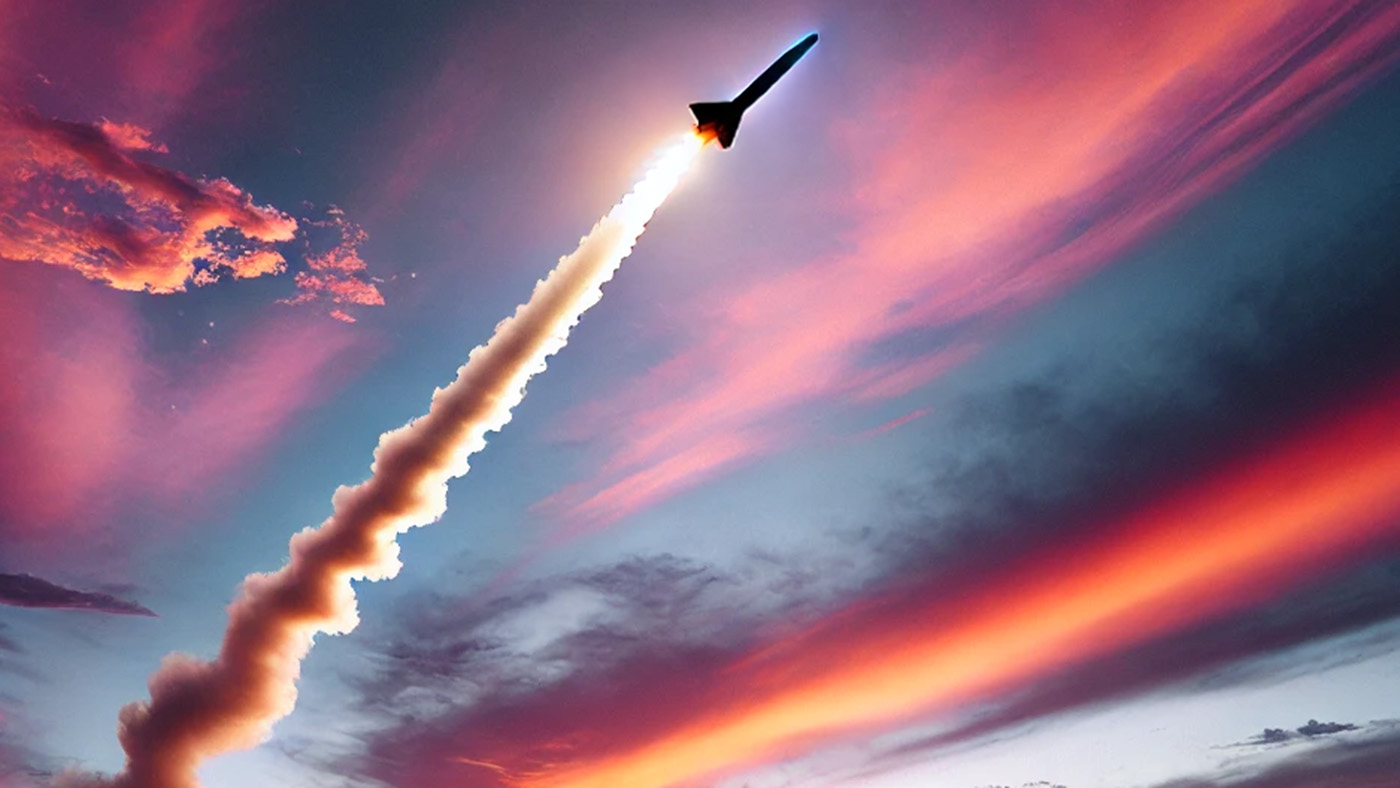
The Ministry of Defence has set out new details on Project Octopus, a joint UK–Ukraine defence industrial initiative aimed at rapidly scaling air defence drone production for use in the war against Russia.
In a written parliamentary answer published on Friday, Defence Minister Luke Pollard confirmed that Project Octopus is the first joint industrial programme launched under Project Lyra, the bilateral framework established to deepen defence cooperation between the UK and Ukraine. Pollard said the initiative, announced by the Prime Minister on 10 September 2025, focuses on adapting a Ukrainian-designed air defence interceptor for large-scale manufacturing. “Under Project OCTOPUS, the UK and Ukraine will work together to rapidly optimise a Ukrainian designed air defence interceptor for mass production,” he said.
According to the minister, initial production is expected to begin in the United Kingdom within weeks, with early units then sent to Ukraine for testing and operational deployment. “The first units are anticipated to start being produced in the UK in the coming weeks, before being sent to Ukraine for testing and operational deployment,” Pollard added.
The programme is intended to move quickly from development into sustained output, with an emphasis on volume as well as speed. The project’s stated ambition is to establish production lines capable of delivering very high numbers of systems each month. Pollard said the initiative “aims to enable production at scale, with a target of being able to produce thousands of drones per month to support Ukraine’s defence needs.”
Project Octopus represents a shift towards deeper integration between the UK and Ukrainian defence industries, moving beyond donations and towards joint design, manufacture and operational feedback. The focus on air defence interceptors reflects Ukraine’s continuing requirement to counter large volumes of aerial threats, including drones and cruise missiles, through systems that can be produced rapidly and in significant numbers.






Hopefully, decent ongoing orders and continued development to give UK forces a load of these as well as keeping production lines going well into the future?
These seem like the obvious solution for air defence against crappy propeller powered drones which seems to be about 90% of what Russia can actually make.
The UK always goes for a few high end systems – not always needed!
The thing with drones is that having a massive stockpile isn’t a good idea as the tech is moving so fast.
So the important thing is spiral R&D feeding into hot production which spirals in sync.
We also get the bonus of them being tested for us in URK.
As this gives us R&D spiral and hot supply chain and production then it probably the right place to spend the money TBH.
True – which, of course, is why you need to do a lot of repeat orders and continue development. As for the tech moving fast, that isn’t a reason to keep stocks low – when you want them, you want them now. Plus Idon’t think Ukraine is going away any time soon – a conveyor belt system would be useful to Ukraine. Build up stocks then once you reach the opimal number you just feed the older models to Ukraine.
Storing and maintaining things like this long term takes the ‘cheap’ out of them. The idea is to be able to produce hundreds a day as you need them and not have to worry about cost and space, unlike with more flashy higher end systems.
Exactly.
The large expensive things such as warships and tanks need to be stockpiled because there won’t be time to quickly make any of them in the event of a war. We can effectively assume that for high-end assets what ever we start with is the only number we will have for the entire duration of the conflict.
But for cheap things such as these drones there is no need for a large stockpile, only a working design and proof that the manufacturer can make them quickly. Say for instance every few years give them a month’s warning before telling them they must make 10,000 the next month. That way it would resemble the slight warning there would be before a major conflict.
Not to mention these small FPV drones are advancing so quickly by the time we finished making a stockpile of them whatever option we bought would already be outdated.
Until you find that the production line hasn’t been maintained, that the people who knew how to run things have all let and noone knows how to use the machinery, and the bits you need are in short supply because everyone had the same thought as you – assuming supplies of essential materials haven’t been cut off at source.
Cheap is relative…
We should still have an always on manufacturing, but you can do that producing 5 or 20 a day instead of 1000 a day used for massed production.
We need to know our manufacturing can reach wartime requirements and cheap drones are a good way of testing that.
Cheap is relative but lots of these FPV drones are a few thousand instead of hundreds of thousands for larger missiles. We also know we can produce drones fast, 85,000 produced in 6 months for Ukraine when we thought we’d do 100,000 over a whole year.
Exactly.
The speed and adaption of current assets and kit for Ukraine is impressive. Could we please see this attitude and effort mirrored in the next 24 months regarding building up some depth within the Army please. Ukraine has shown, contrary to what many (and indeed me many years ago) that mass has an advantage all of its own.
Beat me to it Airborne.
Indeed even some industrial mass would be more than useful.
Then maybe some 155mm mass…..here is to hope…..
Is it just me or is this just getting more and more surreal by the month – the disconnect between what comes out of government in terms of words and cash and further between what we are(n’t) doing and what our allies are doing.
Not just you.
… and Starmer had the cheek last week to to suggest our European friends need to do more with defence’ that is simply the Norman Wisdom version of the rewriting of facts we see from Trump now. Third to twelfth in NATO spending in three years, defend that Starmer or better still grow a backbone rather than spout platitudes, half truths mis-directions, pure gibberish and the shallowest of criticisms you think you can get away with when your Country is despicably insulted. If he is actually tested in a conflict his goose will be truly cooked, though in his case sadly, unlike Carney, Newsom, even Macron and Mertz he is more like a Bombay duck.
Yes the problem is wars of choice don’t need mass.. because your choosing to fight and inevitably that means your at a geostrategic advantage ( picking on someone small or a very long way from the conflict zone) organic wars are different as they are almost always existential and because you have no choice a nation will generally fight to its dying breath, strategic exhaustion or in some cases being beheaded.. so if there is no beheading it’s to the strategic exhaustion and contrary to some views large nation states with populations of 40 million plus take a shit load of beating before they die..
The lack of mass thing really was a Cold War fantasy because everyone loved nuclear weapons and nuclear doctrine was essentially Russia will bury us if we can’t we in a few weeks we will all burn in nuclear fire.. it was a bit of a silly doctrine really..
Hopefully, Jelgava, Latvia is involved in this – they can speak both languages, are advanced in tech and can build at scale.
So lovely.. now we need to make sure we leaver this sovereign capability for the UK.. that means some orders to allow us to develop our own national air defence doctrine using this sovereign capability.. essentially
1) build the sovereign capability by supplying Ukraine.
2) have a modest number trickled to UK forces so they can be used to develop a doctrine and cadre of experts and trainers
3) mass mobilisation plan for units that could use the sovereign capacity.. essentially creating a home reserve force that has a basic skill set to use the sovereign capability.
4) when Ukraine no longer needs these use the cadre and doctrine you have developed to sell to other nations and keep buying our own stocks which are used to keep the trains cadre, doctrine work and home reserve force running well.. this will keep the industrial capacity running along well.
In the end what Ukraine has shown is we are in a war with Russia it’s going to go for all our civilian infrastructure.. power, hospitals etc.. and we need a massively diffuse and robust approach to air defence.. we will not be able to keep burning up our typhoons chasing 20k mass produced prop driven one war attack drones.. and one could cause massive disruption to a DGH ( put it into the O2 tanks and you have a problem)… we cannot loss our power grid and acute hospitals and keep fighting a peer war, we we will need diffuse air defence.. long range attack drones have really changed the game for the UK because once we only had to worry about very expensive and so limited strategic systems ( SSN and strategic aircraft launch cruise missiles).
We are hopeless at ‘selling’ to other countries. Our regulations dictate that we do business our way and not the way that the customer would wish. One or two big government to government deals favouring our para-statals is just about all we are capable of…and those para-statals completely lack customer focus, mandate unfavourable terms of business on SME system/subsystem suppliers. Those contracts often become unmitigated disasters – OPV for non existent Royal Brunei Navy, no ammunition production for SOLF Challengers, problematic Hawk contract in UAE etc etc. Just about everything run by the government turns to a can of worms….
Is this a drone or actually a missile? Granted, the line is getting exceptionally blurry, but the image and description of this as an interceptor certainly seem to imply it’s actually a missile.
A high speed drone, as in greater than 300kph.
You’ve had 4 years
.. what’s the holdup?